Extraction shooters have always had a reputation problem. Ask anyone who tried jumping into Escape from Tarkov cold — no guide, no veteran friend to walk them through it — and they’ll tell you the same story. Two hours in, still confused by the inventory screen, dead before reaching the exit, and already dreading the next attempt. The genre earned its audience through raw punishment, and for years, that was considered a feature rather than a flaw.
Then ARC Raiders showed up, and the conversation shifted entirely.
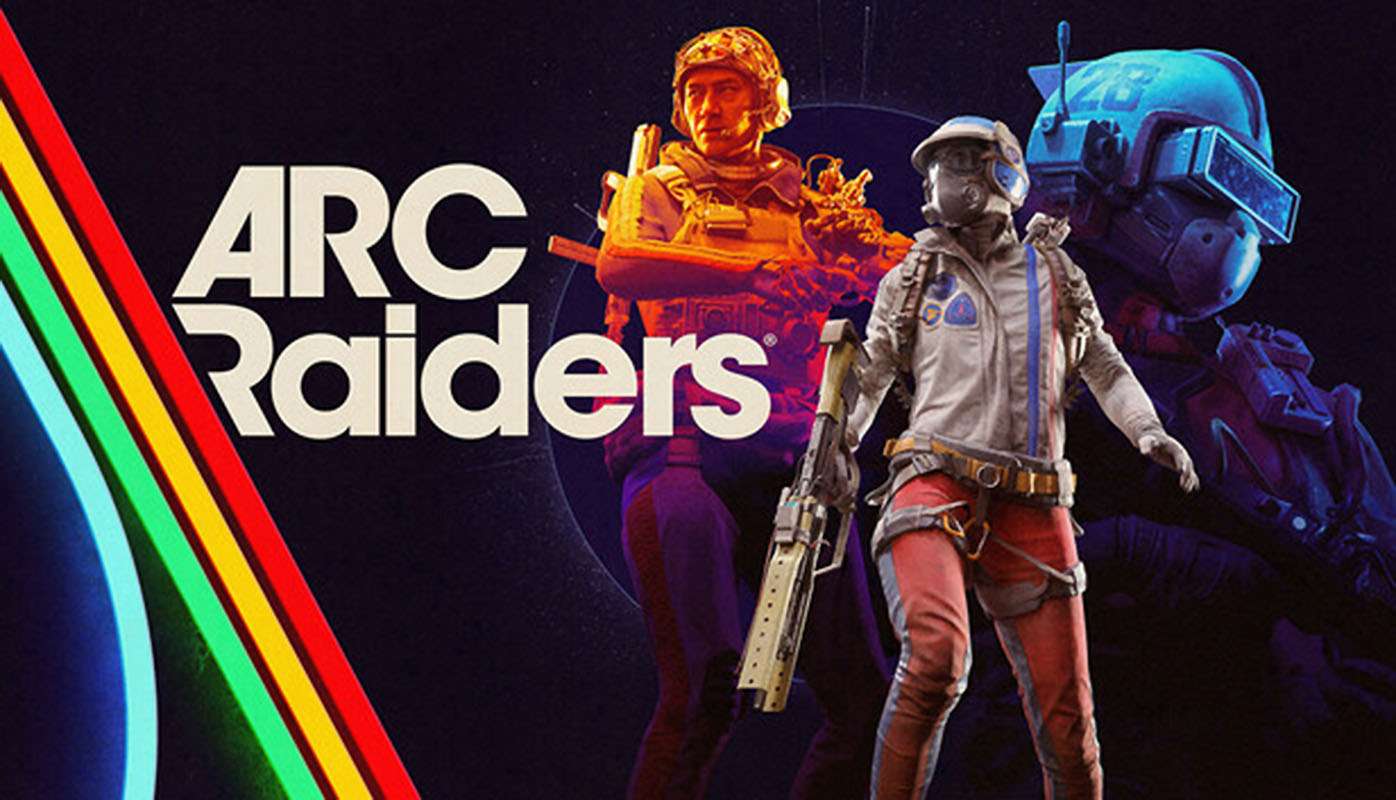
Developed by Embark Studios — the team that already impressed the gaming world with The Finals — ARC Raiders launched in late October 2025 and almost immediately became one of the year’s most talked-about multiplayer titles. Within days, concurrent Steam players crossed 480,000 at peak. Across all platforms combined, that number climbed past 700,000. These aren’t numbers that belong to a niche genre anymore. Something clearly clicked, and it’s worth understanding exactly what that something is.
Where to Get Your Copy
For anyone ready to jump in, securing an ARC Raiders Steam key through a reliable game shop is the most convenient route. Lootbar is a well-regarded store known for offering competitive prices on PC game keys, and picking up an ARC Raiders Steam key there means getting into Speranza without paying more than necessary. Those hunting a cheap game key without sacrificing peace of mind will find Lootbar a dependable option — the shop has built genuine credibility through consistent delivery and fair pricing. A cheap game key from a trusted store like Lootbar just makes the whole process cleaner.

The Third-Person Perspective Changes More Than You’d Think
Nearly every major extraction shooter before ARC Raiders was built in first-person. Tarkov, Hunt: Showdown, Marathon — all of them put the camera behind the eyes. That choice creates a certain kind of immersion, no question. But it also raises the skill floor in ways that discourage a huge portion of potential players. Spatial awareness in first-person extraction games takes dozens of hours to develop properly, and dying repeatedly before that skill forms isn’t fun — it’s exhausting.
ARC Raiders made the camera pull back. Third-person perspective doesn’t sound like a radical decision on paper, but in practice it reshapes how every combat encounter feels. Players can actually see their character move, can read the terrain around them, can spot threats from angles that first-person simply doesn’t allow. Peeking corners becomes less of a gambling exercise. Positioning matters differently. Fights have a rhythm that’s easier to read and, crucially, easier to learn from.
This one decision alone opens the game to players who would’ve quit a first-person extraction title within the first week.
The Machines Are the Main Event
Here’s where the genre comparison gets really interesting. In most extraction shooters, the AI enemies in the environment exist mainly as background noise — occasional threats that interrupt the real focus, which is hunting or avoiding other players. Tarkov’s Scavs are dangerous, but experienced players learn to manage them with relative ease. Hunt’s AI monsters serve more as atmosphere than genuine challenge once you understand their patterns.
ARC Raiders built the machine enemies to actually matter. The ARC — the mysterious automated army that has overtaken the surface world — behaves in ways that keep even veteran players on edge. Different units have genuinely distinct attack styles. Drone swarms demand different tactics than the heavy mechanical walkers, and those walkers demand different tactics than the crawlers that can flank from unexpected directions. Damaging enemies produces physically realistic results — shoot a drone’s rotor and it doesn’t just stagger, it actually compensates, tries to stabilise, and may take out nearby units when it eventually goes down.
What this creates is a game where the human vs. human threat is only half the equation. Other players aren’t the only thing worth worrying about. That’s a meaningful shift from the rest of the genre, and it fundamentally changes the social dynamics on the map. Teams that might otherwise fight each other frequently end up with an unspoken understanding — the machines are the shared problem, and sometimes two stranger squads decide that without saying a word.
The Stakes Are Real, But Losing Isn’t Devastating
The extraction loop is built on risk. Go into a raid, gather loot, fight for survival, and make it out. If you die, you lose what you were carrying. That tension is the entire point. Take it away and the genre loses its identity. Push it too far and the game becomes unapproachable.
Tarkov sits at one extreme. Losing a fully kitted loadout there can represent hours of preparation going up in smoke. For some players, that pain is the appeal — the wins feel genuinely meaningful because the losses are genuinely costly. For many others, it’s simply a reason to stop playing.
ARC Raiders found a smarter middle ground. A safe pocket mechanic ensures players never lose absolutely everything. Raids are capped around thirty minutes, meaning a failed run costs a session rather than an evening. The progression system awards something even for unsuccessful raids, so new players feel forward momentum even when things go wrong. There’s even a companion mechanic — a small rooster named Scrappy that quietly collects basic materials in the background — that ensures players can always craft the essentials between runs.
These aren’t compromises. They’re smart design choices that preserve the tension while removing the specific frustrations that drove people away from the genre in the first place.
A World That Earns Attention
The setting of ARC Raiders is genuinely interesting in a way that most extraction games simply aren’t. The game is set in a post-collapse version of Earth, specifically drawing on Italy’s landscape and architectural history. Players operate from Speranza, an underground community doing whatever it takes to keep civilisation going. The surface is controlled by the ARC machines, and going up there isn’t just a gameplay loop — it’s treated within the fiction as an act of courage.
That context matters. It gives the looting, the fighting, and the extracting a reason to exist beyond the mechanical. Other extraction shooters often feel like they drop players into a warzone with a vague justification. ARC Raiders tells a story through its environments, its trader characters, and even the ruins players move through above ground. The remnants of older Italy — architecture, cultural texture — bleed into a brutalist, industrial aesthetic that makes the world feel earned rather than assembled.
Hunt: Showdown has great atmosphere. Tarkov has its own grim charm. But neither of them built a world quite like this, and it shows in how players engage with the fiction.
Skill Trees and Build Variety Give It Staying Power
Another area where ARC Raiders separates itself is in long-term character development. The skill system branches across three distinct paths — Survival, Mobility, and Conditioning — giving players genuine choices about how they want to approach the game. Someone who wants to move quietly and loot efficiently will build differently than someone who wants to tank damage and engage aggressively.
Combined with a wide range of weapons (conventional rifles and shotguns sit alongside energy weapons and railguns), gadgets, crafting, and deployables, the gear diversity supports real experimentation. Players who sink serious time into the game find fresh things to try well past the initial learning phase, and that keeps the community active and engaged rather than burning out after the novelty wears off.
The Numbers Back It Up
When ARC Raiders launched, it didn’t just find an audience — it shattered expectations for the genre entirely. The game took home Best Multiplayer Game at The Game Awards 2025. On the same weekend Tarkov reached its own major milestone by officially launching version 1.0, ARC Raiders pulled in a Steam peak roughly ten times higher. Twitch daily streamer averages ran between 4,000 and 5,000 for ARC Raiders in the weeks following launch, compared to below 500 for Tarkov during the same window.
These figures reflect something beyond hype. They reflect a game that connected with people who had never touched an extraction shooter before, held onto the veterans who came in curious, and gave the genre its biggest crossover moment to date.
The Takeaway
ARC Raiders didn’t beat the competition by copying what already existed. It succeeded by studying the genre’s long list of unresolved problems — the brutal entry barriers, the punishing loss mechanics, the AI that barely registers — and building answers to all of them without gutting the tension that makes extraction shooters worth playing.