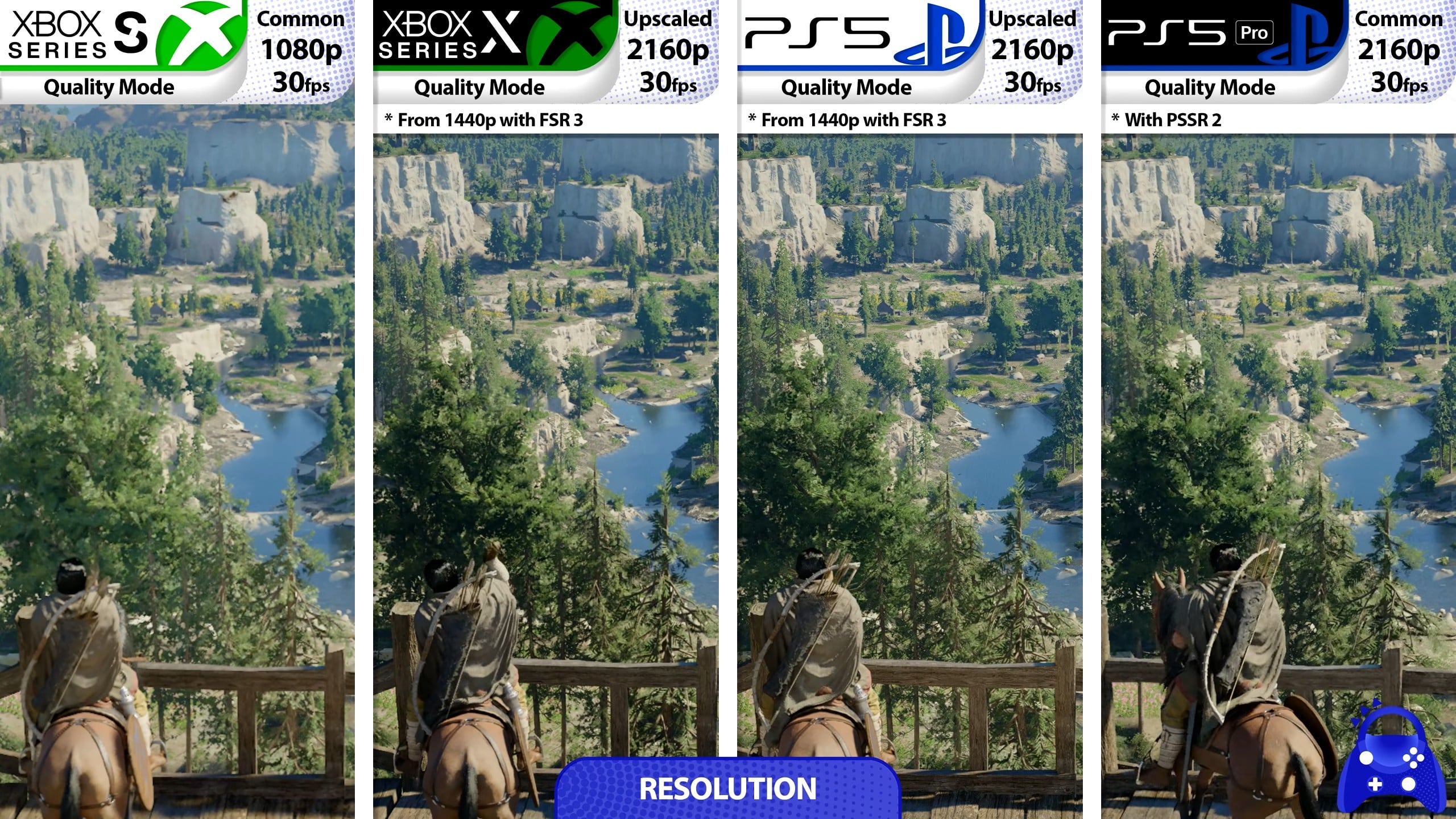
A new graphics comparison for Crimson Desert has outlined how the game performs across PlayStation 5, PS5 Pro, and Xbox Series consoles, with the PS5 Pro version showing a noticeable visual advantage in certain areas. The analysis focuses on display modes, graphical settings, and performance consistency following the game’s recent launch.
Crimson Desert offers three display modes on PS5, PS5 Pro, and Xbox Series X, while the Xbox Series S is limited to two. The Quality and Balanced modes deliver higher graphical settings compared to Performance mode, with the PS5 Pro maintaining some enhanced settings beyond the standard PS5 and Xbox Series X versions. The most visible difference comes from global illumination, where the PS5 Pro is the only console capable of sustaining a medium level of ray tracing even in Performance mode.

On the lower end, the Xbox Series S operates with reduced settings across both of its modes, aligning more closely with low or minimum PC configurations. Despite this, the game remains functional across all platforms, with each version meeting its intended frame rate targets.
Performance appears consistent across the board, with reports indicating that frame rates can exceed targets by 20 to 30 fps when Vsync is disabled. However, limitations related to VRR mean that screen tearing may still occur in Quality mode on both PS5 and Xbox Series X systems.
Based on the findings, Balanced mode is recommended for PS5, PS5 Pro, and Xbox Series X, while Quality mode is suggested for Xbox Series S to maintain visual stability. Overall, the BlackSpace Engine demonstrates solid optimization on consoles, particularly given the demands of ray-traced global illumination in an open world setting.

Crimson Desert launched on March 19, 2026, following a lengthy development cycle, and is available on PlayStation 5, Xbox Series X S, PC via Steam and Epic Games Store, and macOS. The game has already surpassed 2 million copies sold within its first 24 hours, signaling strong early momentum despite a mixed to positive critical reception focused on its complex controls.