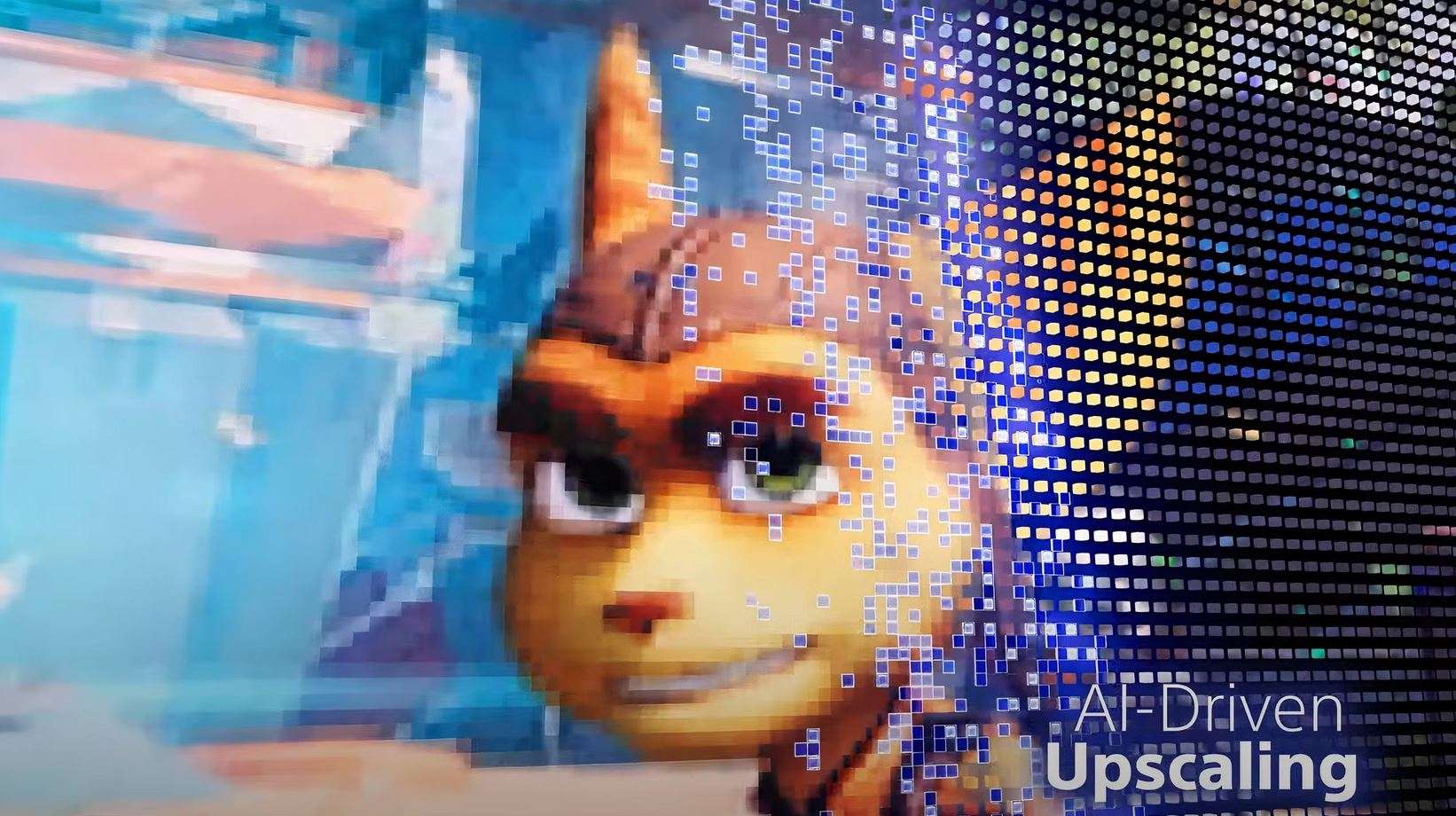
A new technical breakdown from Digital Foundry suggests that Sony has significantly strengthened its upscaling technology on PlayStation 5 Pro. The outlet’s analysis of PSSR 2 indicates a marked improvement over the original implementation, with image quality gains that bring the console solution much closer to leading PC technologies such as DLSS 4.5 and FSR 4.
When PSSR first debuted, expectations were high. As a machine learning based temporal upscaler designed specifically for PS5 Pro hardware, it was positioned as a core pillar of the system’s premium proposition. In practice, however, early implementations struggled to meet that promise. The original version frequently produced soft image reconstruction, instability during motion, and visible artifacts in demanding scenes. Titles that relied heavily on ray tracing often exposed additional weaknesses, including foliage shimmer, incomplete edge reconstruction, and amplified noise in lighting.
In several high-profile releases, the output compared unfavorably not only to Nvidia’s DLSS and AMD’s latest FSR solutions on PC, but even to simpler analytical upscalers. The inconsistency from one game to another further undermined confidence in the technology. For some players, the visual compromises raised questions about whether the PS5 Pro hardware premium was justified.

PSSR 2 appears to address many of those concerns in measurable ways. According to Digital Foundry’s testing, the most immediate improvement is clarity. Even when reconstructing from a base resolution slightly above 1080p, the resulting 4K image presents with far greater sharpness and definition than before. Fine detail, such as fabric stitching, strands of hair, and small environmental text, resolves with noticeably improved precision. Edge stability has been strengthened, and the overall softness that defined earlier builds has largely been reduced.
Motion handling also shows clear progress. The first version of PSSR could reveal underlying base resolution artifacts when geometry moved across the screen, leading to instability and distracting shimmer. PSSR 2 mitigates this to a significant extent. While some aliasing during fast movement remains, the reconstruction is more stable and less prone to obvious breakdowns. The analysis indicates that the new version avoids certain forms of temporal ghosting that can appear in competing methods, where faint trails linger behind moving objects.
Consistency is another area of advancement. Early PSSR performance varied widely between titles, particularly in ray-traced environments where noise and reconstruction errors were more visible. With PSSR 2, output appears more predictable and more closely aligned with modern reconstruction standards. Ray tracing noise can still surface in some cases, but evidence suggests that these artifacts are more closely tied to a game engine’s denoiser rather than the upscaling algorithm itself. This distinction is important, as it shifts responsibility away from the reconstruction layer that previously drew criticism.

There remain scenarios where high-end PC upscalers retain a technical edge. In especially complex backgrounds, including chain link fences or thin power lines, DLSS 4.5 and FSR 4 can demonstrate more complete line reconstruction. However, the difference is narrower than before. When viewed at typical living room distances on a large 4K television, the visual gap often becomes subtle rather than immediately apparent. That context matters, given that console hardware is optimized for couch-based viewing rather than close monitor scrutiny.
One of the more strategic developments accompanying PSSR 2 is the introduction of a system-level toggle on PS5 Pro. Instead of requiring individual developers to patch in the updated algorithm, users can enable the newer version at the system level. This opens the possibility that titles originally shipped with PSSR 1 could benefit from improved reconstruction without dedicated updates. It also signals a degree of confidence from Sony in the stability and maturity of the revised solution.
From a gameplay perspective, PSSR 2 appears to reach a critical threshold. The upscaler is no longer the most noticeable part of the visual pipeline. Where the original version could draw attention to shimmer, noise, or instability, the updated implementation tends to remain unobtrusive. The reconstructed 4K image maintains sufficient sharpness and temporal stability to support performance targets such as 60 frames per second without constantly reminding players of technical compromises.
Digital Foundry’s findings suggest that the evolution from PSSR 1 to PSSR 2 is not a minor adjustment but a meaningful overhaul. While it does not fully surpass DLSS 4.5 or FSR 4 across every metric, it closes much of the previous gap and establishes a level of quality that feels appropriate for premium console hardware. For PS5 Pro, that shift could prove central to how the system is judged moving forward.