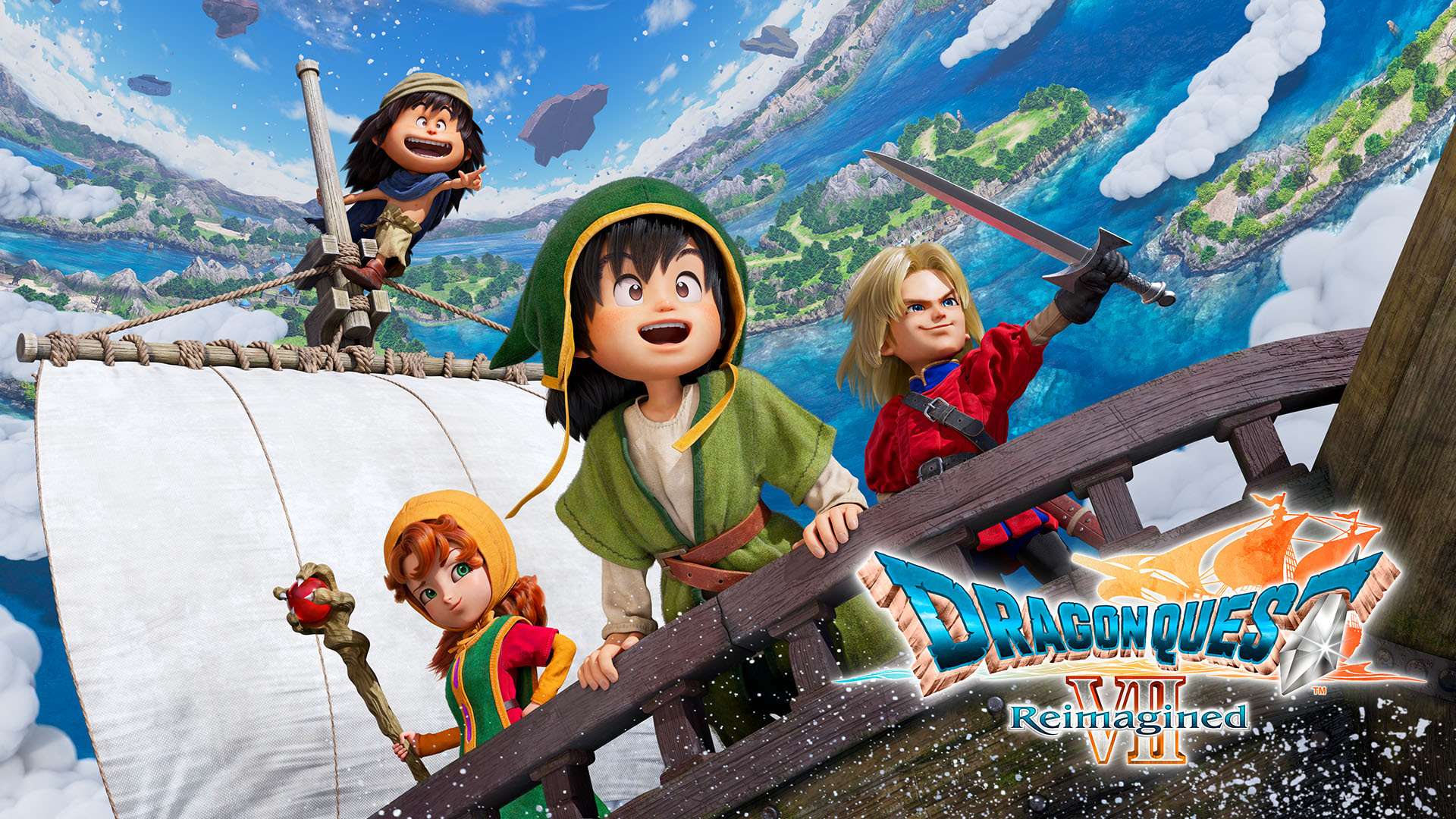
Dragon Quest VII Reimagined brings the cult classic JRPG to modern platforms. It uses a unique art style for this remake, different from the HD-2D visuals used by the other remake games like Dragon Quest 1, 2, and 3. This new visual style seems designed to preserve the authenticity of the original game, blending a diorama-like look with puppet-based character models. The end result looks great most of the time, but it can also look ugly in certain situations, especially when it comes to the character models.
The story of Dragon Quest VII Reimagined focuses on a fisherman’s son and his friendship with Prince Keifer, who comes from a kingdom located on a small island. Both the fisherman and Prince Keifer believe there is much more to the world than their small island, and they set out on an adventure to uncover the mysteries beyond it. They are joined by Maribel, the mayor’s daughter and their childhood friend. Unlike the others, she does not willingly choose to go on this journey, but instead accidentally stumbles into it.

The narrative revolves around ancient stone tablets that allow their user to travel through time. These tablets are placed in a shrine, letting the party journey to different periods, uncover their secrets, and try to resolve the conflicts they encounter. It is a fairly straightforward story, with each pedestal representing an island that usually has a self-contained storyline, almost like an episode. The game eventually ties all of these episodic journeys together into a larger tale, which, as expected from a Dragon Quest game, centers on freeing the world from the Demon King.
Dragon Quest VII Reimagined is not a very long game, especially with the new changes made for this remake. Some content has been cut to keep the pacing solid, since the original game is notorious for wasting a lot of the player’s time. This decision will obviously not sit well with purists of the franchise, but for newcomers, it should not really matter. Personally, I only played parts of the 3DS version of Dragon Quest VII and tried them again before this remake, so I cannot really speak on the stripped-down experience. Speaking only about the main story and gameplay, I really enjoyed my time with this remake.

The combat system in the remake sticks to the same traditional turn-based approach. There is an option to adjust battle speed, which is honestly recommended because the default setting feels too slow. The game is also improved with mechanics like the Vocation system, which allows any party member to equip multiple vocations for stat buffs and the ability to combine different abilities. This also makes the game easier, especially on the default difficulty, which is not very challenging. There are new moves to use in combat as well.
The one quality-of-life change I really liked here is the removal of random encounters. Enemies are now visible on the map and can be attacked first to gain the upper hand, or avoided altogether. The game also includes options to tweak auto-battle, which makes grinding against regular enemies easier to deal with. One thing Dragon Quest VII Reimagined lacks is exploration, since most maps are small and usually self-contained. The game also practically holds your hand at every step, showing the location of the next objective or point of interest on the map. Inventory is now shared, and cursed equipment has been removed. Most of these changes simply come down to making the game more accessible for newcomers.

The soundtrack of Dragon Quest VII Reimagined has been re-recorded with a full orchestra, featuring the iconic compositions of Koichi Sugiyama. The new arrangements sound great and easily stand among the best soundtracks in the franchise. The game has a very whimsical feel, far removed from the overly dark tone common in many modern games, and the music complements this style perfectly.
The main story takes around 40 to 50 hours to complete, which is shorter than the original release. However, not all of this reduction is due to cut content. The quality-of-life improvements have greatly improved the pacing of the gameplay, story, and even exploration, which naturally lowers the overall playtime. There is also plenty of post-game content to tackle, and reaching full completion can easily take between 60 and 80 hours. Your mileage may vary, of course, but the point is that there is no shortage of content here for a JRPG.

The most controversial aspect of this remake is undoubtedly going to be its visuals, if we set aside the cut content and other changes made to the game. The combat is clearly better now, even if that improvement comes at the cost of an easier experience. There are simply more choices and options available to customize characters for battle. The difficulty settings are also quite extensive and should appeal to hardcore fans of the franchise who want to squeeze every bit of challenge out of the game. That said, difficulty was not a concern for me personally.
All in all, I feel that Square Enix is on the right path when it comes to remaking these older Dragon Quest games. The visual style could use some refinement, and perhaps the developers should reduce the amount of hand-holding and avoid decisions that result in cut content. Still, this feels like a solid template for future remakes in the Dragon Quest franchise. While none have been officially announced, I personally hope they continue bringing more games back in this way.
Dragon Quest VII Reimagined Game Information
- Price: $59.99
- Publisher: Square Enix
- Developer: Square Enix
- Platform: PC, Switch 2 (Reviewed)
- Disclaimer: A review code was given by the publisher