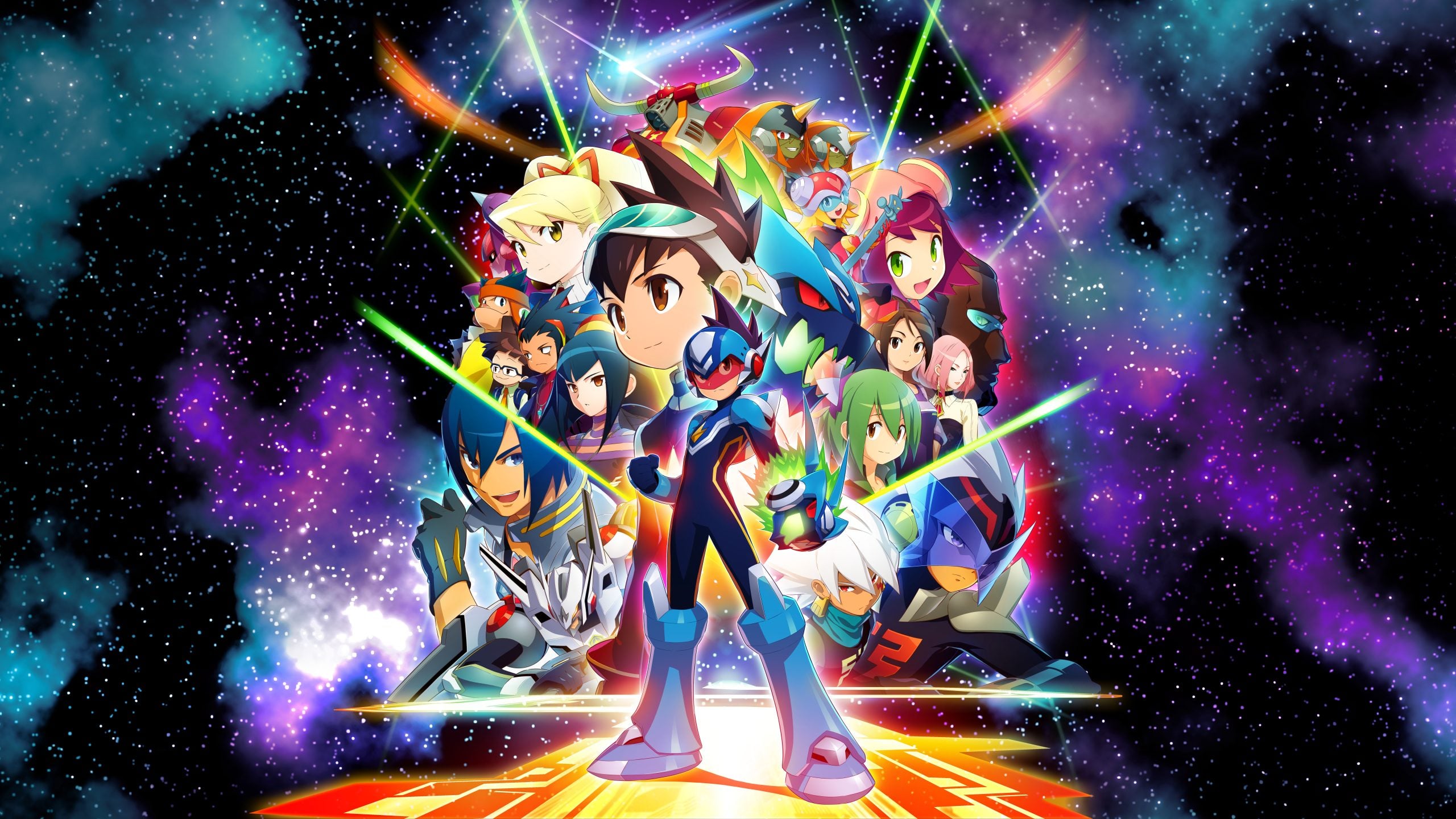
Capcom has been on a strong run with its legacy game collections lately. With the release of Mega Man Star Force Legacy Collection, the company is bringing back a set of classic games from the Nintendo DS era that never received a proper push in the West. Following the success of Mega Man Battle Network, Mega Man Star Force introduces a new story with fresh characters, a different setting, and updated gameplay. At the same time, it keeps the familiar structure of the Battle Network series while improving several parts of the core experience.
The story follows a young boy named Geo Stelar who lives in a futuristic world shaped by wave technology. This technology creates a digital layer of electromagnetic space that overlaps with the physical world. While Mega Man Battle Network focused on controlling a digital partner, this follow-up takes a different approach by having the player become the hero directly. The story begins when Geo receives his missing father’s Visualizer device. Using it, he is able to see the digital electromagnetic world around him. He eventually forms a bond with an alien made of electromagnetic energy, allowing him to transform into Mega Man and enter the digital space known as the Wave World.

One thing worth mentioning is that the story can feel a bit confusing at first. The game introduces the concept of brothers, which are close friendship bonds formed with others using devices called a Transer or Star Carrier. Many of the early terms and names can feel overwhelming compared to the simpler setup of Mega Man Battle Network. Because of this, the narrative takes some time to properly settle in. That said, one aspect of the game that I really enjoyed right away was the battle system.
In terms of visuals, Capcom has done a great job adapting the original dual-screen layout of the series to a single screen. My main platform for testing was the Steam Deck, where the game runs very well with no major issues aside from the lower resolution. The pixel-based art style used for the main campaign still looks good and scales nicely on the screen. The 3D battle scenes are also handled well and appear crisp and clean. The same applies to the character and environment artwork that appears during transitions and throughout battles. The user interface has also been updated and now looks clear in high definition.

I was honestly quite impressed with Capcom’s effort here, especially since the original game was designed around the dual-screen setup of the Nintendo DS. During gameplay, both screens are still shown, but the game can automatically switch between them depending on what is happening at the moment. There is also a manual option that lets players switch screens by pressing one of the trigger buttons, though it is rarely necessary because the automatic switching works well most of the time.
The combat system is simple to understand and feels like a solid improvement over Battle Network. Battles take place in a 3D environment on a 3×5 grid that is viewed from behind Mega Man. The focus is mainly on positioning and timing attacks. Each battle begins with a set of cards, up to six, which players can choose before starting a turn and use during the fight. Once the cards are used, a new set must be selected. The Battle Card system is the centerpiece of combat. Cards can be obtained from shops, defeated enemies, or through exploration, and players can build a custom deck from them. If no cards are available, Mega Man can still attack enemies using the Mega Buster to deal basic damage.

While the exploration can feel a bit dated, the game does include a fast-forward option when moving around, which helps speed things up. Battles appear as random encounters, but they are usually short and easy to get through. The collection also includes several quality-of-life options that allow players to adjust different mechanics, including encounter rates, damage values, in-game currency, and movement speed.
While the collection may seem impressive with multiple versions for each entry, most of these games are quite similar and do not introduce major changes. If someone plans to go through the series, there is little reason to play every version. It is usually better to choose the version that fits your preferred gameplay style and stick with that.

Overall, this feels like a great way to experience the Mega Man Star Force series. Capcom clearly did more than simply bundle the games together. The company made improvements to the visuals and gameplay while also adding several quality-of-life features that help bring the experience closer to modern standards.