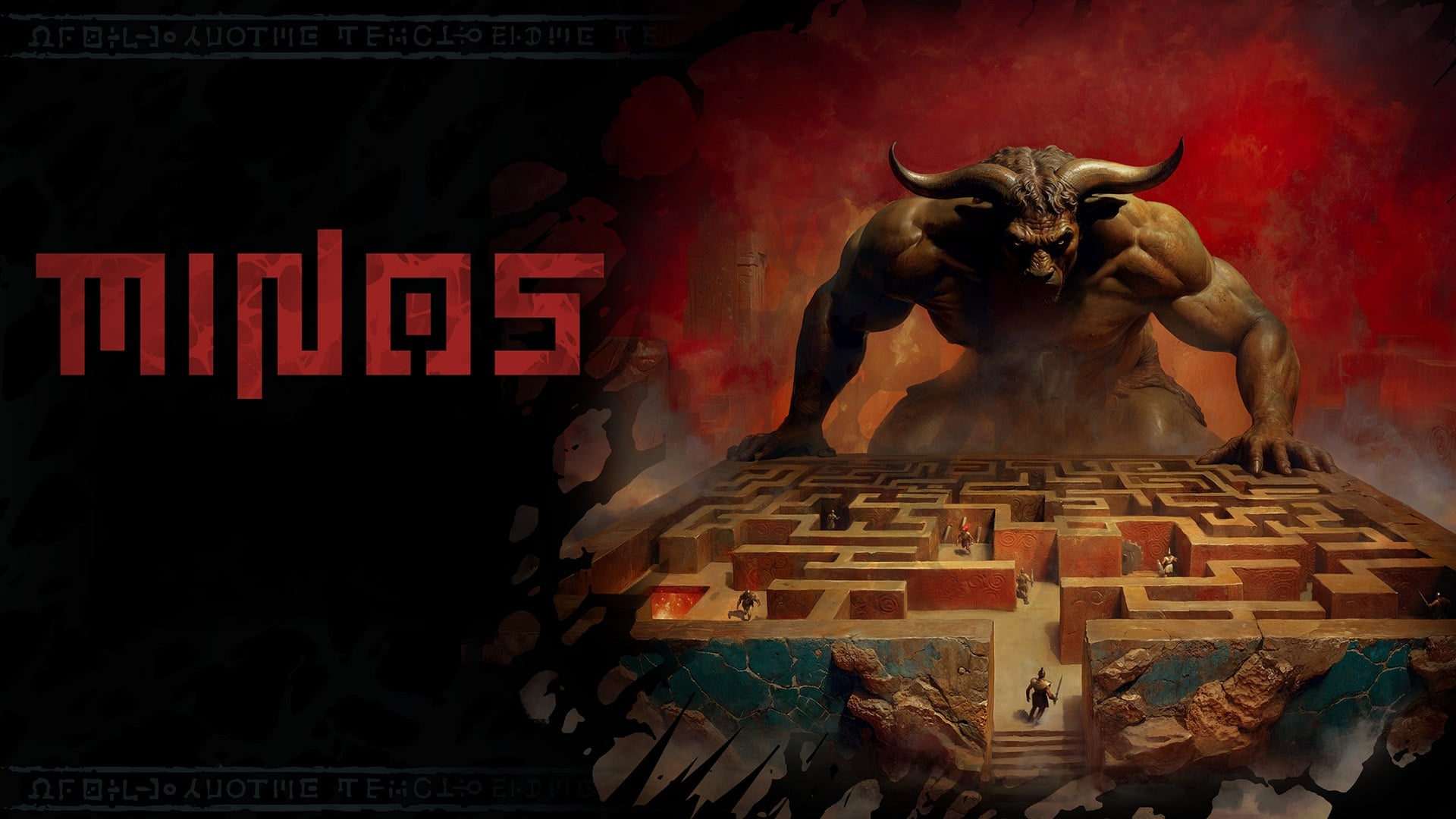
Minos is a unique roguelike that combines tower defense with maze-building and trap placement. The game draws inspiration from Greek myth, putting the player in the role of Asterion, the son of Daedalus. The story is expanded through background lore, with letters and documents explaining the narrative, while there is very little in terms of dialogue or character interaction.
Minos is not an easy game to recommend to those who do not enjoy roguelike elements. As a fan of tower defense games, however, I found the premise interesting. The story does not do much to fully immerse the player, but the game makes good use of creative writing through its scattered bits of lore. It presents a tragic tale, allowing players to experience the world from a monster’s perspective. There is a strong focus on gameplay, so, understandably, the story is not the main highlight, but what the developers have done here is still worth noting.

The gameplay systems in Minos are not difficult to understand at first, but they become more complex over time. The game begins with a short tutorial that covers the basics, with the rest left for the player to figure out. There are two main phases of gameplay. One involves preparing for incoming tower defense sections, where the player places traps and mines to survive waves of enemies. The controls are accessible for newcomers and work well on both a controller and keyboard and mouse. I played most of the game on a Steam Deck and had some trouble placing walls at times, but it was still a fun experience overall.

The game runs fairly well on the Steam Deck and includes a good range of options, including upscaling features that help improve performance. Since enemy paths are shown in advance, players can plan and place traps more effectively to stop enemies before they reach the end of the maze. This requires careful thinking and positioning, which can sometimes take a while to set up.

There is a wide variety of traps available, including spike pits, buzzsaws, fire, and deception traps. If everything else fails, Asterion serves as the last line of defense. While Asterion has a limited set of moves in these situations, this seems like a deliberate choice to avoid making the player feel too powerful. It may have made the game easier otherwise, so the decision makes sense. That said, some runs can feel inconsistent.
As a roguelite, Minos includes permanent upgrades between runs, such as health boosts, new traps, and abilities for Asterion. The randomization between runs, which changes available traps, was not always enjoyable, though it does help keep things fresh. Some shortcuts allow players to move through certain floors more quickly. Unfortunately, the game does require some grinding to gather resources, which can take away from the enjoyment of later runs.

Visually, the game reminded me of Hades, with a distinct art style. The camera is isometric, giving an overhead view of the maze. Enemy designs are not particularly flashy, and the same goes for the traps. The game does feature moments of over-the-top violence, especially as enemies fall victim to the traps placed throughout the maze.
In the end, I would only recommend Minos to those who enjoy the roguelite structure. As a traditional tower defense game, it does not quite scratch the same itch. Asterion’s gameplay sections feel underwhelming. Some traps can also behave inconsistently at times, making them less useful compared to more reliable options. The story is fairly thin, with most of it told through background lore, which may not appeal to everyone.
Minos Game Information
- Price: $17.99
- Publisher: Devolver Digital
- Developer: Artificer
- Platform: PC (Reviewed)
- Disclaimer: A review code was given by the publisher