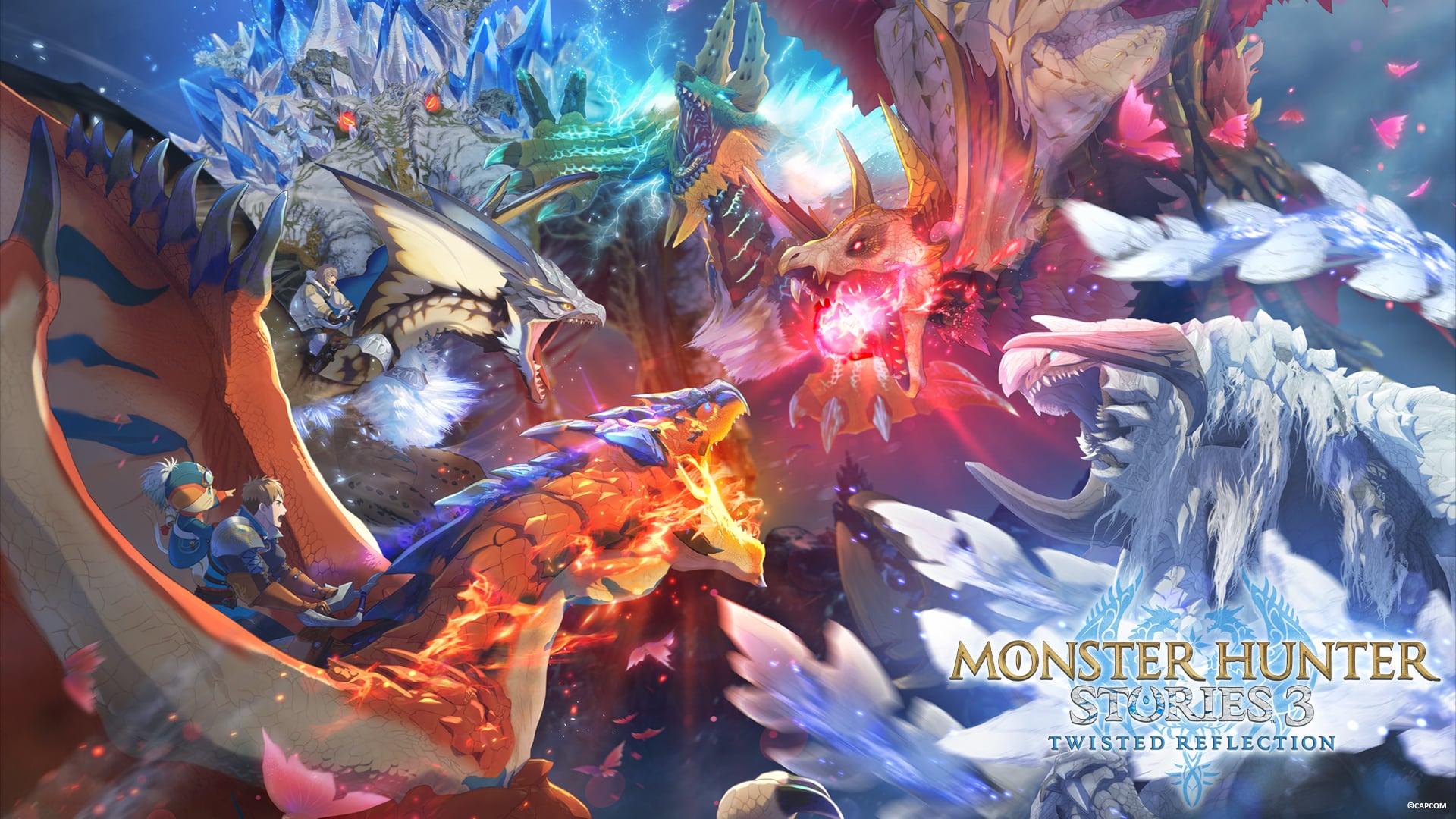
Monster Hunter Stories 3: Twisted Reflection is a spin-off based on the popular Monster Hunter franchise. The first game had a limited release because it was a 3DS exclusive. Since the series saw a huge rise in popularity with Monster Hunter World, Capcom has moved away from keeping the series on a single platform and has instead made it available across multiple platforms. This shift began with Monster Hunter Stories 2, and now its successor is launching simultaneously on almost all major platforms.
The first thing I noticed when I booted up Monster Hunter Stories 3 was how gorgeous it looks. Capcom has used its proprietary RE Engine for the game, resulting in impressive visuals that make it feel like an anime brought to life. The performance is also solid across most consoles. Even the Steam Deck runs the game at a respectable frame rate that can reach 60 FPS, which is quite impressive. The vibrant colors, detailed character models, and lush environments stood out immediately, and in my view, the game sets a new benchmark for how JRPGs can look.

As for the story, the game takes place in the medieval kingdom of Azuria. The main character is gender neutral, meaning the player can choose between a Prince or a Princess and customize their appearance in detail. The protagonist leads a group known as the Rangers, whose role is to protect the ecosystem of monsters. They are portrayed as environmentalists who aim to safeguard the creatures they encounter. This time, the protagonist is also fully voiced, which makes the experience feel like a clear step forward compared to the previous two games.
The game does a good job of teaching the basics of its gameplay, so even if you have never experienced the earlier entries, this is a good place to start. The core of the narrative revolves around the Crystal Encroachment, which is the main reason monsters begin to turn feral. However, this is not the only storyline at play. Alongside it, a war is beginning to take shape, with political tensions slowly building in the background. The story explores human ambition and desire, drawing inspiration from history while blending it with a fantasy world where monsters are often treated as tools in larger conflicts. In terms of storytelling, this feels like the strongest entry in the Monster Hunter Stories series so far. It delivers an emotionally engaging narrative supported by solid character development. Players who experienced the earlier games will also notice several callbacks, which makes it especially rewarding for those who have followed the series through its ups and downs.

The combat system in Monster Hunter Stories 3: Twisted Reflection largely builds on the foundation established in the previous games. Battles still revolve around turn-based mechanics, with the familiar rock-paper-scissors style system based on power, speed, and technical attacks. However, the overall scale and depth of combat has been expanded. Players also need to consider different damage types, such as blunt, piercing, and slash, which can be used to exploit specific monster weaknesses. Targeting individual parts of a monster’s body remains an important tactic, and it often makes tougher battles easier to manage.
One of the new additions to combat is the Wyvernsoul Gauge, which introduces a new stun and stagger system for monsters. Every member of the party, including both human characters and their companion monsters, can unleash powerful attacks and even combine abilities depending on the situation. Although the player directly controls only the main character and their Monstie, it is still satisfying to plan strategies that work alongside the actions of other party members. Combat is just one part of the overall experience, though, as the game offers plenty of other activities and systems to enjoy.

Monsters are usually obtained from eggs that can be found across the world. There is a sense of randomness in how these monsters appear, which helps make the game feel more dynamic. Every Monstie can also be ridden, allowing players to travel around the world in addition to using them in battle. Some Monsties also have special traversal abilities that make exploration easier. For example, Rathalos can fly, which allows players to move across areas much more quickly.
Progression in the game is tied to restoring the habitats of monsters. Extra Monsties can be released into different regions to increase their species population. As the population rank rises, the quality of eggs improves, and rarer Monsties begin to appear. The game also includes a breeding system connected to these habitats. As the population rank gradually improves, new mutations and even new species can start to appear. Players can also send Monsties on excursions, which allows them to gain environmental bonuses and other benefits over time.

Boss fights in the game often feel like solving a puzzle. These bosses usually represent invasive monsters that disrupt the ecosystem and require a specific approach to defeat. Similar to the mainline Monster Hunter games, success depends on understanding each monster’s strengths and weaknesses. Exploring the boss’s territory beforehand can often reveal clues about how to deal with them, giving players useful information that can be applied during the fight.
While it is not technically an open-world game, the title features large areas that allow for free traversal using Monsties. This gives players a good amount of freedom when exploring the world. The game also includes several helpful quality-of-life improvements, such as the option to speed up battles and fast travel between specific locations. I also liked the addition of a new Palico companion named Rudy, who feels like an improvement over Navirou.

When it comes to replay value, the game offers a large amount of content. The main story alone is quite lengthy, and there is also a good amount of post-game content that includes tougher challenges and additional boss fights. The monster breeding and habitat systems are especially addictive, and the overall gameplay loop remains engaging throughout. It took me a little over 50 hours to finish the main story, and that does not even include the many optional activities or post-game content available. Overall, this stands out as one of the strongest entries in the franchise in terms of both scale and production value, while still being very fun to play. Even those who are not familiar with Monster Hunter can enjoy it as a solid JRPG that works well on its own.
Monster Hunter Stories 3: Twisted Reflection Game Information
- Price: $69.99
- Publisher: Capcom
- Developer: Capcom
- Platform: PC (Reviewed)
- Disclaimer: A review code was given by the publisher