NVIDIA has officially announced DLSS 4.5, a significant update to its AI-powered rendering technology, during CES 2026. The new version introduces a second generation transformer model for Super Resolution alongside Dynamic Multi Frame Generation and a new 6X frame generation mode, marking the most substantial upgrade to DLSS since the launch of DLSS 4 last year.
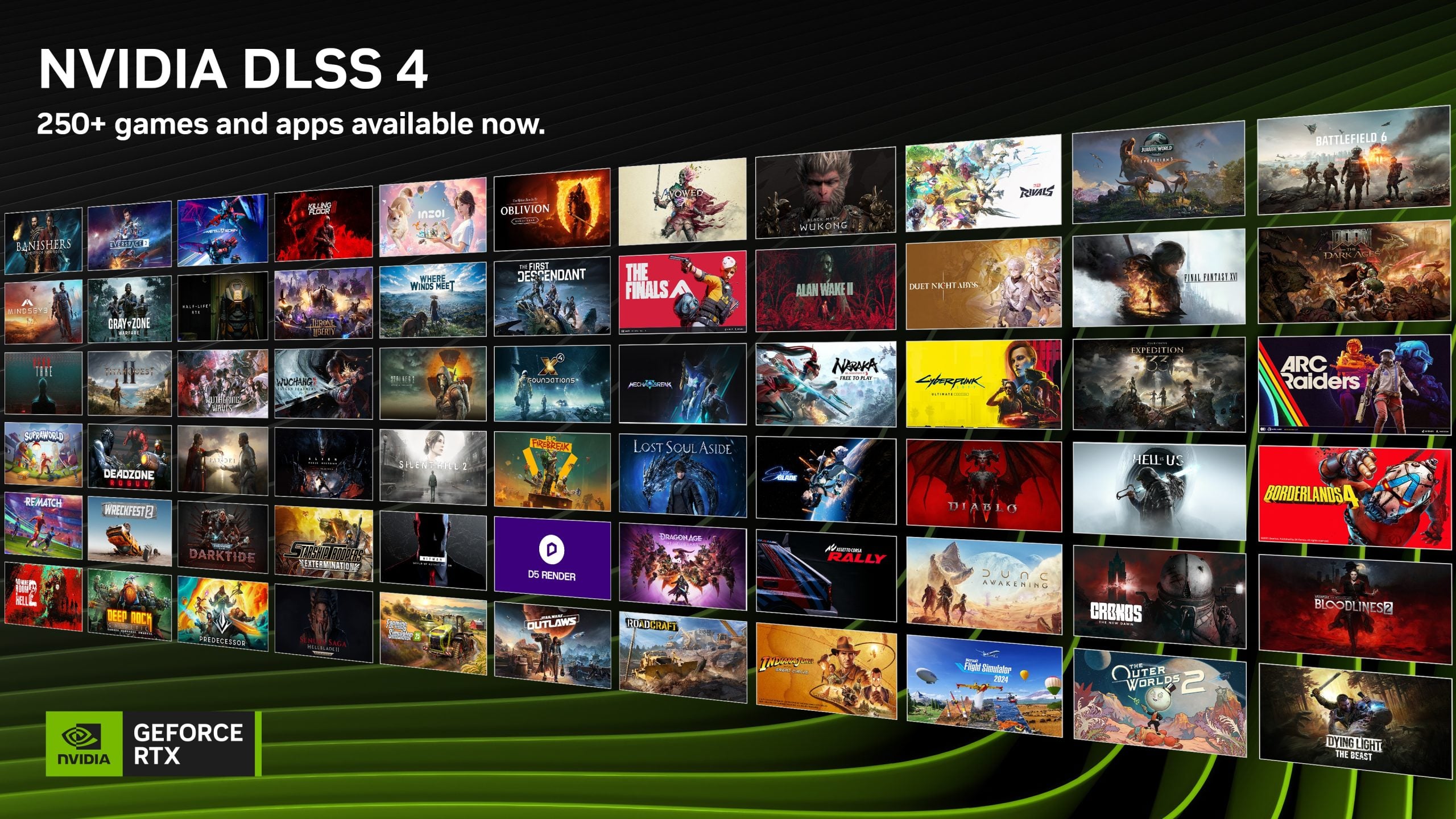
According to NVIDIA, DLSS 4 has already seen rapid adoption, with support across more than 250 games and applications since its debut at CES 2025. With DLSS 4.5, that footprint is expanding further, as the updated Super Resolution model will be available across more than 400 supported titles and apps on all GeForce RTX GPUs. NVIDIA says the new model has been trained on a significantly larger and higher quality dataset, uses roughly 5 times the compute of the original transformer model, and delivers noticeably improved image quality with better lighting accuracy, sharper edges, and clearer motion handling.
One of the most notable technical changes in DLSS 4.5 is how Super Resolution handles lighting. Unlike previous approaches that processed data in logarithmic space, which often led to muted highlights and crushed shadows, the new model operates directly in linear space. This allows lighting to accumulate more naturally, preserving detail in high contrast scenes such as neon signage, reflections, and bright light sources without introducing instability or flicker.

NVIDIA says image quality improvements are visible across all DLSS modes, but the biggest gains appear in Performance and Ultra Performance settings. In some cases, DLSS 4.5 Performance Mode can rival or even exceed native image quality, while Ultra Performance is now positioned as a practical option for 4K gaming. The company highlighted reduced ghosting, improved temporal stability, and stronger anti-aliasing in fast motion scenarios across multiple examples.
DLSS 4.5 also expands NVIDIA’s frame generation technology in a major way. The new 6X Multi Frame Generation mode allows the system to generate up to 5 additional frames for every traditionally rendered frame. When paired with DLSS Super Resolution and NVIDIA Reflex, this enables extremely high frame rates with minimal latency impact. On GeForce RTX 50 Series GPUs, NVIDIA claims the jump from 4X to 6X frame generation can increase 4K performance in path-traced games by up to 35 percent, unlocking smoother gameplay on 240Hz and 360Hz displays.
Alongside this, NVIDIA is introducing Dynamic Multi Frame Generation, a system designed to automatically adjust the frame generation multiplier in real time. Instead of locking performance to a fixed setting, the technology dynamically scales frame generation based on GPU workload and display refresh rate. The goal is to maintain smooth performance without generating unnecessary frames, adapting on the fly to demanding scenes or lighter workloads.
NVIDIA also noted improvements to in-game user interface rendering with the updated frame generation model. By incorporating additional game engine data, DLSS 4.5 improves the clarity of static UI elements such as minimaps and HUD components. Titles including The Outer Worlds 2, Marvel’s Spider-Man 2, Dragon Age The Veilguard, and Starfield were cited as examples where players will see cleaner interface presentation.
DLSS 4.5 Super Resolution is available immediately through a new NVIDIA app beta update, allowing all GeForce RTX users to upgrade supported games with just a few clicks. A full public release of the NVIDIA app update is scheduled for January 13. Dynamic Multi Frame Generation and the new 6X mode will roll out later in the spring and will be exclusive to GeForce RTX 50 Series GPUs.
In addition to the DLSS 4.5 announcement, NVIDIA confirmed that DLSS 4 and RTX technologies continue to expand across upcoming releases. Games such as 007 First Light, PRAGMATA, Phantom Blade Zero, Active Matter, Screamer, and DEFECT are set to launch with DLSS 4 support, while Resident Evil Requiem will release on February 27 with both DLSS 4 and path tracing. NVIDIA also highlighted ongoing work with developers to enhance existing titles and showcased new AI-driven technology demonstrations using NVIDIA ACE.
With DLSS 4.5, NVIDIA is positioning its latest update as a major step forward for AI-assisted rendering, combining higher image quality with more flexible and aggressive performance scaling for next-generation PC gaming.