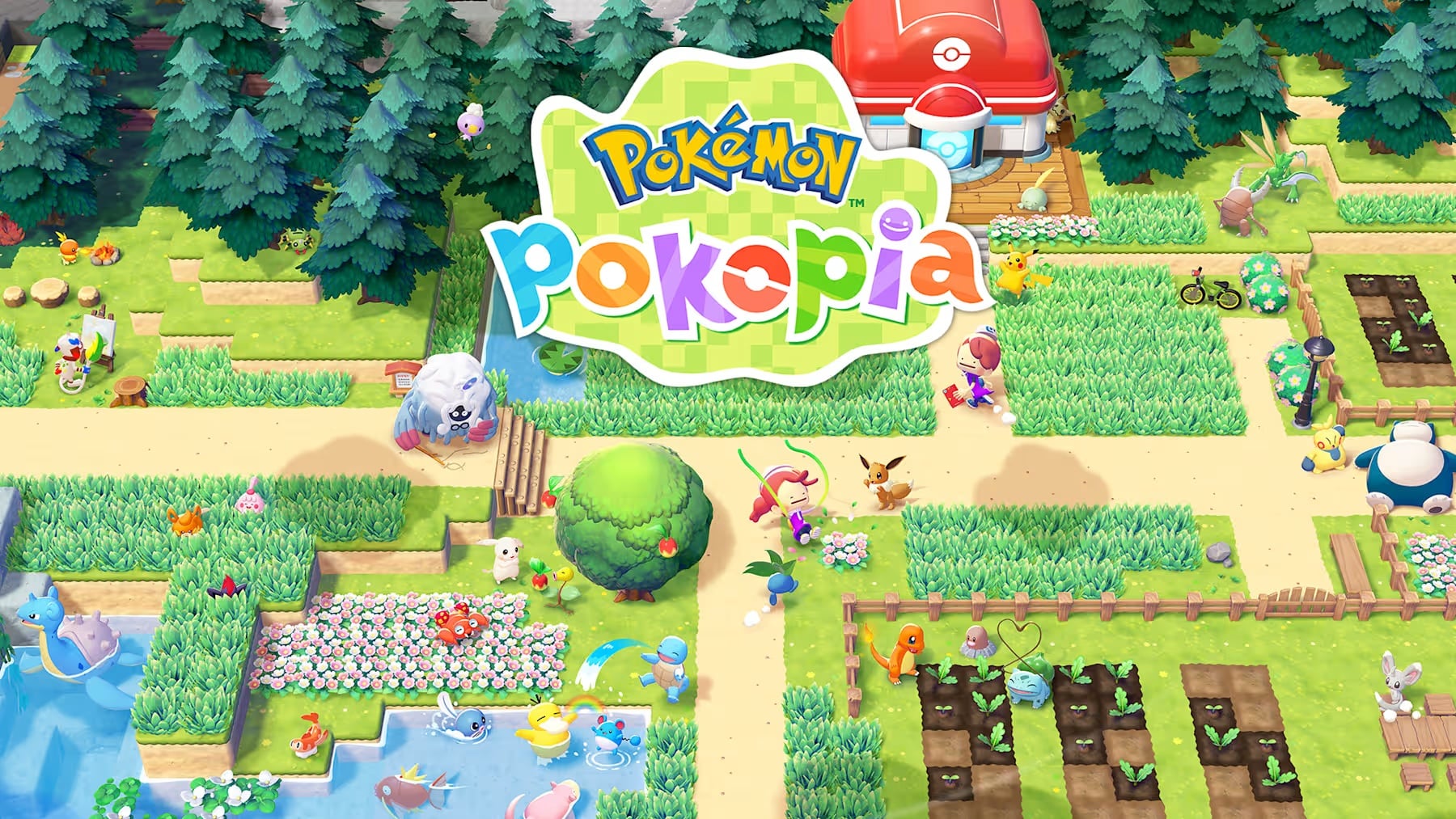
Pokémon Pokopia is a spin-off based on the popular franchise that tries to do something new. In the past, we have seen spin-offs focused on dungeon crawling, RPGs, fighting games, or general adventure games, but Pokémon Pokopia takes a different approach. It blends the charm of the Pokémon franchise with the appeal of games like Animal Crossing and Minecraft to create a lively world where humans no longer exist. Instead, Pokémon have taken their place, with the main character being a Ditto that has morphed into a human form.
The story is simple. You play as a Ditto that has taken the humanoid form of its missing trainer, and your goal is to help transform a ruined version of the Kanto region into a place that is safe for the Pokémon that survived after humans disappeared. The game begins in Fuchsia City, where Ditto, with help from Tangrowth, learns how to befriend other Pokémon while working to create a better environment for them. The narrative also builds a sense of mystery around how this world was destroyed and what exactly happened. These answers are slowly revealed through logs, notes, and other forms of environmental storytelling that explain more about the world’s past.

Pokémon Pokopia features several regions to explore and puts a strong focus on Ditto’s ability to shapeshift. Over the course of the main story, which lasts more than 40 hours, Ditto can copy the abilities of other Pokémon and use them to help rebuild and sustain the world. While the game keeps a casual and kid-friendly tone, the darker side of its history is revealed through bits of lore scattered throughout the environment.
The gameplay loop in Pokémon Pokopia revolves around building, crafting items, forming friendships with other Pokémon, fulfilling their requests, gathering resources, and learning new abilities. It is a simple loop, but it quickly becomes addictive. The main appeal comes from the Pokémon ecosystem, which has been used in a clever way to create a gameplay experience that is different from other games in the same genre. Abilities like Water Gun, Leafage, Rock Smash, and Cut are learned gradually. Traversal also improves over time, with abilities like Surf and Fly opening up new areas to explore. As more locations are unlocked, additional tasks become available, and more Pokémon can be captured, with even more content opening up after the credits roll.

One of the more unique aspects of the game is its 24-hour clock, which syncs with the real world. This also affects the Pokémon appearance schedule, giving the game a more dynamic feel. Pokémon can help with gathering resources as well as handling small tasks, since each one has its own specialty. Charmander, one of the first Pokémon you get in the game, can light wood on fire, while Scyther can chop wood. The game also supports mouse controls, though I mostly treated them as optional. The basic control scheme is simple enough that I never felt the need to switch to mouse mode. Still, using the mouse can make certain tasks quicker and allows for more precise building.
The game not only supports single player, but also includes a multiplayer mode. This mode allows up to four players to explore the world and build together in a dedicated sandbox area. Its main appeal will likely be for players who enjoy the sandbox side of the experience, but I was more interested in focusing on the single-player content. Every Pokémon in the game has a set of quests to offer, and there are also various challenges to complete. Some of these challenges are fairly simple, such as finding certain items or completing a task a set number of times, but finishing them unlocks additional rewards.

One aspect of the game that deserves a lot of praise is the soundtrack. It draws inspiration from the Kanto region and classic Pokémon melodies, striking the right balance between nostalgia and a more modern sound. The game also has strong replay value, with a large amount of content available before the end of the story and additional unlocks that appear afterward. After completing the main story, the game essentially turns into a sandbox where players have full freedom to build however they like. A major motivation will be finding every Pokémon in the game, as the Pokédex includes a large number of entries, including several rare ones. The multiplayer mode also adds to the replay value, making the entry price feel worthwhile. Even for those who are not Pokémon fans, it still works well as a charming social simulation with a Minecraft-style sandbox world and Animal Crossing-style quests and tasks.
While the visuals are not exactly impressive by Switch 2 standards, they are still cute and capture the charm of the world well. Ditto appears as an adorable take on the human Pokémon trainer, while the other Pokémon are modeled nicely. The art style feels closer to something like Pokémon Snap rather than the recent mainline games. I also appreciate that the developers stuck to their target of 60 FPS performance, which helps the controls feel smoother and makes the gameplay more enjoyable.

Overall, I would easily rank it as one of the best Pokémon spin-offs since the Pokémon Legends series. I am definitely interested in seeing this series continue in the future. Now that the core gameplay formula has been established, it should be easier to build on it in future entries. Much like how Square Enix approached Dragon Quest Builders and later released a sequel, Nintendo could continue developing more Pokopia games. Considering the strong success of this release, that would not be surprising.
Pokémon Pokopia Game Information
- Price: $69.99
- Publisher: Nintendo
- Developer: Koei Tecmo/Game Freak
- Platform: Switch 2 (Reviewed)
- Disclaimer: A review code was given by the publisher