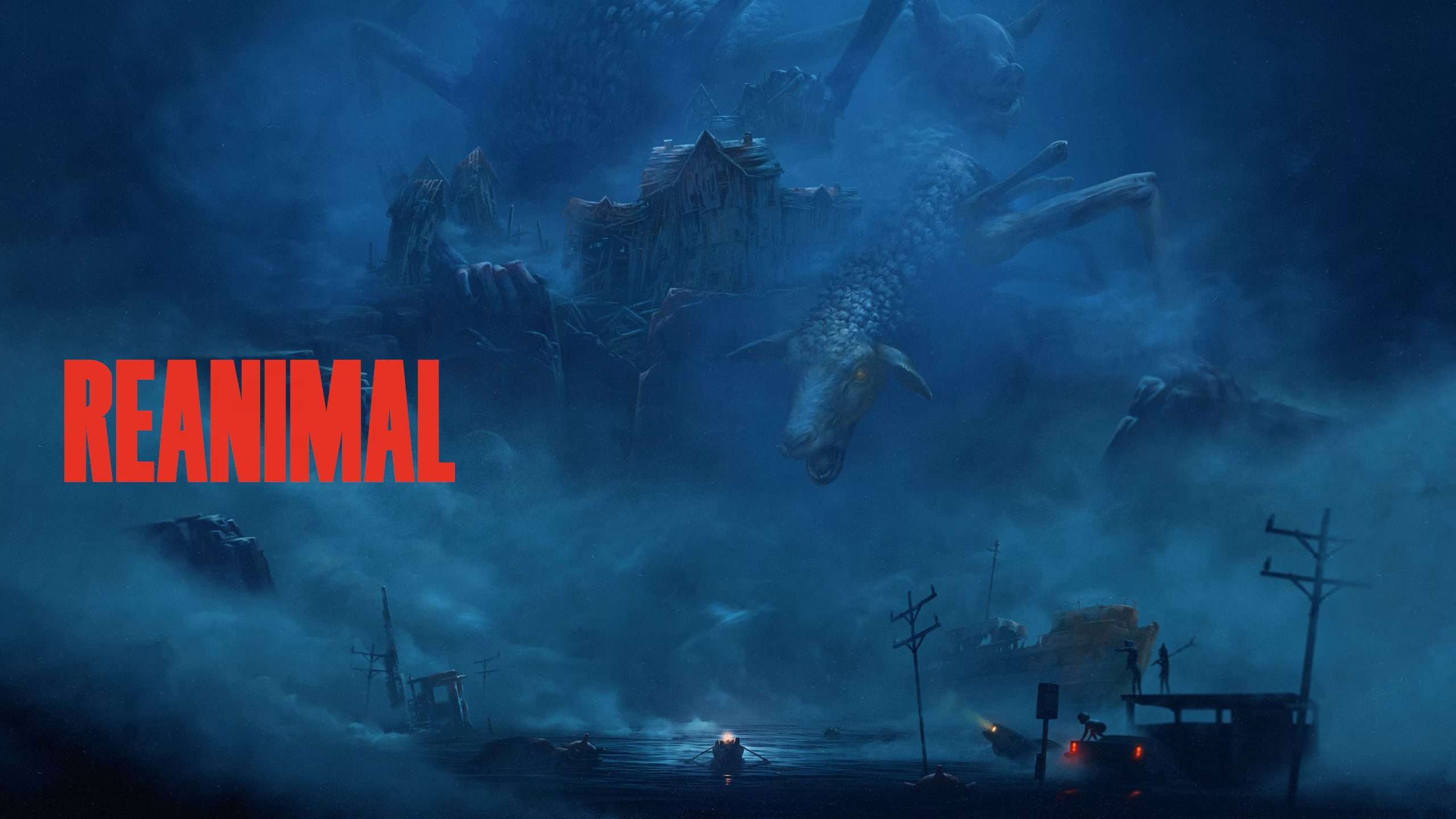
Tarsier Studios need no introduction. They previously worked on the Little Nightmares IP, creating two critically acclaimed games set in a unique and terrifying world. After they left the series behind, its future felt uncertain. While Little Nightmares 3 was good overall, it lacked the soul of the earlier games. Reanimal is their attempt to create a brand new IP of their own, and they have absolutely nailed it on their first try.
Reanimal follows two orphan siblings, a boy and a girl. The story is never explained clearly or directly, but that has always been a trademark of games like Little Nightmares. Instead, visual details and background elements give you a sense of the world and its inhabitants. In Reanimal, you begin by controlling the boy in a small boat as he moves through the darkness. He soon finds his sister, and the two join hands as they make their way to Warton Island, the main setting of the game. There is no spoken dialogue. The environment tells the story, and the quiet interactions between the boy and girl, while intentionally vague, help shape their personalities.

The siblings set out to find their missing friends, though how and why they disappeared is never explained. The island serves as the backdrop, telling its own story through its unsettling inhabitants as the boy and girl struggle to survive its horrors. The locations are varied and filled with twisted creatures, deadly traps, and puzzles. The game carries a mature and somber tone, with a strong focus on trauma and how everyone experiences and deals with it.
The gameplay in Reanimal is very similar to Little Nightmares, to the point that if someone saw both games, they might think they are the same. It is a survival horror-focused adventure with a dynamic camera perspective. Most of the gameplay revolves around interacting with the environment, looking for key elements, and solving small puzzles. The controls are simple, with one button used for interaction or combat, along with light platforming for movement. There are also plenty of stealth sections and chase sequences, which are typical for this kind of game. I did enjoy the short moments where the game tried something different, such as driving a vehicle or steering a boat.

The main new addition here is co-op, which I really appreciate. Tarsier Studios made a strong move by including local offline co-op, and it greatly improves the game’s replay value. The game is structured around boss encounters, and most of them follow a similar pattern. Even so, the creativity behind each boss and their design remains impressive. The game is not completely linear either, as there are branching paths that can lead to secrets. In terms of difficulty, the checkpoint system helps reduce frustration during exploration and boss fights. One thing I did not like was the lack of big, memorable moments, along with the overall lower number of boss encounters.
When it comes to replay value, co-op definitely helps. There is a friends pass, but no cross-platform play. This means that if you want to play with someone on a different platform, it is not supported right now. The friends pass allows anyone who does not own a copy of the game to play with someone who does, similar to what Hazelight has done with games like It Takes Two and Split Fiction.

The game is not very long and can be finished in under eight hours. Still, it is enjoyable to replay after completing it, as it gives you a chance to see the world from a different perspective and notice moments you may have missed the first time. There are also secrets to uncover, including collectibles like masks. Since I found the world interesting, I felt motivated to explore every corner and learn more about it.
Reanimal also deserves credit for its soundtrack. It is impressive and creates an atmosphere that feels heavy and somber when it needs to. The developers use several smart audio techniques, such as directional sound, environmental effects, and long stretches of silence. These elements are used carefully to build tension, sometimes giving you a false sense of safety before the music suddenly rises and gets your heart racing.
The PC version of Reanimal runs very well and supports most modern features. It also performs reasonably well on the Steam Deck, though you should not expect a steady 60 FPS. The pacing feels faster, and the controls have been improved significantly. The strongest part of the game is arguably its art direction and environmental storytelling. However, if we focus strictly on the narrative, it does not end on a positive note.

The puzzles feel overused and fairly easy. At times, they come across as small obstacles rather than meaningful challenges. While the atmosphere does a good job of keeping you engaged, there is still a sense of familiarity, as if you have seen and done this before. After nearly three games built around a similar theme and style of gameplay, it starts to feel a bit repetitive. I would not say I dislike it, but co-op alone may not be enough to push the formula forward. Even so, I am still looking forward to whatever Tarsier Studios works on next. If you are a fan of their previous games, this is still a must-play.
Reanimal Game Information
- Price: $39.99
- Publisher: THQ Nordic
- Developer: Tarsier Studios
- Platform: PC (Reviewed)
- Disclaimer: A review code was given by the publisher