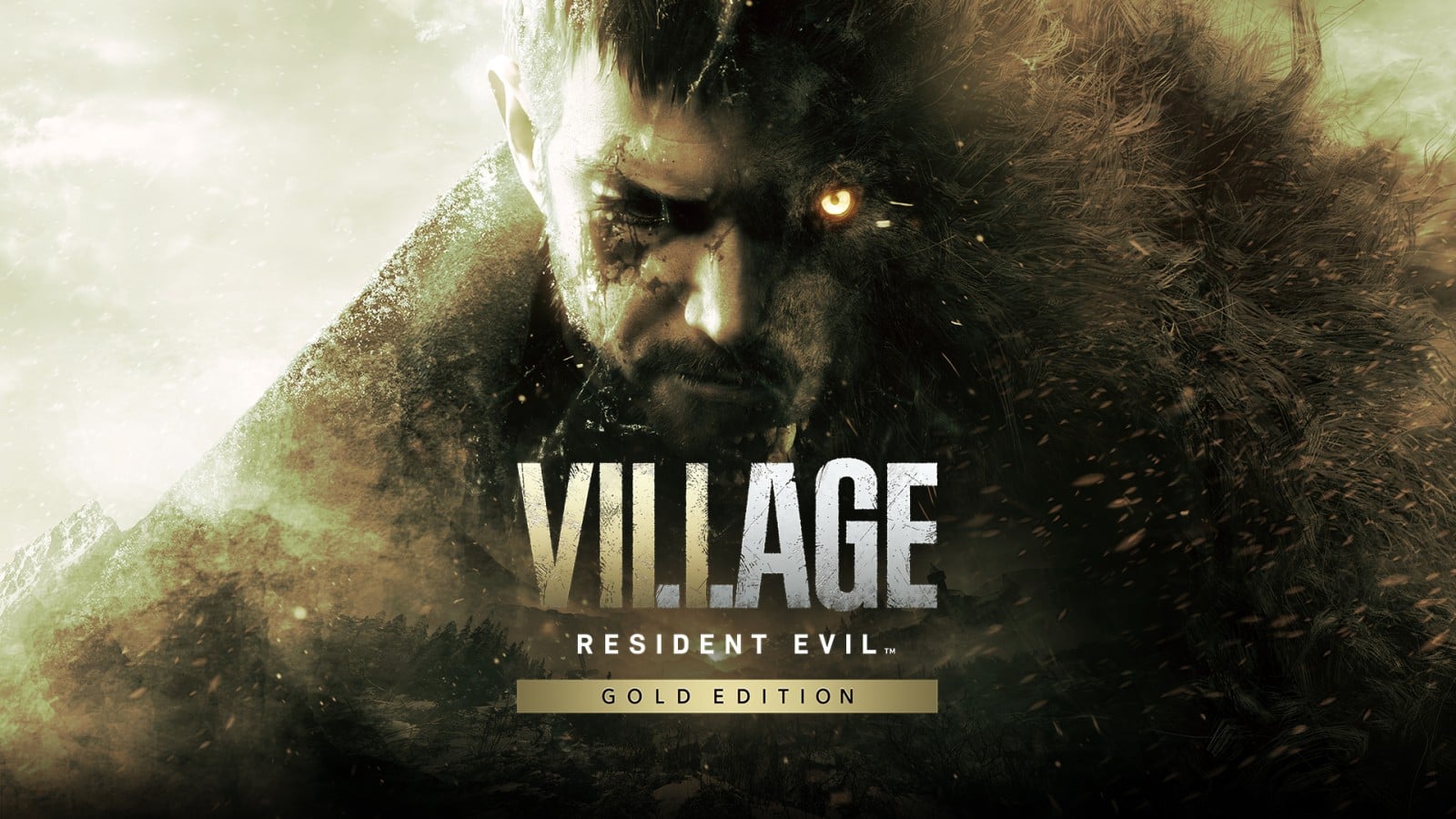
Resident Evil Village is the second game in the Ethan Winters saga and concludes the story of the family. It was originally released in 2021 and later received an expansion called Shadows of Rose, along with the addition of a third-person mode as part of the Gold Edition. The Nintendo Switch 2 port of Resident Evil Village Gold Edition includes all of the post-launch DLC for the game, including the third-person mode, the Shadows of Rose expansion, and more.
The story continues a few years after the events of Resident Evil 7. The opening shows Ethan Winters living a peaceful life with his wife, Mia, and their daughter, Rose. That peace does not last long. Their home is suddenly under attack by a mysterious armed force, Rose is abducted, and Ethan is left in a snow-covered landscape surrounded by a village, mountains, and a large castle. The opening sequence clearly draws inspiration from Resident Evil 4, right down to the hostile villagers who begin attacking Ethan as soon as he enters the village. Unlike the Las Plagas or traditional zombies, however, the threat here has a more supernatural angle, with werewolves, vampires, and other creatures playing a major role, continuing a theme introduced in the previous game.

Ethan soon discovers that this place is ruled by four powerful lords, all serving under a figure known as Mother Miranda. The story explores the mystery behind these lords and slowly reveals a larger truth connected to Ethan’s daughter Rose, as well as his wife Mia. The events in the game are directly tied to Resident Evil 7, offering a clearer understanding of what happened in the previous game while also expanding the story in this one. Because of this, playing Resident Evil 7 beforehand is important to fully appreciate the narrative, even though the game does include a short recap for those who missed it. That said, the overall structure of the story feels somewhat weaker when compared to the two recent entries, Requiem and Resident Evil 7.
The gameplay in Resident Evil Village is more action-focused than its predecessor. Even the opening sequence in the village requires players to run and gun through a swarm of enemies, which feels reminiscent of the original Resident Evil 4. The game builds on the same foundation as Resident Evil 7 but adds more options this time around. One of the biggest additions is the ability to play in either first-person or third-person mode, which offers two very different experiences. My first playthrough on the PS5 was in first-person mode since the third-person option was not available at the time. With the Switch 2 version, however, I decided to start the game in third-person mode from the beginning.

While the third-person mode makes exploration feel better, there are definitely moments, such as the opening walk through the snow, where the experience seems better suited for first-person. Despite these small limitations, I still enjoyed playing in third person because it offers a fresh perspective on the game. Although Ethan Winters himself is not a particularly memorable character, it was still interesting to explore the game while seeing his character model on screen.
Speaking of the visuals and performance on the Switch 2, I thought the game looked great overall. It is understandable that features like ray tracing are missing and that reflections take a hit on the Switch 2, but the game still looks impressive. I played it on both a 4K TV and in handheld mode. The one area that does suffer a bit is performance, especially in handheld mode. Unlike Resident Evil 7, the game does not always maintain a steady 60 FPS. Frame drops are more noticeable on a 4K TV due to the lack of VRR support. This was clear right after stepping into the opening village, although some sections of the game do manage to run at a solid 60 FPS.

While Resident Evil Village loses some of the charm of a classic survival horror experience, it offers more reasons to explore and look around because of its metroidvania-style structure. The game encourages players to revisit areas as they find new items that can unlock different paths. This design approach was later expanded in the sequel, Requiem, but Village laid the groundwork for it. It is not exactly an open-world game, but rather a set of connected areas built around a larger central hub.

Resident Evil Village feels like a solid port for the Switch 2. While it struggles a bit with performance in certain gameplay sections, it still scales well to the hardware. Visually, it looks better than many PC handheld versions, and the performance holds up reasonably well on a big screen where the game renders at 4K using upscaling. Overall, I was satisfied with how Capcom handled this new Resident Evil lineup on the Switch 2. If the company continues to bring more games to the platform, it would be great to see the older Resident Evil remakes make their way there as well.
Resident Evil Village Gold Edition Game Information
- Price: $49.99
- Publisher: Capcom
- Developer: Capcom
- Platform: Switch 2 (Reviewed)
- Disclaimer: A review code was given by the publisher