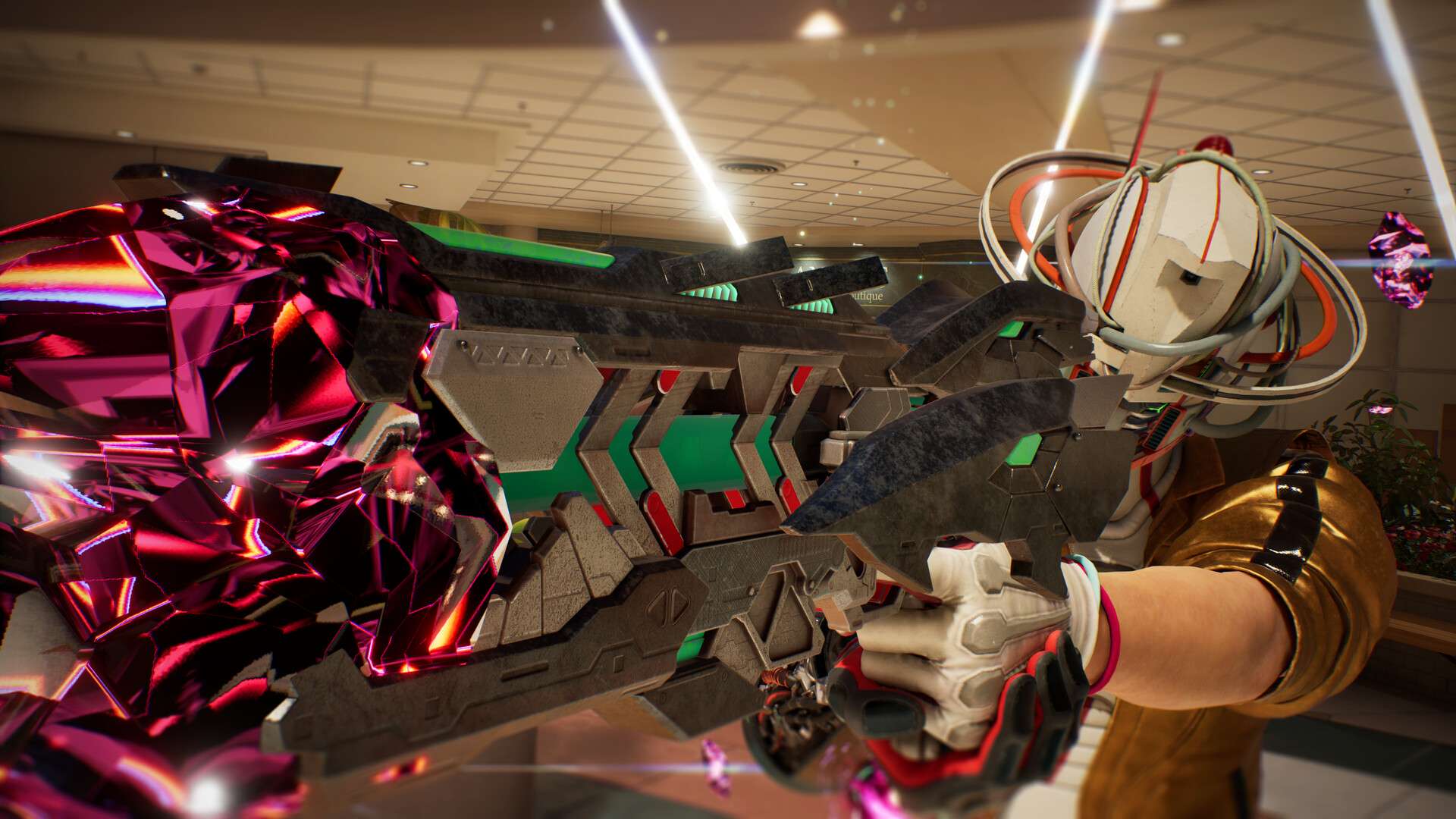
Digital Foundry has published a detailed technical analysis of Romeo Is a Dead Man, examining resolution, frame rate, and overall performance across PlayStation 5, Xbox Series X and S, and PC. The game, developed and published by Grasshopper Manufacture, launched on February 11, 2026, for PS5, Xbox Series consoles, and Windows PC via Steam.
Across consoles, all versions except Xbox Series S offer both Performance and Quality modes. However, Quality mode is broadly discouraged. While it marginally improves image quality and extends Lumen global illumination further into the distance with slightly reduced noise, the performance cost is considerable. Frame rate instability becomes far more apparent, and the visual improvements are subtle during active gameplay, particularly in combat. Performance mode is therefore the recommended option on supported systems.

On PlayStation 5 Pro, Performance mode renders at a resolution slightly above 1080p before upscaling to 4K. The user interface is displayed at full 4K, preserving clarity in menus and HUD elements. The system generally targets 60 FPS, though demanding scenes, such as the mall area with multiple light sources and enemies, cause drops into the 50 to 60 FPS range.
The base PlayStation 5 operates at a lower dynamic resolution range, typically between 720p and 1080p in Performance mode. Frame rate instability is more frequent, with even early boss encounters dipping below 60 FPS. Heavier scenes that strain CPU resources can result in sustained drops rather than brief fluctuations.
Xbox Series X delivers the most stable overall frame rate, holding close to 60 FPS even in demanding scenarios. This stability appears linked to more aggressive dynamic resolution scaling, resulting in slightly noisier image quality compared to PlayStation versions. Xbox Series S does not provide selectable modes and presents the weakest performance, with low internal resolution and frequent frame rate drops.
Xbox consoles also benefit from robust system-level VRR support, improving frame pacing when enabled at 120 Hz. PlayStation 5 VRR implementation is more limited, making dips more noticeable. On PC, performance varies widely depending on settings, with demanding particle effects and unconventional resolution scaling impacting stability. Neither PC nor console versions currently support HDR.