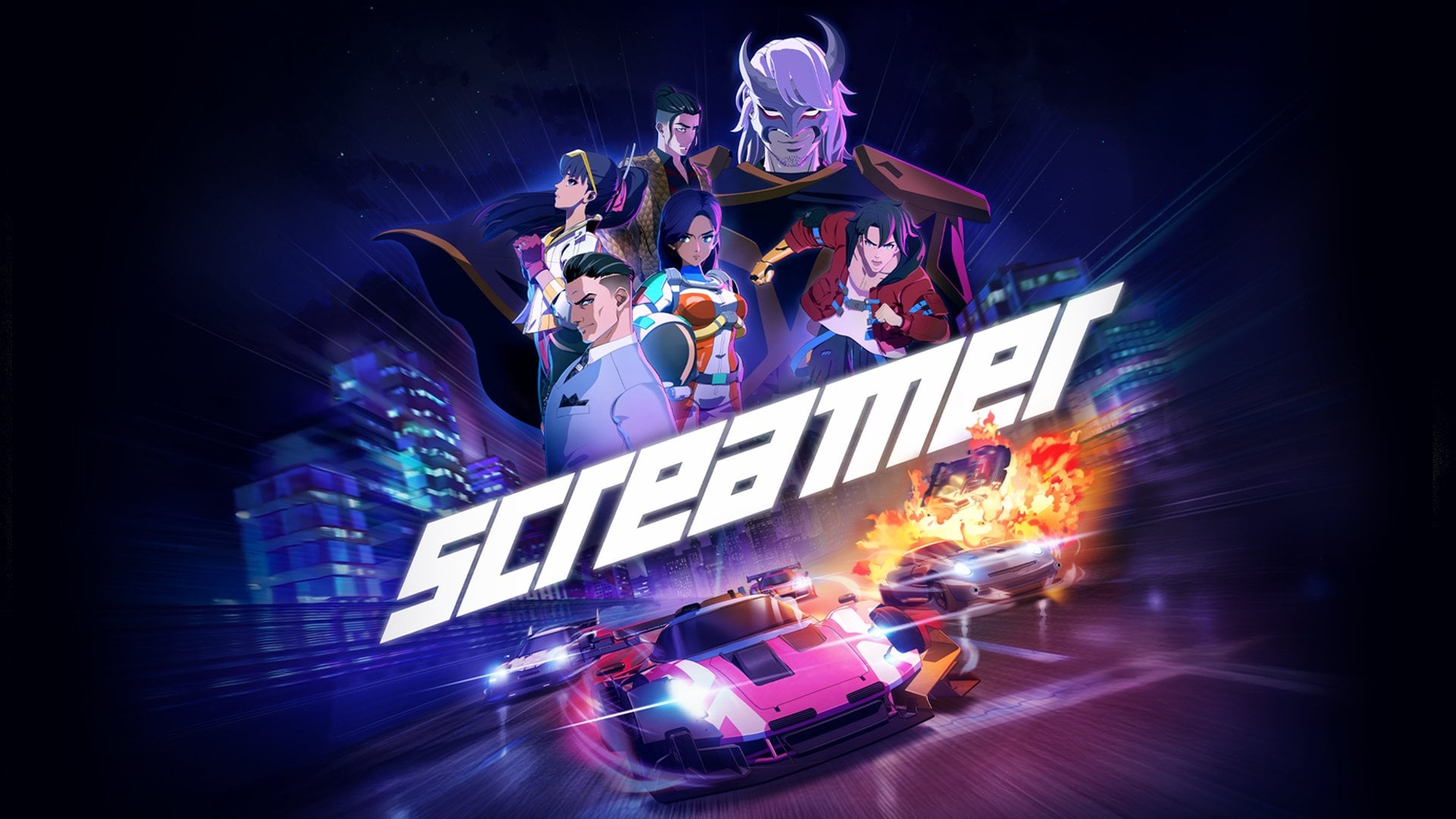
Screamer is an arcade racing game with a very stylish presentation, featuring impressive cinematics and a strong focus on a story mode, which is rare these days. The game is centered on arcade racing, but its anime-inspired style gives it an edge over its competitors. The studio partnered with the Japanese animation house Polygon Pictures to deliver feature-rich cutscenes, with detailed character models and vibrant colors.
The main appeal is its story mode, which revolves around a high-stakes tournament that is part of an illegal global racing circuit. The competitors range from pop stars and government contractors to even a dog that can drive a car. This mix of realism and science fiction gives Screamer a unique identity. The story focuses not just on winning the tournament, but also on the personal motivations of each participant, from revenge to corporate interests, making the stakes feel high for everyone involved.

One major issue with the story mode is its inconsistent pacing and writing. The game starts abruptly and expects players to immediately care about the characters. It would have benefited from more gradual character development and a smoother introduction to the story. It also tries to do too much at once, which makes some events hard to follow.
There are more than five different teams in the game, each with a diverse cast of characters. Some of them even speak in their native language, which is a nice touch. The story shifts between intense races and melodrama, which can make it hard to connect with the characters at times. However, if you stick with it, this style of storytelling does start to grow on you. The presentation is worth noting, with a mix of well-animated scenes that are reminiscent of Dispatch, along with character portraits and text box conversations. It gives the game a structural edge over most arcade racers.

Having played a lot of racing games, I was not expecting this kind of control scheme in Screamer. The game uses traditional triggers for acceleration and braking, but the drift mechanic is tied to the analog stick along with steering, making it feel closer to a twin stick setup. Drifting takes some time to get used to, but the boost system adds a lot to the racing. Boost can be built up by timing gear shifts, and once you reach peak speed, you can fill a meter that leads to a significant speed boost. This timed shift boost becomes important later in the story, where finishing first, rather than just placing in the top three, is often required. There are also offensive abilities that unlock when you maintain boost during a race, helping you get ahead of rivals.
The game uses several dynamic systems to keep players engaged during races. Overdrive is one of them, offering strong rewards but with significant risks. The controls are very tight and require precise timing to handle some of the more difficult tracks. There are multiple difficulty options, including a basic story mode for those less familiar with racing games. Even on the middle setting, the difficulty can feel uneven at times. The AI can also come across as overly aggressive and sometimes unfair, turning races into a constant struggle to stay in first place.

One aspect that stands out is how each character has a unique car and a set of abilities. These cars can be customized, though mostly on the cosmetic side. Characters are unlocked gradually as you progress through the story, and there is a good variety to choose from. Beyond the main mode, the game also includes online multiplayer as well as offline options, with local co-op support included.
Sound design in Screamer is excellent, delivering an immersive experience with engine sounds and audio cues that blend well with the on-screen action. The audio syncs nicely with what is happening during races, and the track music adds a lot of energy. That said, there is some repetition in the sound design. While it feels exciting at first, by the end, you will likely have heard many of the same elements multiple times, which reduces its impact.

I was not really following Screamer at first, but its anime style and story-driven arcade mode caught my attention. The game also supports local split-screen racing, which is rare now and adds a lot to its replay value. Overall, it stands out as one of the better arcade racing experiences on current-generation consoles, even if the story mode has its issues and the gameplay demands a fair amount of skill to fully enjoy.
Screamer Game Information
- Price: $59.99
- Publisher: Milestone S.r.l.
- Developer: Milestone S.r.l.
- Platform: PS5 (Reviewed)
- Disclaimer: A review code was given by the publisher