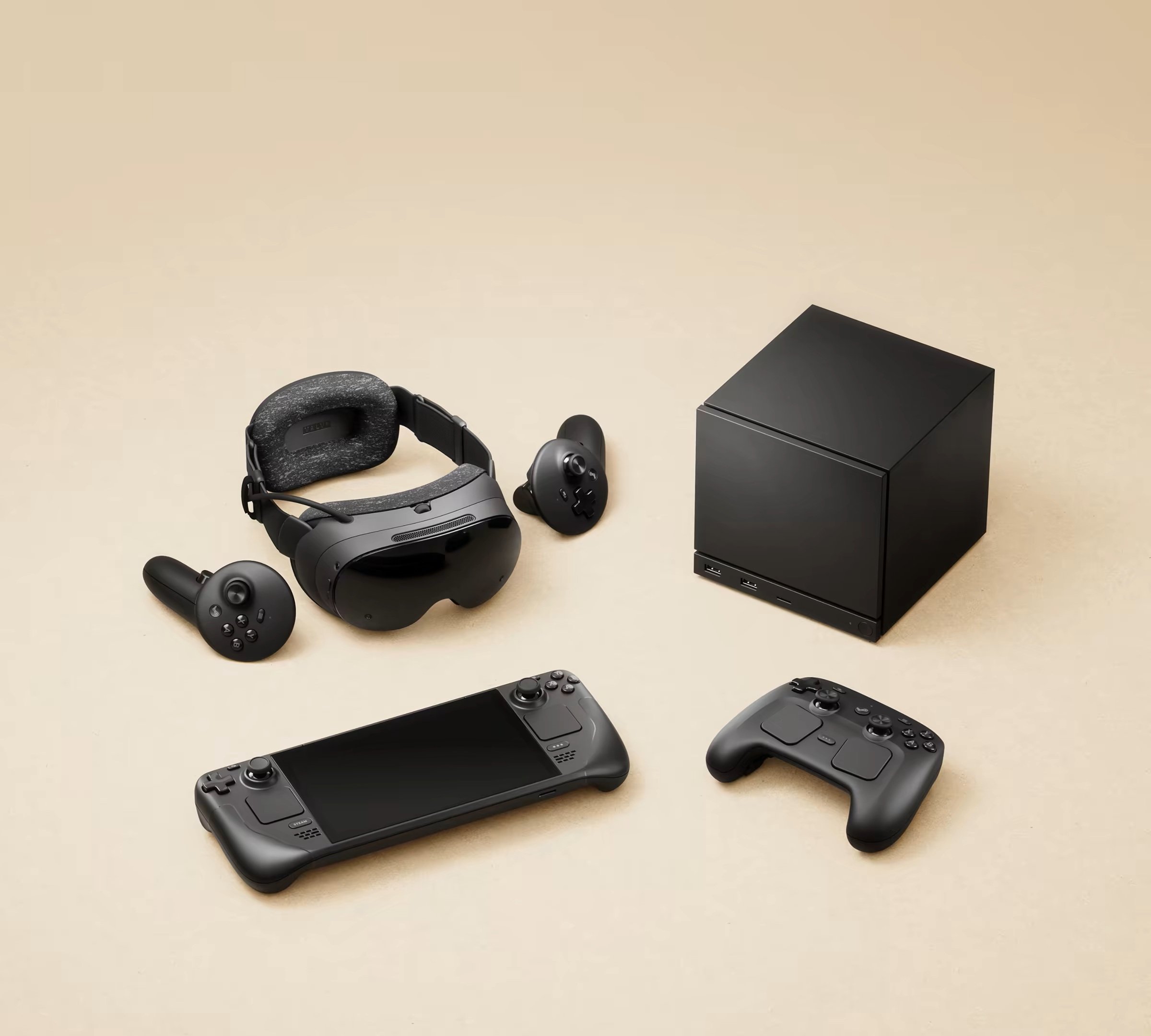
Valve has suggested that its upcoming hardware lineup, including the Steam Machine, Steam Frame headset, and a redesigned Steam Controller, may see delays as the company continues finalizing its launch plans.
The update appeared in a message published on Steam as part of the company’s Year in Review discussion. While reflecting on its long-term hardware ambitions, Valve acknowledged that supply issues have created complications for the new devices.
“We shared recently that there have been challenges with memory and storage shortages, but we will be shipping all three products this year. More updates will be shared as we finalize our plans.”
However, Valve also indicated that timelines remain uncertain as the company continues refining its hardware ecosystem, suggesting that the products could arrive in 2026 depending on how development and manufacturing progress.

The hardware lineup announced by Valve includes three major devices designed to expand PC gaming into the living room and virtual reality spaces.
The redesigned Steam Controller has been built specifically for Steam and is intended to support the full library of PC titles available through the platform. The controller features capacitive touch thumbsticks, dual trackpads, high definition rumble, and Grip Sense gyro aiming. Each unit also includes a wireless connectivity puck that doubles as a charging station.
Valve also outlined plans for a new Steam Machine system designed to function as a powerful living room PC. According to the company, the device will deliver more than six times the performance of the Steam Deck while maintaining a compact and quiet form factor.
“Steam Machine has more than six times the horsepower of Steam Deck, packed into sleek, quiet form factor. And because it’s a PC from Valve, it’s totally open. Install other game stores and launchers, other operating systems, use it for productivity software apps, or just launch straight into Steam and start playing.”
The third device in the lineup is Steam Frame, a wireless virtual reality headset equipped with its own processing power. Valve described the headset as capable of operating independently while also connecting to a Steam Machine or other PCs for additional functionality.
“A lightweight and comfortable headset with its own processing power, the Steam Frame is an amazing wireless VR experience.”
Valve also emphasized the role of its software ecosystem in supporting the hardware lineup. Over the past several years, the company has expanded Proton compatibility to allow thousands of Windows games to run on Linux and SteamOS without additional work from developers.
The company noted that improvements to SteamOS, SteamVR, and Proton throughout 2025 have helped build the foundation for its upcoming hardware. Valve also highlighted that SteamOS recently became the default operating system on third-party hardware when Lenovo launched the Legion Go S handheld with the platform installed.
Valve originally began pursuing the concept of bringing PC gaming to the living room in 2013 with the first generation Steam Machines and Steam Controller. The upcoming hardware represents another attempt to deliver a unified living room PC gaming experience built around Steam’s ecosystem.