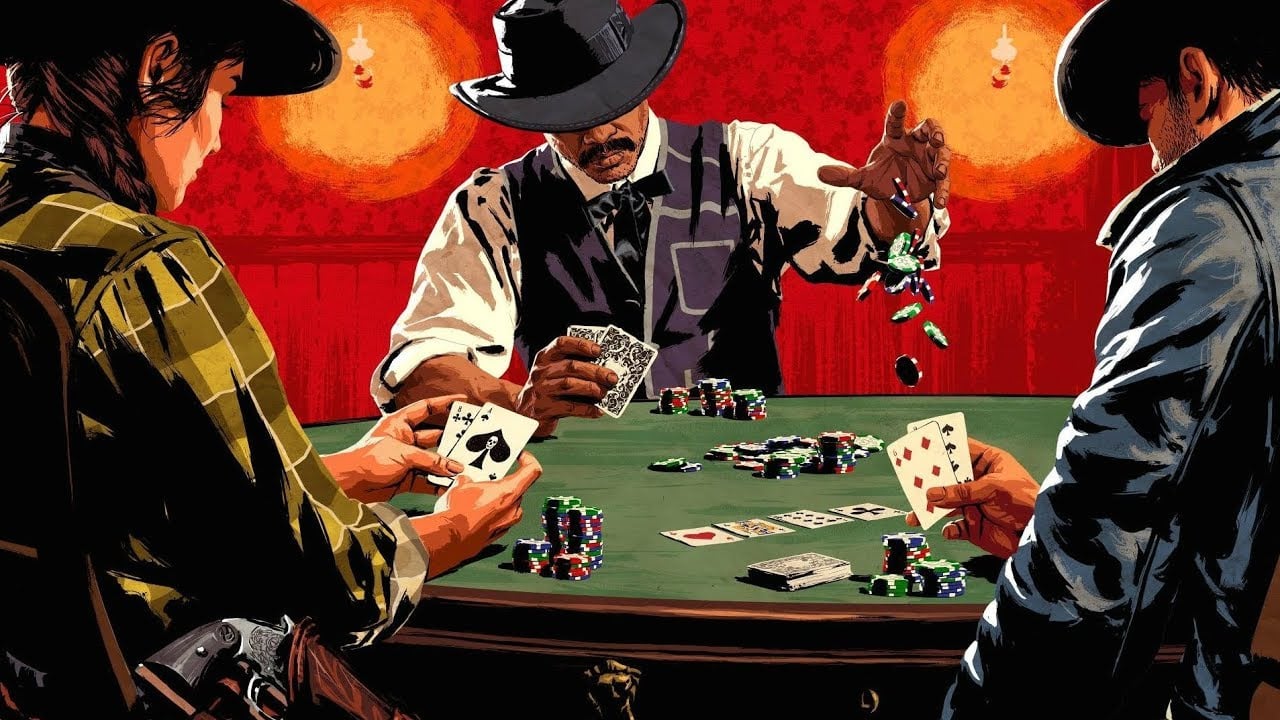
Video games have greatly improved compared to the time when side activities were considered meaningless. It isn’t necessary to consider them as distractions anymore. In Triple-A development, studios invest an immeasurable amount of resources in constructing entirely fleshed-out simulations in their open worlds.
Games like Red Dead Redemption 2 and Grand Theft Auto V offer more than just shooting and driving. They now also feature complex and engaging gambling ecosystems. The players often have to spend hours not paying attention to the main plots of the games. They want to play a card game at a virtual table. These games are almost as complex as standalone simulators. This has transformed amateur players into scholars of probability and strategy without their acknowledgement.
Moving From Virtual Chips to Real Tables
It takes a significant shift in mindset to transition from playing against an AI player to playing against real people. After learning the ropes of playing Texas Hold’em on a small-stakes virtual game, many gamers see the next logical step. They view it as pitting those skills against real-world players in real-time.
As they make this transition, savvy players usually look to poker bonuses to build a bankroll. Without the pressure of high buy-ins, they’re effectively creating a training mode for real-money play. Gamers replicate this by grinding low-level items before moving on to high-level raids. They know what they’re getting into before investing resources.

Red Dead Redemption 2 Offers Unmatched Realism
Red Dead Redemption 2 was the game that introduced a fresh approach to in-game gambling by Rockstar Games. The developers have introduced an entirely automated version of No-Limit Texas Hold’em, which operates with remarkable precision. The game features motion-capture dealing animations, and its distinct NPC behavior sets it apart. The player must read the physical tells, not just betting patterns.
Through buy-ins that increase progressively in various locations, players learn how to manage their bankroll and develop patience. This detailed mini-game necessitates the players to pay closer attention to the dynamics of the table. They know that poker is as much about people as it’s about cards.
The Diamond Casino Update Changed GTA Online Forever
In July 2019, the update to the Diamond Casino and Resort became a turning point for Grand Theft Auto Online. This growth positions table games, including Three Card Poker and Blackjack, at the forefront of active players’ achievements. The game experienced a significant increase in activity after the update, hitting massive new heights. It soared past 360,000 simultaneous players on apps like Steam.

This gaming download made old-school casino games familiar to an age group aged 18 to 35. Some had never casually visited a physical casino. The social aspect of eating with friends at a virtual table creates a relaxing atmosphere that facilitates understanding the betting process and hand ranks.
The Witcher 3 Teaches Crucial Strategic Thinking
While The Witcher 3: Wild Hunt doesn’t require playing poker, the character plays a fictional game known as Gwent. It plays a significant role in teaching players how to play cards within the game. The success of Gwent on its own proves that players who play more action-centered games are demanding richer and more intellectual mechanics.
The game educates players about resource management and strategy. These are required to win a round in a war. These lessons apply immediately to Omaha or Hold ’em, where knowing when to save is crucial. It isn’t always significantly less than taking down small pots. CD Projekt Red demonstrated that a card game is equally gripping as killing monsters. This is true when strategy is involved.
Gamers Benefit From Risk-Free Learning Environments
Video games offer a unique sandbox environment where loss doesn’t carry any financial implications in the real world. Losing an amount of virtual money, like $5,000 in a virtual environment, prevents real-world loss. It spares the user but damages their ego. The safety net provides players with the opportunity to make offensive errors and test daring strategies that they might not execute in real-life scenarios.
Games like Watch Dogs or Far Cry 3 feature interfaces displaying hand ranks. They’re showing payouts on screen as a dynamic tutorial. This visual reinforcement conditions the brain to identify winning hands and automatically compute odds.
A New Demographic Enters the Card Game Scene
These huge titles have brought a new wave of players to the conventional card game industry. Poker is no longer considered a type of entertainment exclusive to the older generations. Demographics are changing as Gen Z and Millennials take the felt.
Such players have a different approach to the game, as they calculate game mechanics and seek statistical advantages. They perceive the system of random number generation as a solvable puzzle. Having been exposed to video game logic, they’re analytically strong players and don’t rely solely on intuition.
Folding the Controller for the Felt
It’s hard to distinguish a serious game player from a highly trained card player. That’s because video games have become more advanced. The abilities developed on a console include risk assessment, pattern recognition, and resource management. It’s possible to transfer them to the card game world.
Video games may be the most effective recruitment tool in the traditional card game industry. Their graphics and artificial intelligence continue to improve. The subsequent World Series of Poker winner may claim training in a Wild West saloon. They might also claim that it’s a high-rise in Los Santos.