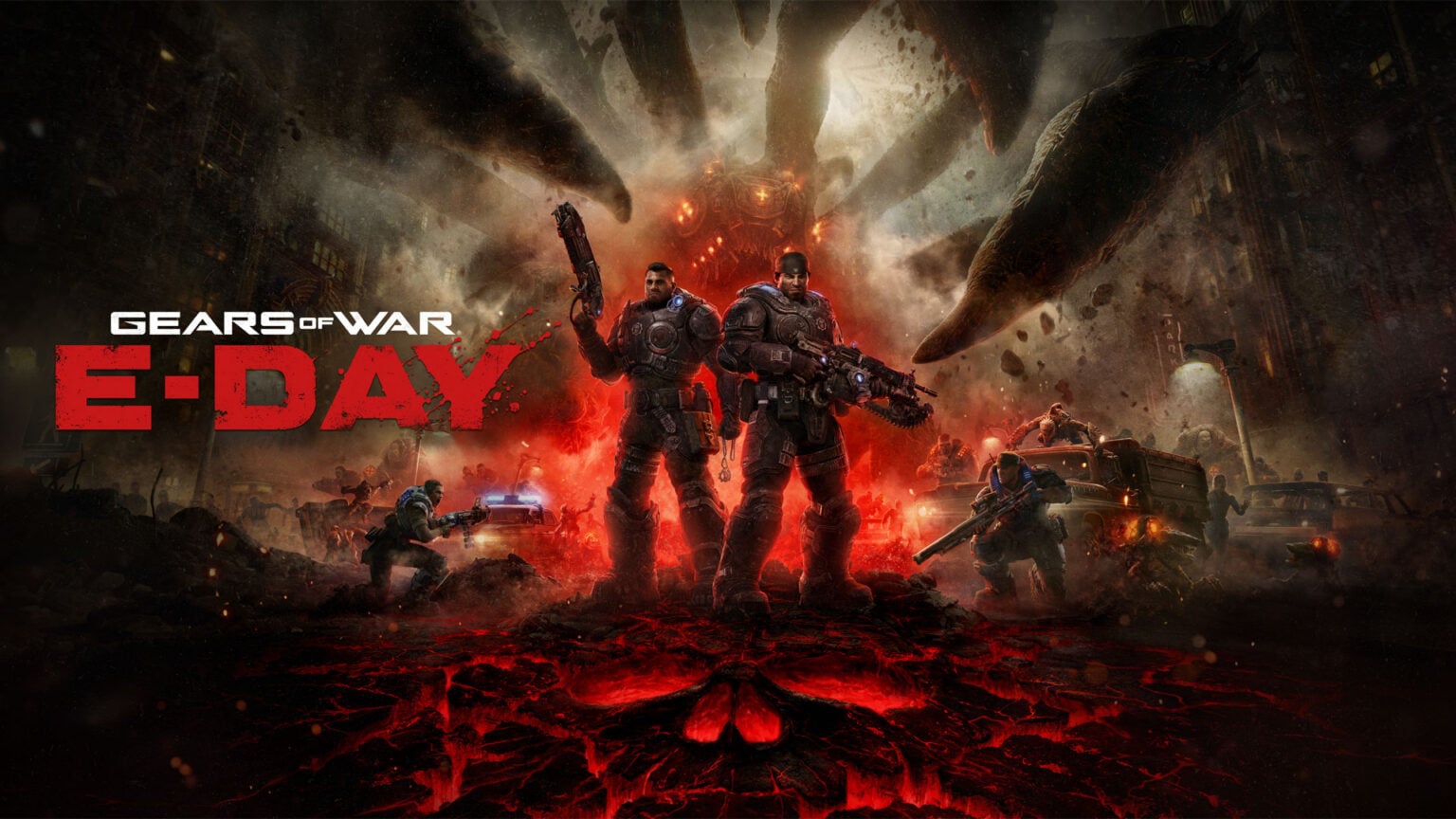
Gears of War E-Day pushes Unreal Engine 5 hard across Xbox consoles and PC, but Digital Foundry’s analysis shows a substantial gap between the Xbox Series X and Series S versions. Microsoft’s entry-level console runs at considerably lower internal resolutions while making major cuts to lighting, reflections, foliage and other visual features, alongside more pronounced performance problems.
On Xbox Series X, Gears of War E-Day offers Performance, Balanced and Quality modes. Digital Foundry measured average internal resolutions of approximately 936p, 1000p and 1152p respectively, with all three modes using dynamic resolution and Unreal Engine’s Temporal Super Resolution to reconstruct the final image.
Performance mode targets 60 FPS and generally maintains that target in the game’s more linear sections. However, larger environments and fast traversal can produce frame-time spikes and occasional extended drops, which Digital Foundry attributed largely to CPU-related streaming and memory-management demands.
Using a 120Hz display with VRR can make these issues less noticeable. Balanced mode, which targets 40 FPS on 120Hz displays, provides a more consistent experience, while Quality mode targets 30 FPS and is generally the most stable option.
The three Series X modes also make different visual compromises. Quality mode uses Virtual Shadow Maps for the sun and enables full ray-traced reflections on translucent surfaces, while Performance mode uses MegaLights for the sun in most areas. Quality mode additionally retains strand-based hair for the main characters, which is removed in the other two modes.
The differences are considerably more substantial on Series S. Performance mode removes Lumen reflections entirely, reduces MegaLights quality and eliminates muzzle-flash lighting. Global illumination and foliage density are also reduced, among other changes.
Digital Foundry measured average internal resolutions of approximately 576p in Performance mode, 648p in Balanced mode and 792p in Quality mode. Temporal Super Resolution helps reconstruct these lower-resolution images, but the underlying resolution remains significantly below that of the Series X version.
Performance is also a greater concern on Series S. Performance mode can suffer frequent frame-rate drops and stutters, with some frame-time spikes exceeding 100 milliseconds. The problems are particularly apparent in larger and more open environments, while enclosed areas generally perform better.
VRR and 120Hz output can again help reduce the perceived impact of these issues, although they do not eliminate the underlying performance problems. Balanced mode targets 40 FPS and is more predictable in smaller areas, but larger city environments can still produce dips and stutter. Quality mode can also suffer substantial drops on a fixed 60Hz display in demanding sections.
Memory is one of the key technical challenges for Series S. The console has less than two-thirds of the RAM available on Series X, creating additional difficulties for a game built around large environments and advanced Unreal Engine 5 technologies.
The Coalition worked with Microsoft’s Xbox platform and Advanced Technology teams on a system that uses the Series S NVMe SSD as an extension of the available memory hierarchy. Memory-mapped files allow several gigabytes of data to be mapped to the SSD, effectively providing roughly another gigabyte of available memory for the game.
The PC version can push the technology further on compatible hardware. Nvidia’s Mega Geometry technology allows ray tracing to use substantially more detailed geometry, with Digital Foundry noting that it can increase the complexity of ray-traced geometry by roughly 50 to 100 times while matching the detail of the game’s Nanite meshes.
Gears of War E-Day uses hardware Lumen across PC and Xbox consoles, with hardware ray tracing supporting its global illumination and reflection systems. MegaLights also allows thousands of shadow-casting lights to be rendered, while Nanite is used for character geometry through an experimental Nanite skinning implementation.
Digital Foundry’s testing was performed before the game’s Day One patch, meaning some smaller improvements could still arrive in the final release. However, the analysis demonstrates the technical cost of The Coalition’s Unreal Engine 5 ambitions, particularly on Xbox Series S.
Series X provides the stronger console experience, with three graphics modes and a generally solid 60 FPS target in much of the campaign. Series S, meanwhile, requires significant reductions in resolution and visual fidelity and encounters more noticeable performance problems in the game’s most demanding environments.