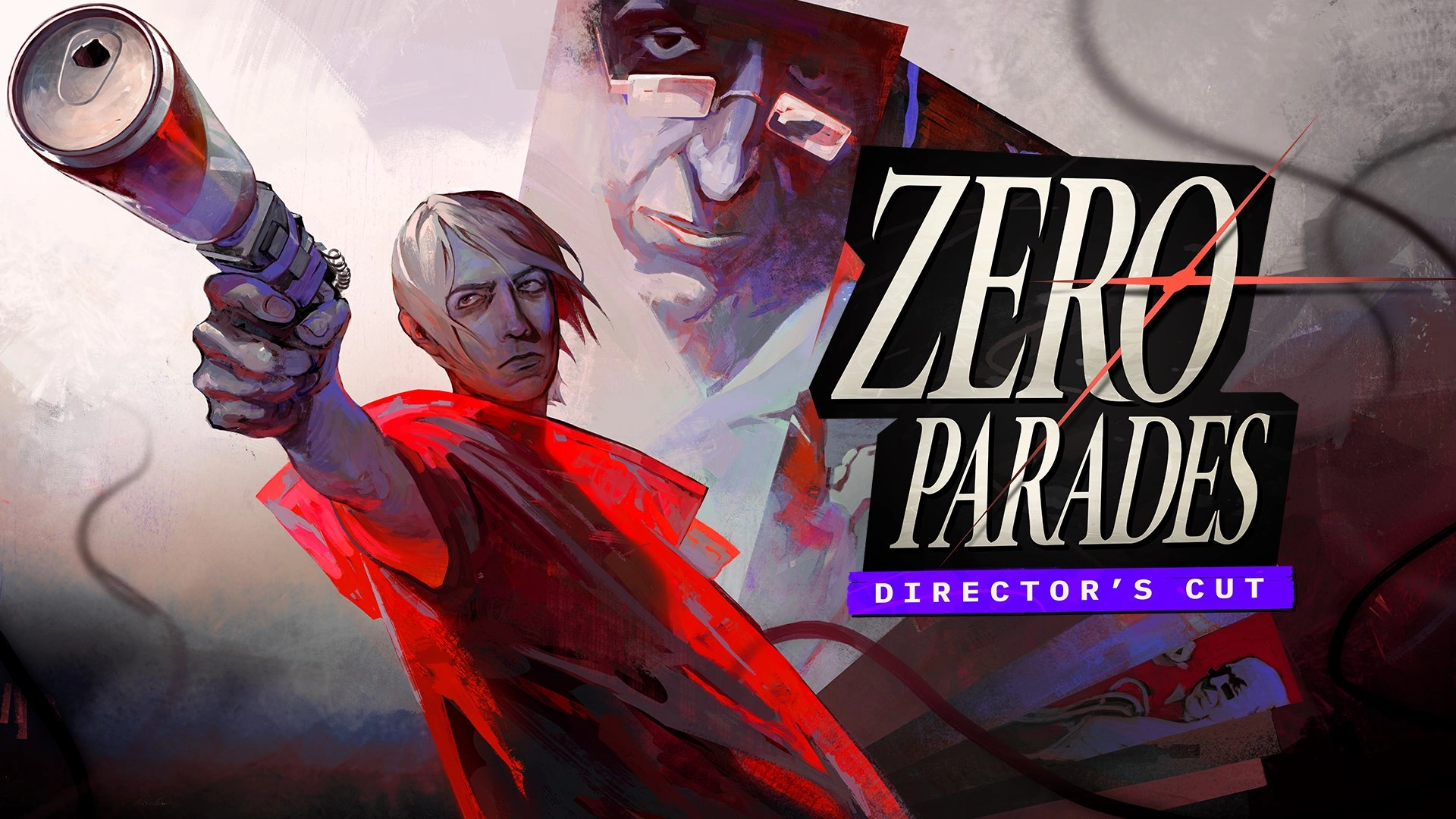
Following the success of Disco Elysium, ZA/UM had some considerable expectations to live up to with its next project. Inevitably, Zero Parades: For Dead Spies invites comparisons to its predecessor, sharing much of its narrative DNA, distinct art direction and dialogue-driven RPG mechanics. However, rather than simply attempting to recreate the magic of its previous work, ZA/UM delivers a psychological espionage thriller with its own identity. The Director’s Cut arrives on consoles with additional content, improvements to voice acting, and several quality-of-life enhancements.
Players assume the role of Hershel Wilk, better known by her codename Cascade, an intelligence operative whose prior mission ended in disaster. Her team disappeared; she was subsequently relegated to desk duty, and years later she finds herself reluctantly returning to the field. Sent back to Portofiro, the very city where everything went wrong, Cascade is tasked with investigating a mysterious situation that gradually develops into something considerably more complicated. What initially appears to be a straightforward assignment soon unfolds into an elaborate conspiracy involving political factions, corporate interests, ideological conflicts and covert operations.
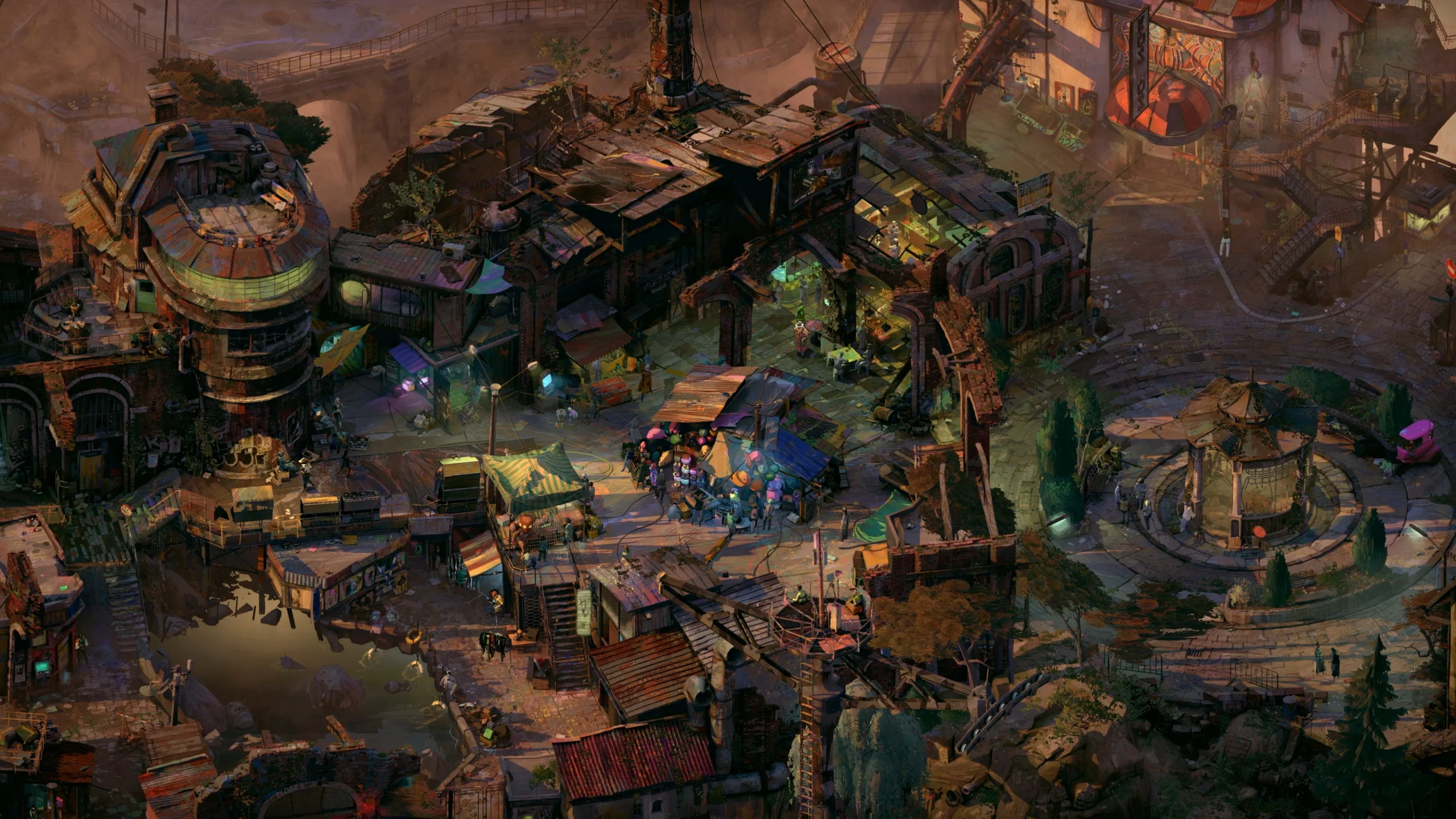
The story takes its time to get going, and the opening hours can feel somewhat overwhelming as players familiarize themselves with Portofiro, its inhabitants, and the various political forces shaping its future. As the investigation progresses, seemingly trivial conversations and discoveries gain greater significance, with information gathered hours earlier frequently opening entirely new avenues of investigation. As one would expect, the writing is one of Zero Parade’s greatest strengths, as the game is rich with memorable characters, sharp dialogue, and an abundance of philosophical observations. Its humor often provides unexpected moments of levity amid an otherwise melancholic atmosphere.
The narrative is made more interesting via its exploration of culture, identity and the influence of external powers over a society. Beneath its espionage framework lies a thoughtful examination of cultural homogenization, political manipulation, and the relationship between artistic expression and commercial interests. These themes are woven into the central conspiracy rather than presented as detached commentary, giving considerable depth to the investigation. Cascade’s personal struggles also provide an emotional foundation, turning what could have been a conventional spy thriller into a story about regret, relationships, and the possibility of redemption.
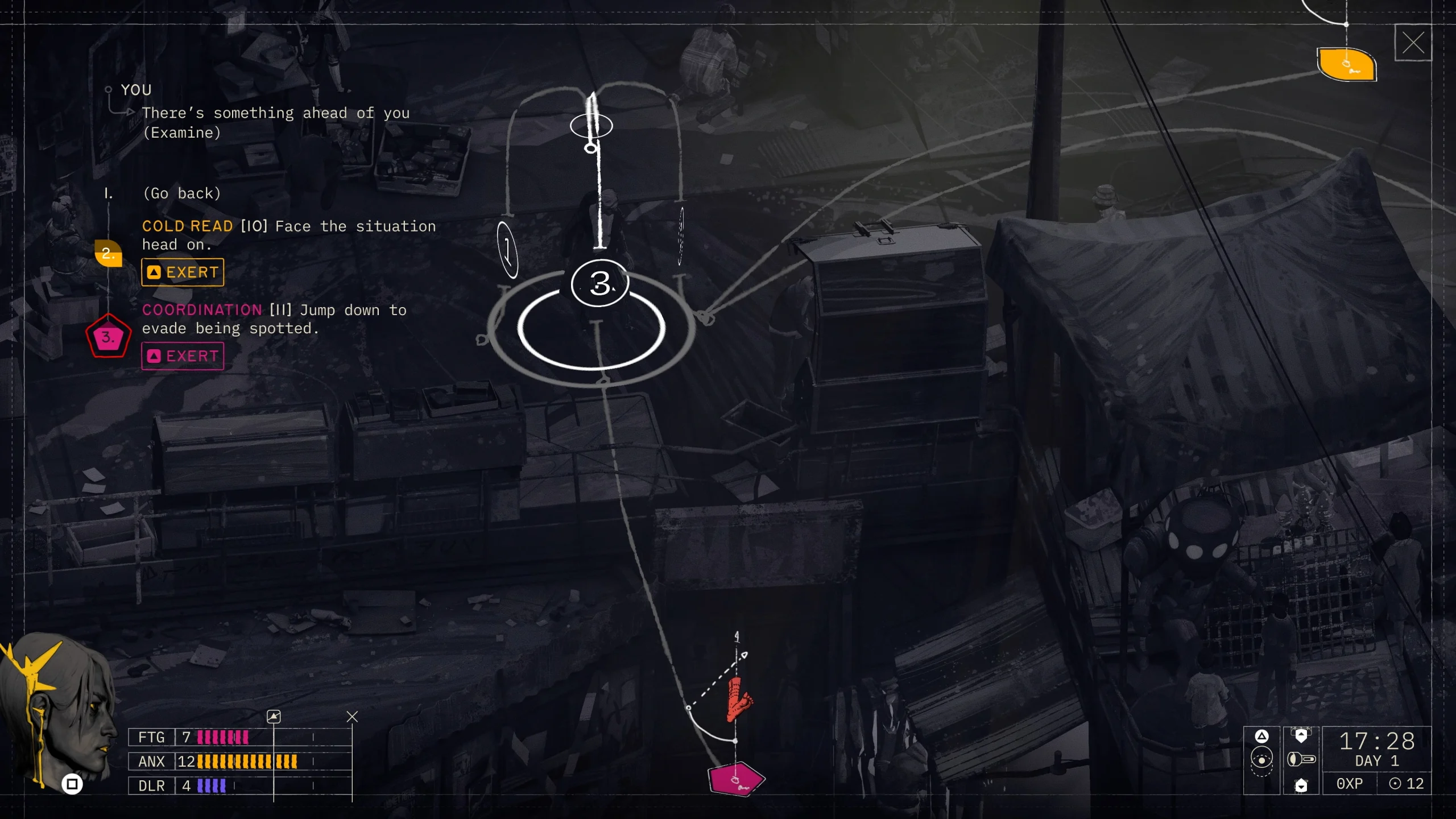
Gameplay follows the familiar isometric, dialogue-driven structure, with exploration, conversations and investigative work forming the backbone of the experience. Cascade possesses 15 skills divided into three categories, i.e., intellectual, psychological, and operational. They determine her ability to interpret situations, persuade individuals, uncover hidden information, and handle physical confrontations. Players can distribute skill points according to their preferred approach, allowing for plenty of flexibility in character development.
The dice-based skill-check system will instantly remind players of Disco Elysium. Each action comes with calculated success probabilities, and decisions frequently involve weighing the potential rewards against the consequences of failure. Zero Parades introduces an additional layer of complexity through 3 psychological and physical condition meters representing fatigue, anxiety, and delirium. As these deteriorate, Cascade becomes increasingly vulnerable, and reaching critical thresholds results in the permanent loss of a skill point. Players are therefore required to manage her condition using consumables, equipment, and rest.
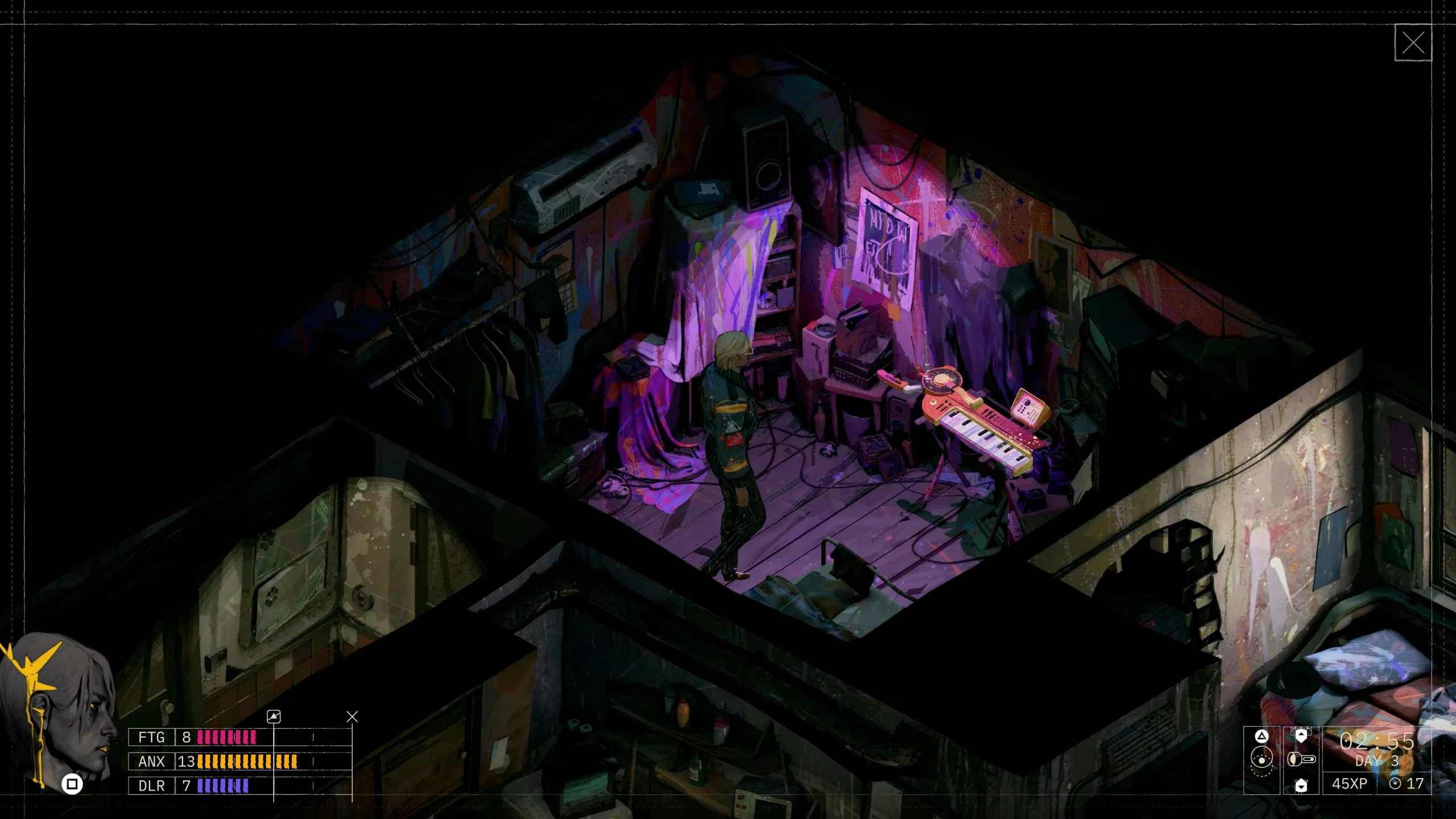
This system is conceptually excellent, reinforcing the vulnerability of a protagonist who is far from an invincible secret agent. Clothing and equipment can provide useful skill bonuses, while consumables help manage deteriorating conditions. Players can also deliberately compromise their mental or physical well-being to improve their chances of succeeding at particularly difficult skill checks. It creates an interesting balancing act, although managing these meters can occasionally feel more like an excessive chore than a meaningful narrative mechanic.
Another worthwhile feature is Conditioning, which allows Cascade to internalize different thought patterns as the story progresses. Similar to the Thought Cabinet in Disco Elysium, these provide specific advantages while imposing behavioral restrictions or temporary penalties when their conditions are violated. This creates interesting opportunities for role-playing, encouraging players to consider not only which abilities they wish to develop but also what kind of person Cascade is becoming.
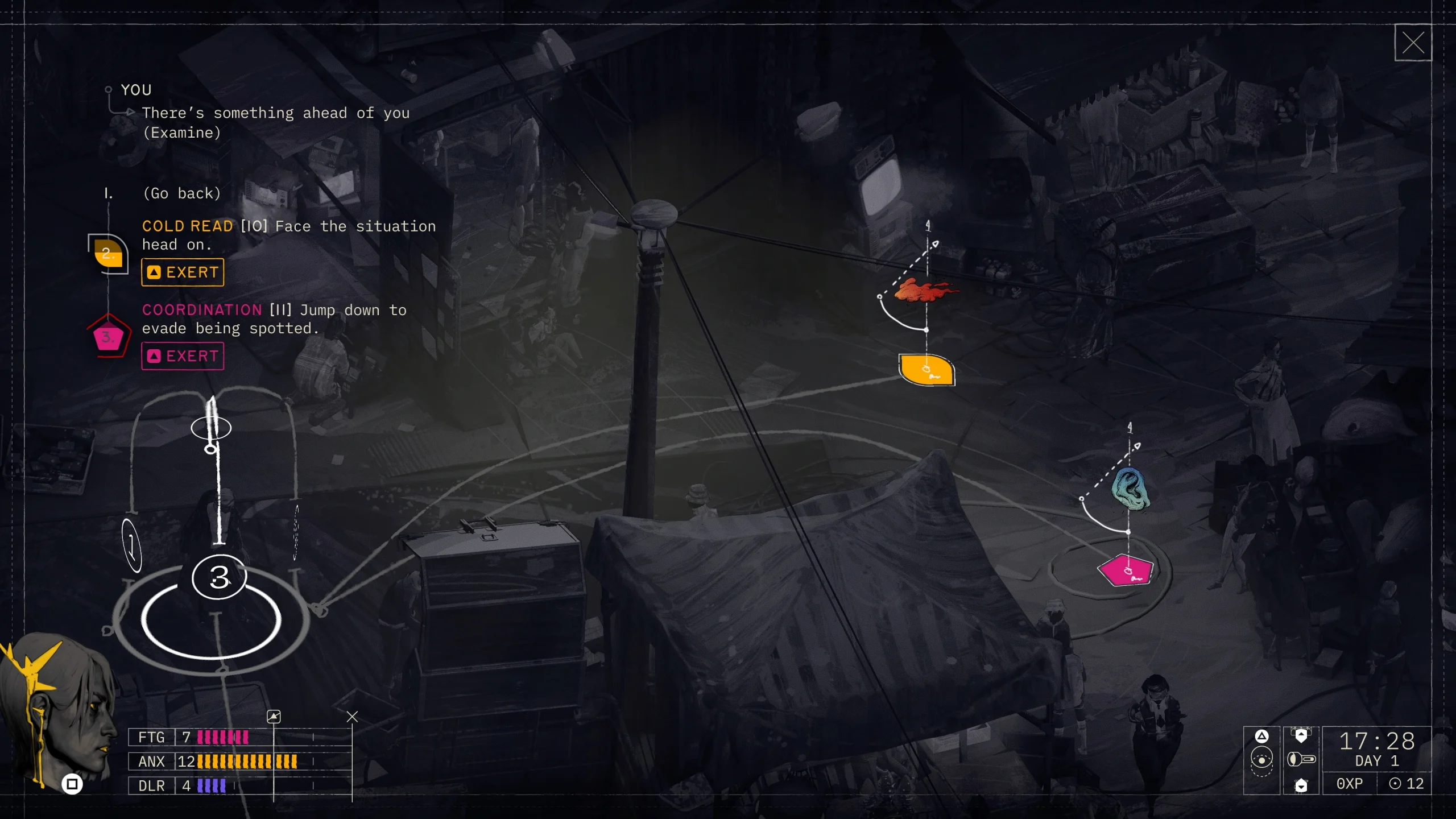
Dramatic Encounters add another welcome dimension to the gameplay. During highly tense situations, time effectively freezes, allowing players to examine different approaches before committing to an action. Whether confronting an opponent, attempting to talk their way out of danger, or choosing an alternative course of action, these relatively infrequent sequences introduce a welcome sense of tension.
The dice system can occasionally lead to frustration, however, as even seemingly favorable probabilities can produce disastrous results, sometimes undermining mindful consideration. While failure occasionally leads to amusing and memorable situations, it often means finding another way forward.
In terms of visuals, Zero Parades is brought to life through painterly environments, distorted character designs, prominent colors and architectural details that give Portofiro a distinct personality. Its expressionist aesthetic effectively communicates the psychological unease permeating the narrative. The soundtrack favors atmospheric compositions, distorted jazz and unsettling electronic music. Although generally more restrained than the visual presentation, the sound design is impactful during moments when Cascade’s mental state begins to deteriorate.
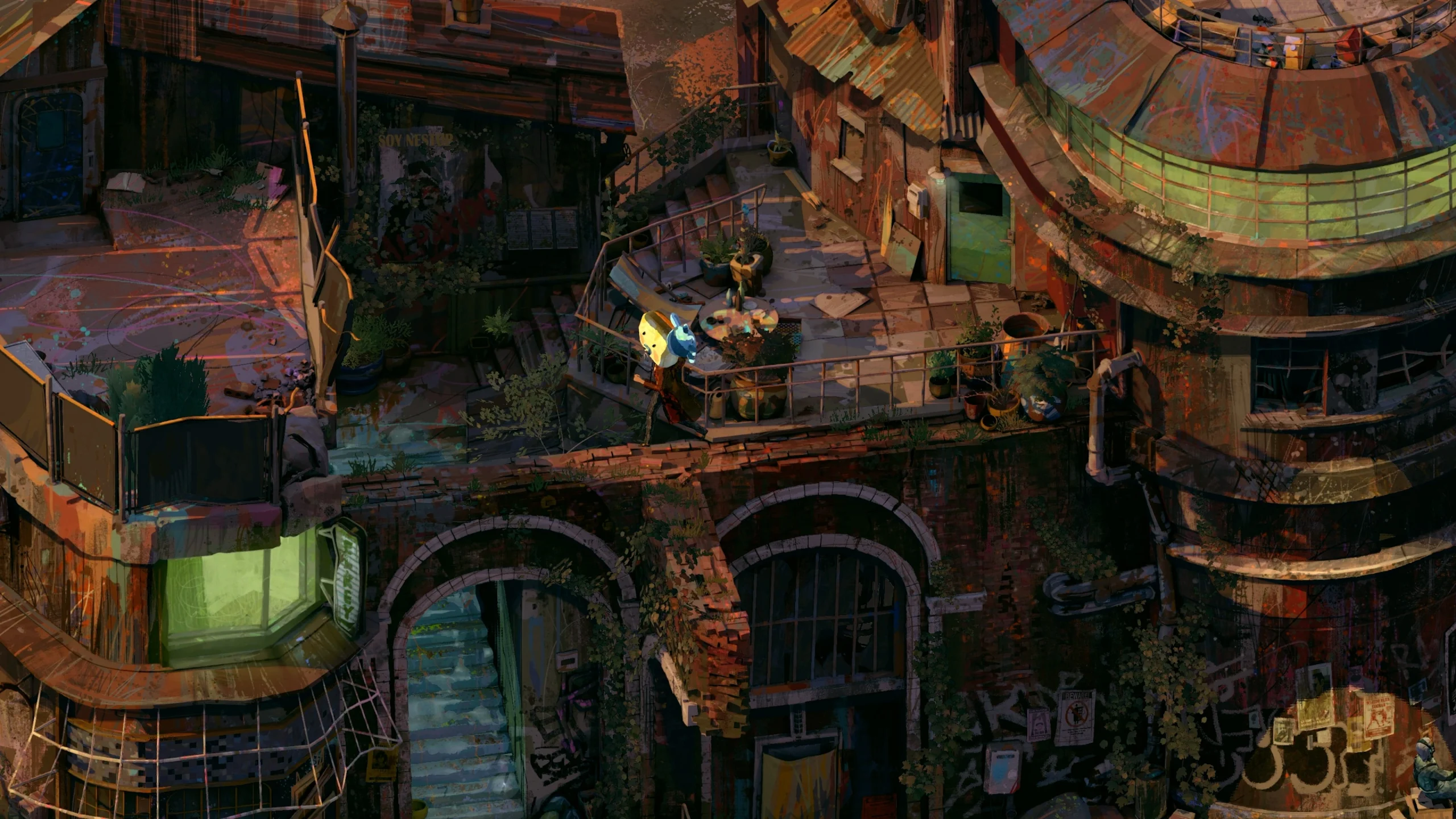
The Director’s Cut on PS5 is a technically stable experience, with improved accessibility, additional dialogue and narrative encounters, and refinements to the overall presentation. Voice-overs have also been overhauled, making conversations more consistent and coherent. However, exploring Portofiro and interacting with points of interest using the controller can occasionally feel awkward, as the interface seems better suited to a mouse cursor. That said, the DualSense’s adaptive triggers do offer some nice feedback when zooming the camera in and out.
Ultimately, Zero Parades: Director’s Cut is an ambitious, intelligent, and occasionally frustrating RPG that succeeds in establishing an identity of its own despite its unavoidable similarities to Disco Elysium. Its elaborate writing, fascinating world, unconventional protagonist, and thoughtful character-development systems make for a thoroughly engaging espionage adventure. Its slow opening, occasional narrative excesses, and unpredictable dice rolls hold it back to a degree, but there’s much to appreciate here.
Game Information
- Game Title: ZERO PARADES: Director’s Cut
- Price: $39.99
- Publisher: ZAUM STUDIO LIMITED
- Developer: ZA/UM
- Platform: PlayStation 5/Switch 2
- Review Code: Provided by the publisher