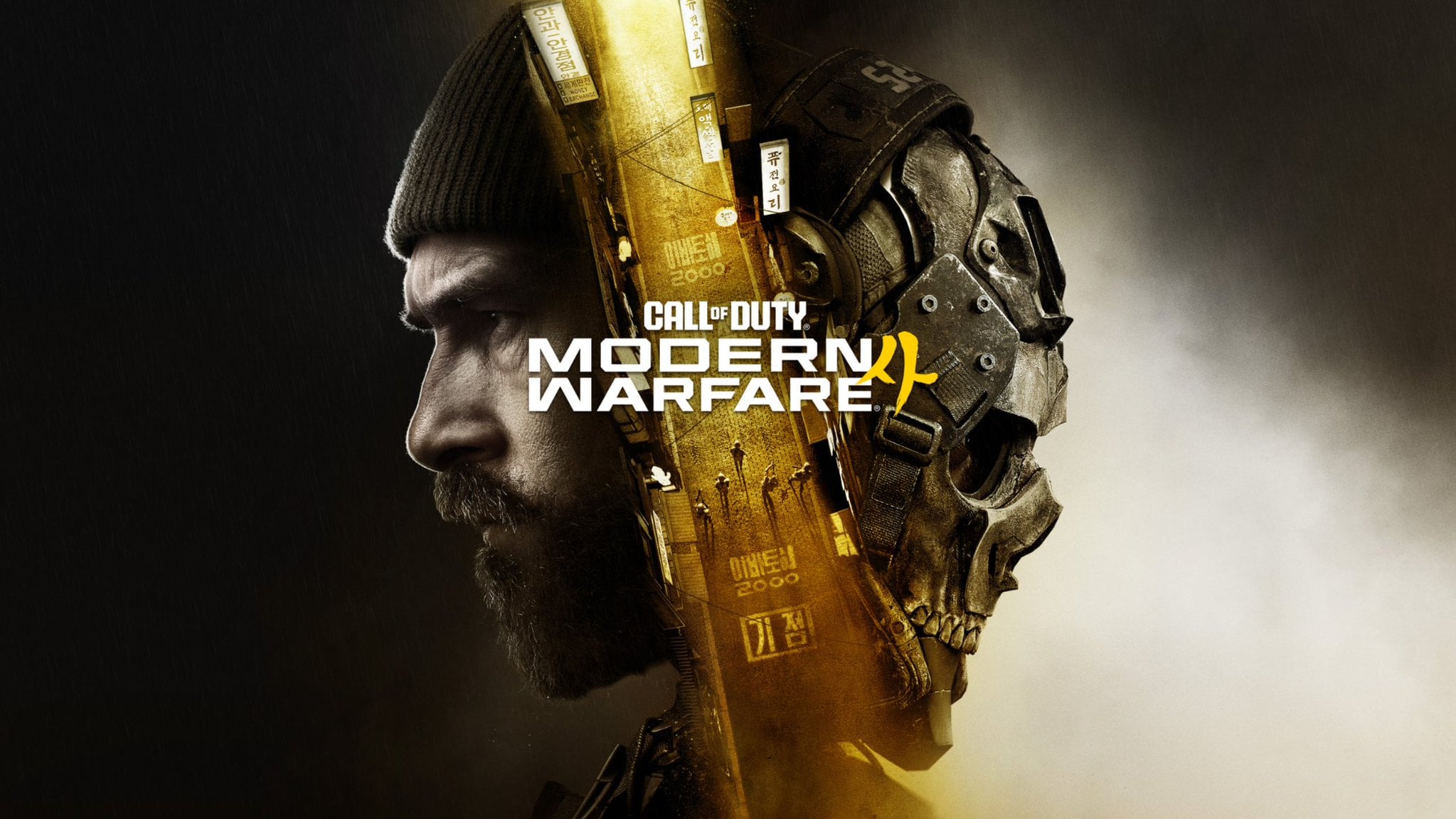
After a turbulent year, Call of Duty: Modern Warfare 4 feels like a course correction for Activision’s first-person shooter series, with developer Infinity Ward focusing on what the series does best, i.e., cinematic action, satisfying gunplay, and varied multiplayer experiences.
The campaign focuses on a North Korean invasion of South Korea, a conflict that escalates into a wider international crisis involving political conspiracies and a mysterious weapon. The story alternates between Private Park Hyun Jun and his squad of young South Korean soldiers caught in the fighting, and Captain Price, whose pursuit of revenge puts him on a collision course with Ghost, Gaz, and other familiar characters. These contrasting perspectives give the story a welcome sense of scale. The inexperienced Korean soldiers offer a fresh viewpoint, while Price’s increasingly questionable decisions introduce moral tension. Longtime fans will appreciate the continuing storylines, although the numerous characters and shifting timelines can make the wider conflict difficult to follow.
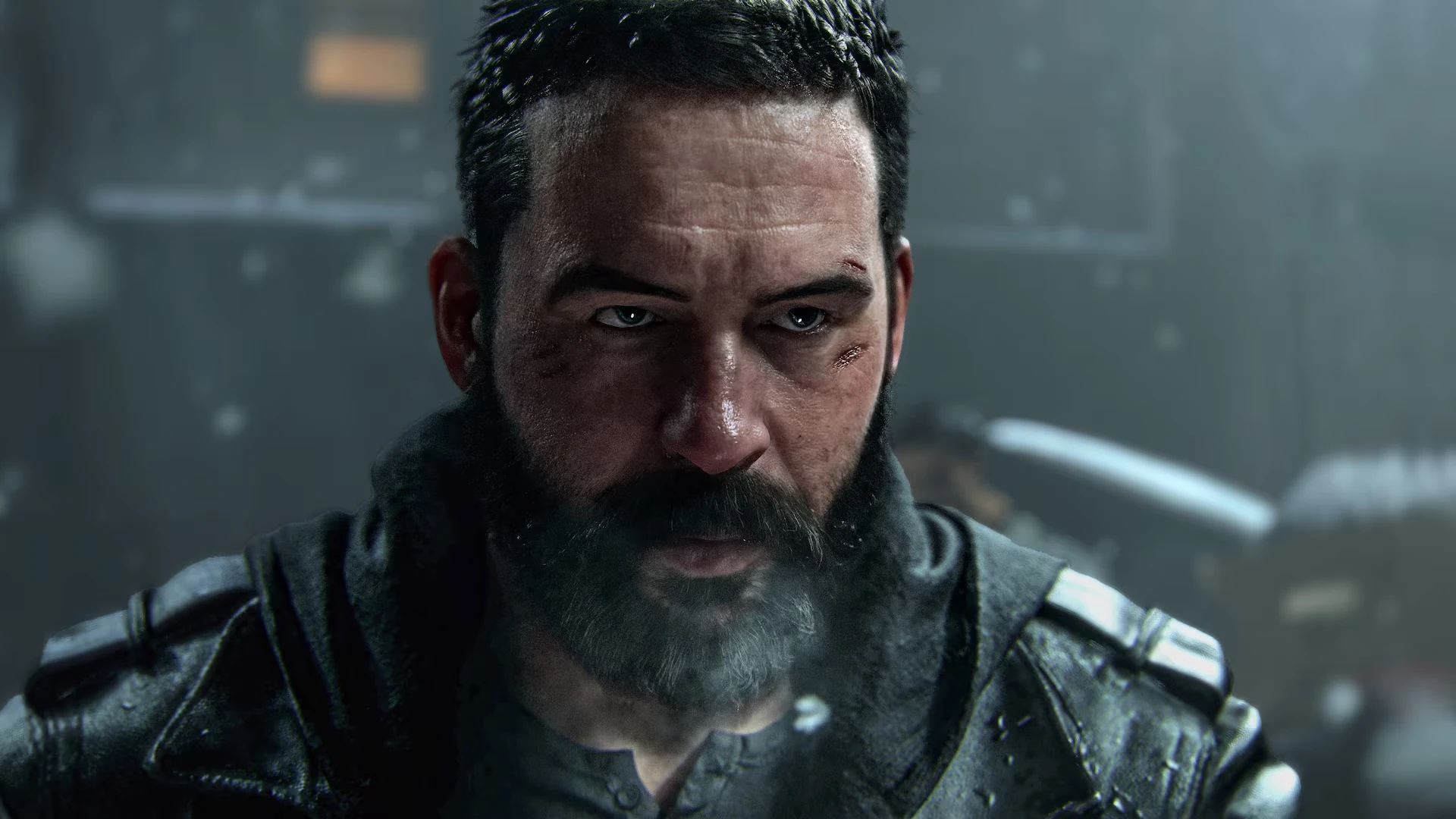
The writing is less successful when it comes to pacing and character development. Some plot points feel rushed, particularly towards the ending, while the antagonist known as the Archer, portrayed by Mads Mikkelsen, could have benefited from more screen time. The campaign also presents morally difficult situations without always giving player choices meaningful consequences. Fortunately, the storytelling rarely gets in the way of the action. Across roughly seven to nine hours, the campaign delivers a steady succession of cinematic set pieces and varied missions. It may not have the strongest narrative in the series, but it provides an effective foundation for the gameplay.
Infinity Ward’s decision to return to a predominantly linear campaign has paid dividends. Instead of stretching every mission into an open-ended experience, Modern Warfare 4 focuses on tightly directed encounters, spectacular set pieces, and a consistent pace. Missions alternate between conventional firefights, stealth, night-vision sequences, vehicle pursuits, and close-quarters encounters. This variety keeps the action engaging without making the campaign feel disjointed. When a more open-ended mission does show up, its relatively compact design works better than the less cohesive open missions of the prior entry, allowing it to complement the traditional campaign structure instead of replacing it.
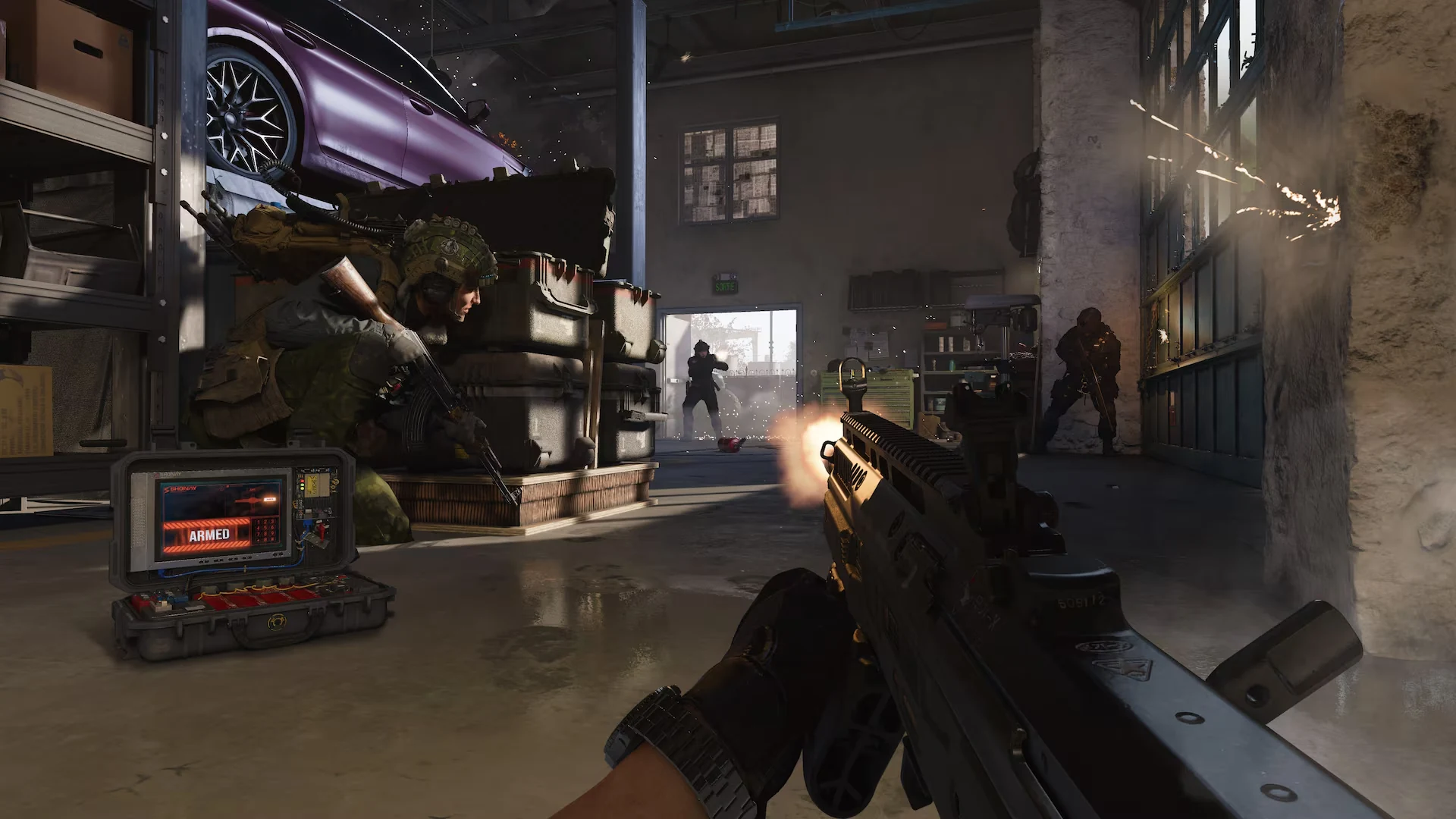
Some missions are overly restrictive, occasionally punishing players for straying only slightly from the intended route. Enemy AI can also be inconsistent, while hand-to-hand encounters sometimes feel rough. Gunplay remains the campaign’s greatest strength. Weapons feel powerful and responsive, with convincing recoil and satisfying feedback. The absence of omnimovement is a sensible choice here, as movement and traversal mechanics remain fluid without making combat feel disconnected from the game’s grounded approach. Sliding, climbing, and vaulting still allow for dynamic encounters, but positioning and aim remain central to firefights.
DMZ is arguably the game’s biggest surprise. Reimagined from its earlier appearance in Modern Warfare 2, the extraction mode now stands alongside the campaign and traditional multiplayer as one of the game’s three main pillars. It’s set in Hajin, a sprawling demilitarized region connected to the campaign’s events. The map spans over 60 locations, ranging from urban districts and military installations to rural settlements, industrial sites, and hazardous facilities. Players can deploy solo or in squads of up to three, complete objectives, gather equipment and resources, and attempt to extract before losing their valuable loot.
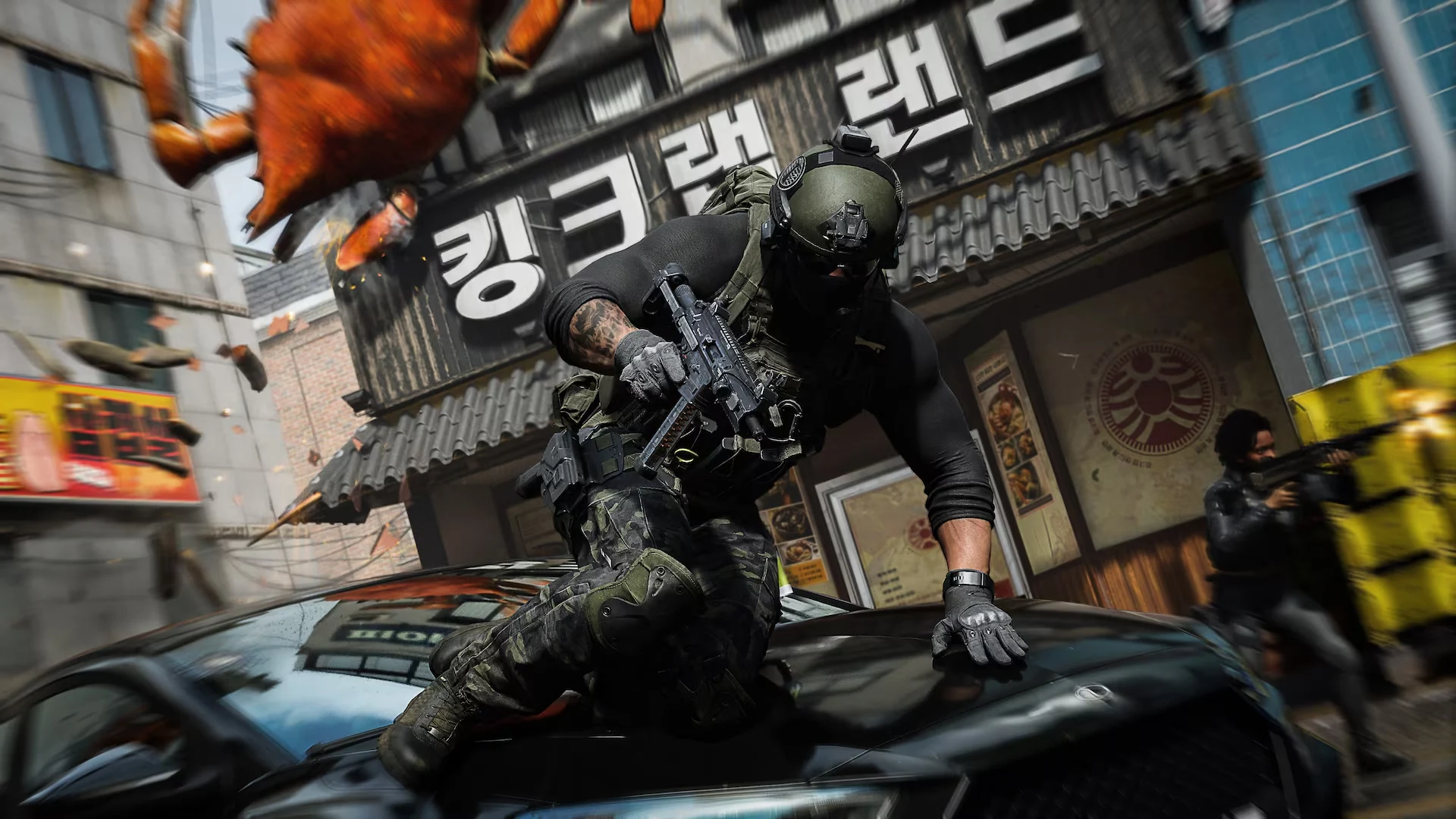
It’s a game of balancing risk versus reward, where staying longer can mean finding better equipment and completing additional objectives, but it also increases the danger of being overwhelmed by enemies or encountering hostile players. An extraction can quickly become a desperate fight for survival, especially when other squads converge on the same location. DMZ supports several playstyles through story missions, dynamic operations, and free exploration. Story missions serve as an aftermath to the campaign through specific assignments, while dynamic operations introduce changing objectives that encourage players to adapt. Free exploration offers opportunities to collect resources, discover information, and pursue personal goals.
Progression gives the experience lasting appeal. The Forward Operating Base expands as players return with resources, unlocking useful services and equipment options. Operators develop their own abilities and specializations, creating incentives to keep improving a preferred character. Meanwhile, the risk of losing valuable equipment after a failed deployment makes every decision to continue or extract feel consequential. Hostile players add another layer of unpredictability. Multiple squads may cooperate against a powerful enemy, but temporary alliances can quickly collapse into firefights, making each deployment capable of producing its own memorable stories. Enemy AI can feel simplistic at times, however, with difficulty often coming from sheer numbers rather than intelligent tactics or reactions.
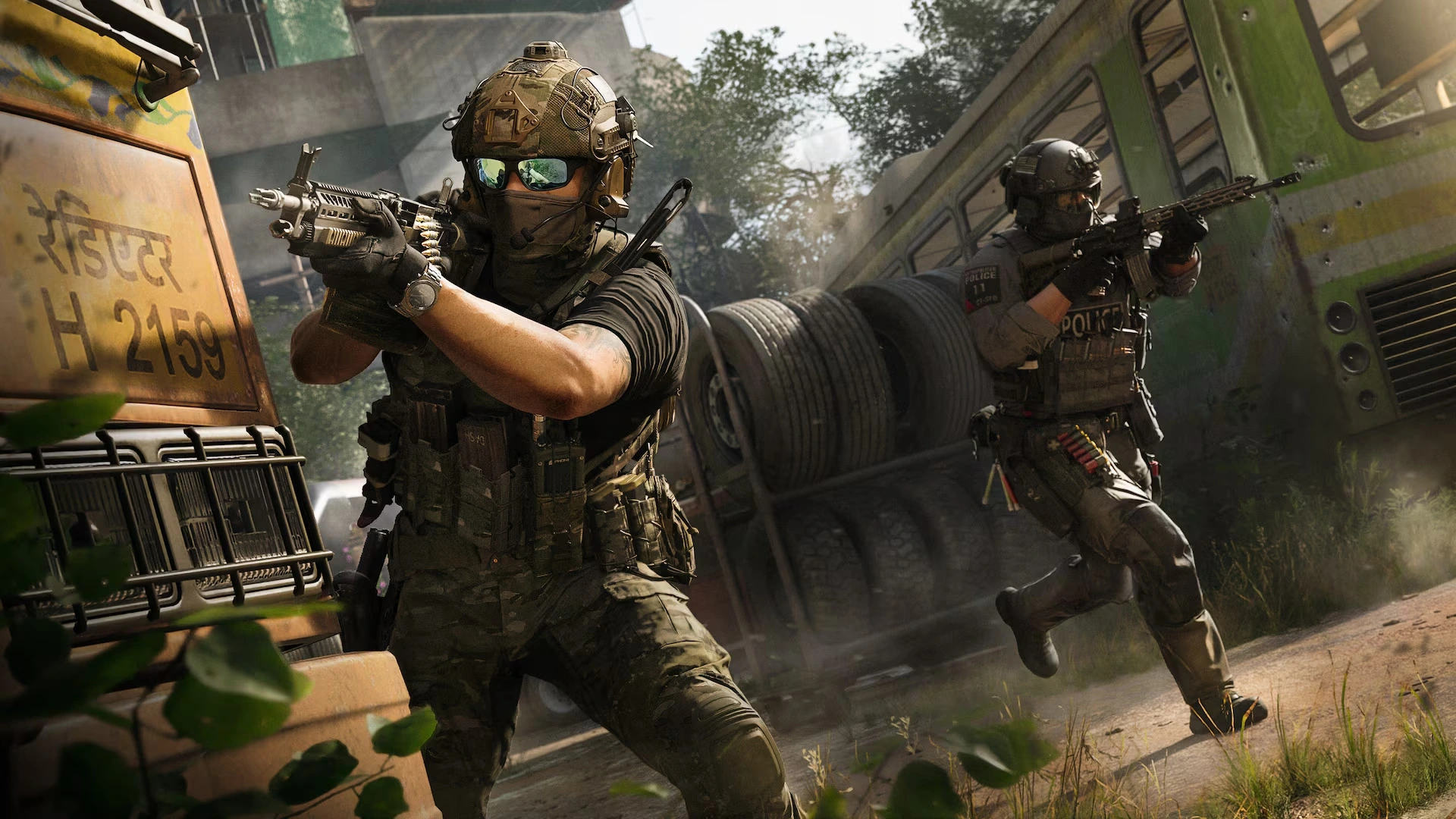
Traditional multiplayer remains central to Call of Duty’s longevity, and Modern Warfare 4 delivers a fast-paced experience built around familiar modes and some worthwhile additions. The game launches with 12 new 6v6 maps, alongside established modes such as Team Deathmatch, Domination, Hardpoint, Search and Destroy, and Kill Confirmed. The maps favour direct engagements, keeping matches active and encouraging players to adapt quickly.
One standout addition is Kill Block, a compact arena whose layout changes every two rounds. Its modular design creates hundreds of possible configurations, helping keep matches unpredictable without abandoning the close-quarters combat that makes smaller maps appealing. Ground War offers a larger-scale alternative, with 32-versus-32 battles featuring vehicles, infantry, and strategic objectives. Battle Outpost expands on this by letting teams capture positions and earn resources for increasingly powerful support rewards. These modes provide a welcome change of pace from the intensity of standard 6v6 matches.
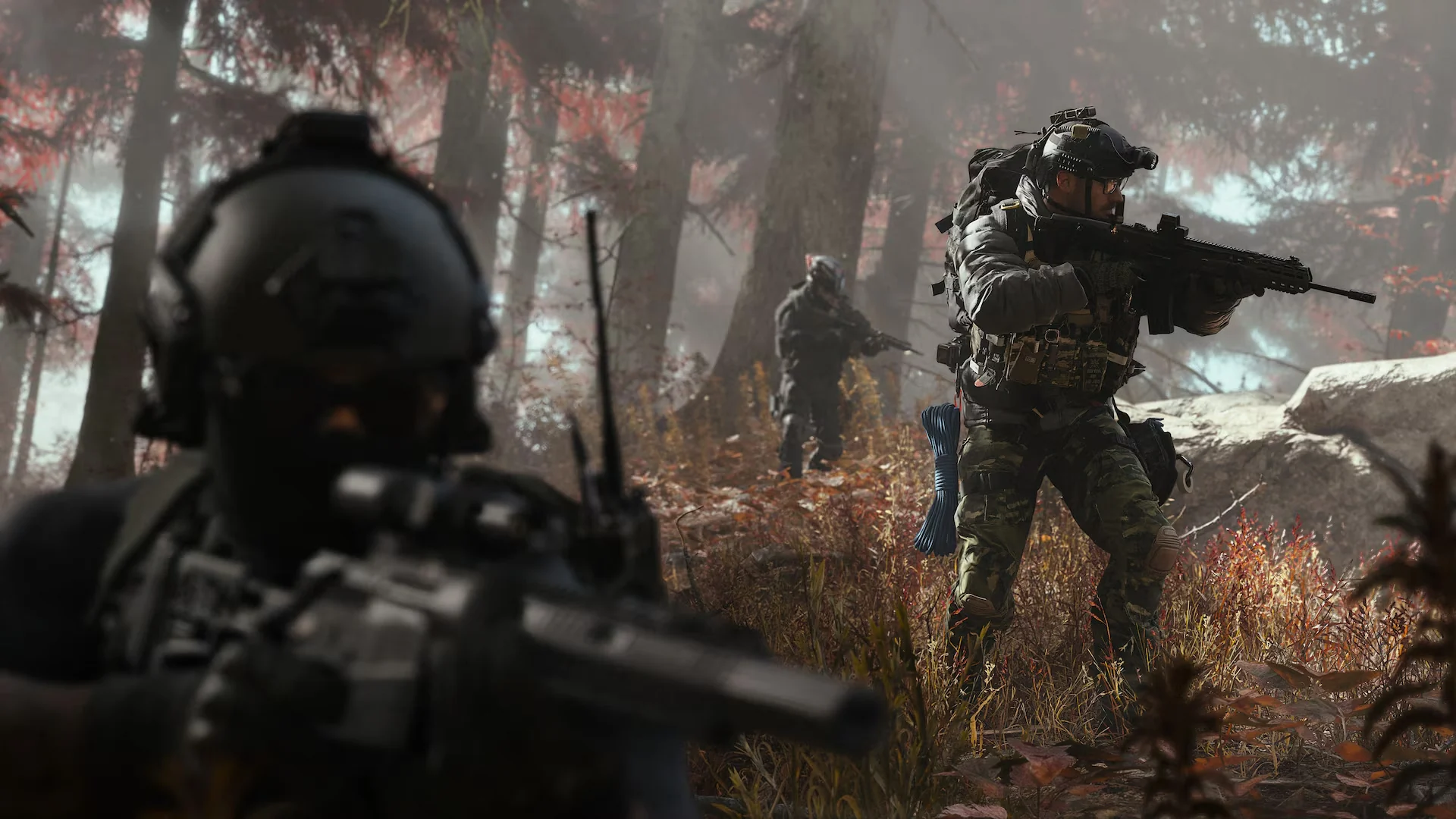
The shooting itself feels excellent. Weapons are responsive, recoil is satisfying, and the movement system offers plenty of ways to navigate the battlefield. On PS5, the DualSense controller’s haptic feedback and adaptive triggers further enhance the sensation of firing and weapon impact.
However, the fast time-to-kill means firefights can end after only a few shots, leaving little room to recover from mistakes. On top of that, respawns can occasionally place players frustratingly close to opponents. Long-term weapon balance and matchmaking quality will ultimately depend on how Infinity Ward responds to player feedback.
Being a current-gen only game, Modern Warfare 4 stands out as an impressive visual experience on PS5. Detailed environments, dramatic lighting, explosions, and particle effects give the campaign cinematic flair. Shifting light sources and atmospheric effects during night-time missions are especially effective in establishing a strong sense of place. Sound design is equally well-executed, gunfire sounds convincing, explosions carry real weight, and reverberation helps distinguish enclosed spaces from open battlefields.
Call of Duty: Modern Warfare 4 is a triumphant return to form for Infinity Ward. The campaign recaptures the appeal of a tightly directed Call of Duty adventure while retaining superb gunplay. DMZ has evolved into a standout extraction game with unpredictable encounters and meaningful progression, while multiplayer delivers the familiar competitive experience that fans expect.
Game Information
- Game Title: Call of Duty: Modern Warfare 4
- Price: $69.99
- Publisher: Activision
- Developer: Infinity Ward
- Platform: PS5 (Reviewed)
- Review Code: Provided by the publisher