The upcoming AMD RDNA 5 graphics cards target GPU clocks between 3.1 and 3.4 GHz, according to a new rumor.
Known hardware insider Kepler_L2 took to the AnandTech forums to respond to a fellow member who said that they didn’t expect AMD’s next-generation APU graphics processors to be able to reach 4 GHz. In response, they stated that, based on “some internal stuff” they had seen, AMD is targeting GPU clocks between 3.1 and 3.4 GHz with RDNA 5.
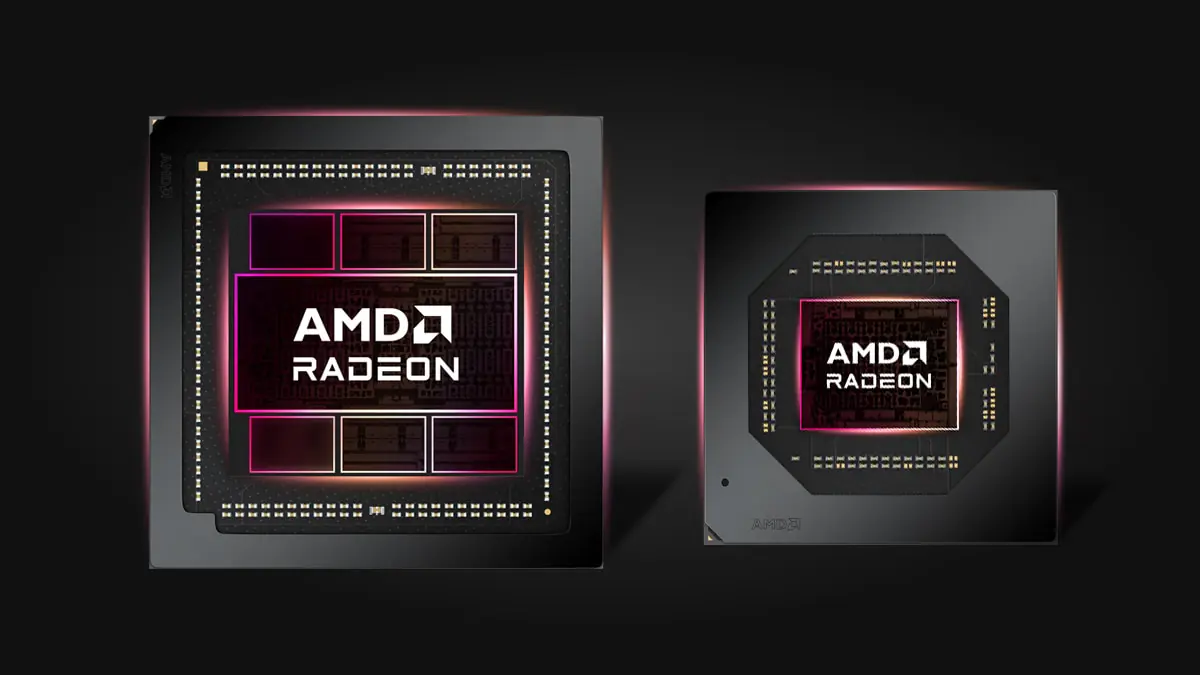
The Radeon RX 9070 XT has a boost clock of around 2.97 GHz, while the Radeon RX 9060 XT reaches approximately 3.13 GHz. A 3.1-3.4 GHz target for RDNA 5 would therefore put future GPUs above their RDNA 4 predecessors. Regarding the potential clock-speed improvement achieved via a newer TSMC process, moving from a 4nm semiconductor manufacturing process, to 3nm could deliver roughly a 10.6% clock increase at the same power level. Applying that estimate to existing reference clocks results in figures of approximately 3.29 GHz for the RX 9070 XT and 3.46 GHz for the RX 9060 XT.
These calculations overlap with Kepler_L2’s claim of a 3.1-3.4 GHz target for RDNA 5. That said, process-node characteristics, architecture, power limits, cooling, and individual GPU configurations can all affect achievable frequencies, so these clocks should be taken with a grain of salt until there is confirmation via official channels.
AMD is said to be pursuing substantial architectural changes for its next-generation graphics products. Higher clock speeds alone do not guarantee proportional performance gains, but combined with architectural improvements, they should allow RDNA 5 to deliver a meaningful generational upgrade.
Back in February, fellow hardware insider Moore’s Law Is Dead (MLID) claimed that the GPU chiplet inside the next-generation Xbox APU, codenamed Magnus, is “literally the same chip that will be used to make the successor to the 9070 XT next year.” AMD CEO Lisa Su stated that development of the console is currently aligned to support a 2027 launch window, suggesting that RDNA 5 discrete GPUs are also on schedule to launch by mid or late 2027. More details here.