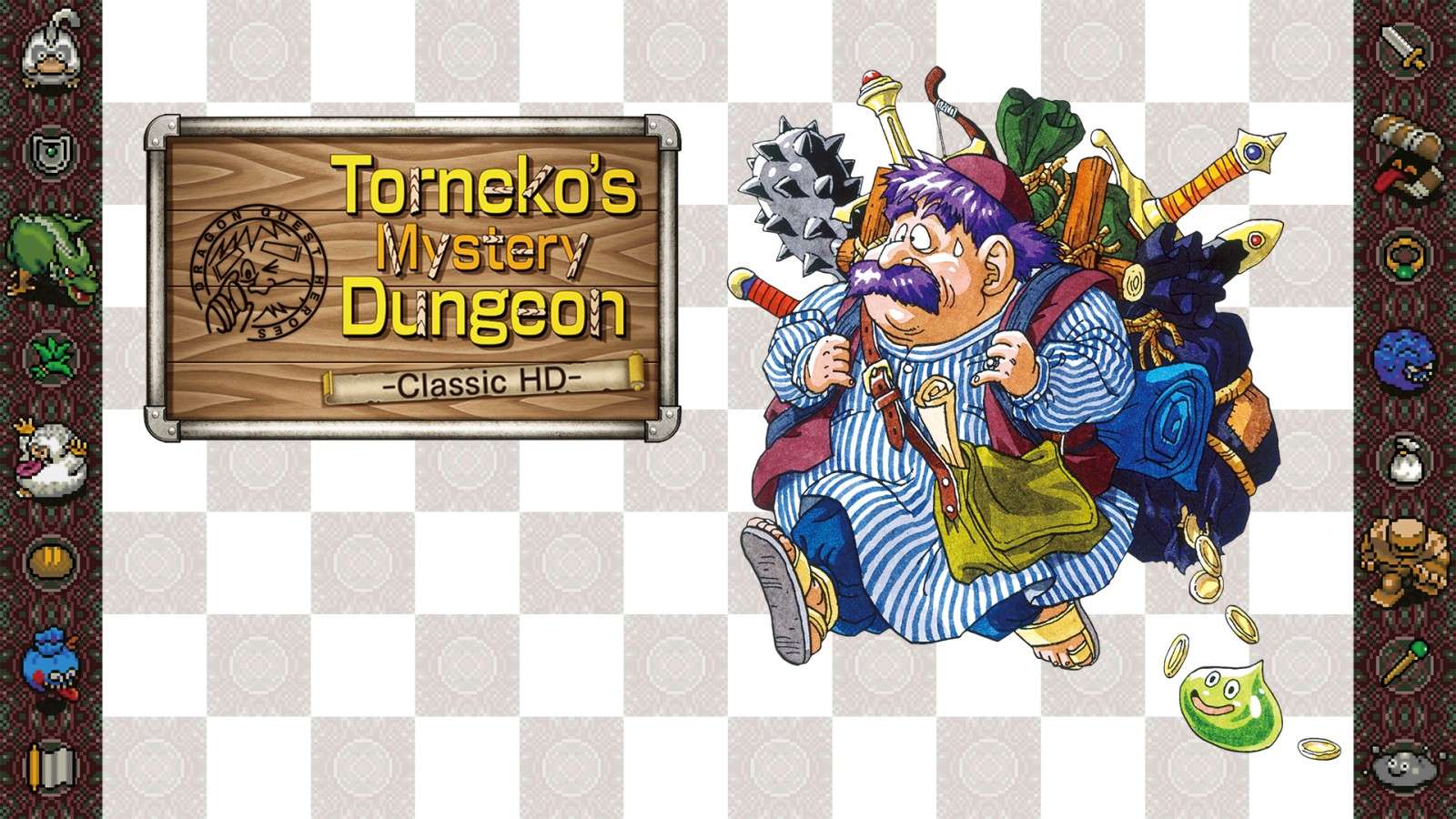
Dragon Quest Heroes: Torneko’s Mystery Dungeon was a surprise announcement and release. The game was suddenly announced during a Nintendo Direct and released on the same day, making it a particularly unexpected reveal for fans. What made the announcement even more interesting was that the game had never previously received an official English translation.
It is also a very old Dragon Quest title, dating back to around the era of Dragon Quest IV. Its main character is Torneko, a merchant rather than a traditional warrior or fighter. He is essentially an ordinary character whose profession revolves around running a shop, which gives the game a rather different premise from the mainline Dragon Quest games.
The story itself is not particularly complicated. Torneko wants to expand and improve his shop, so he ventures into a dungeon to collect items that he can sell and use to keep his business running. The main focus, however, is not really the story but the game’s Mystery Dungeon formula. It is a classic roguelike dungeon-crawling experience built around exploring randomly generated dungeons, collecting items, and dealing with the dangers that come with each run.
For me, Square Enix’s Chocobo’s Mystery Dungeon series is a good point of comparison. I have always enjoyed that series, so when Square Enix announced this classic Torneko game with an official English localisation and released it as a surprise, I was genuinely happy to see it finally receive this treatment. Of course, being excited about the announcement is one thing, but whether the game itself still holds up as a good experience is something I would have to find out by actually playing it.
At the start of the game, we spend some time in the town, where we are introduced to the game’s various systems and given basic tips on what we are supposed to do. It is important to keep in mind that this is a classic game, so it does not have the kind of modern game design and onboarding that we are used to today. Instead, the game takes a fairly straightforward approach, with the characters in town talking to Torneko and explaining the different systems through conversations.
The game initially starts with a small dungeon that serves as a tutorial of sorts. It has around ten floors, and once we complete it, the proper full dungeon becomes available. This is where the game’s roguelike structure really comes into play. Each time Torneko enters the dungeon, many of its elements are reset. The dungeon layout, the items available inside it, and the monsters we encounter can change from one run to the next. If Torneko dies, he loses his progress in that run and has to start the dungeon again from the beginning. This is essentially the core philosophy behind the game and what defines its Mystery Dungeon formula.
There are plenty of different items to find throughout the dungeon, but Torneko does not have any particularly powerful abilities or the kind of combat advantages that would allow him to simply fight his way through everything. As a merchant rather than a traditional fighter, the game is designed around managing what you find, making careful decisions, and trying to survive each run rather than simply overpowering every enemy.
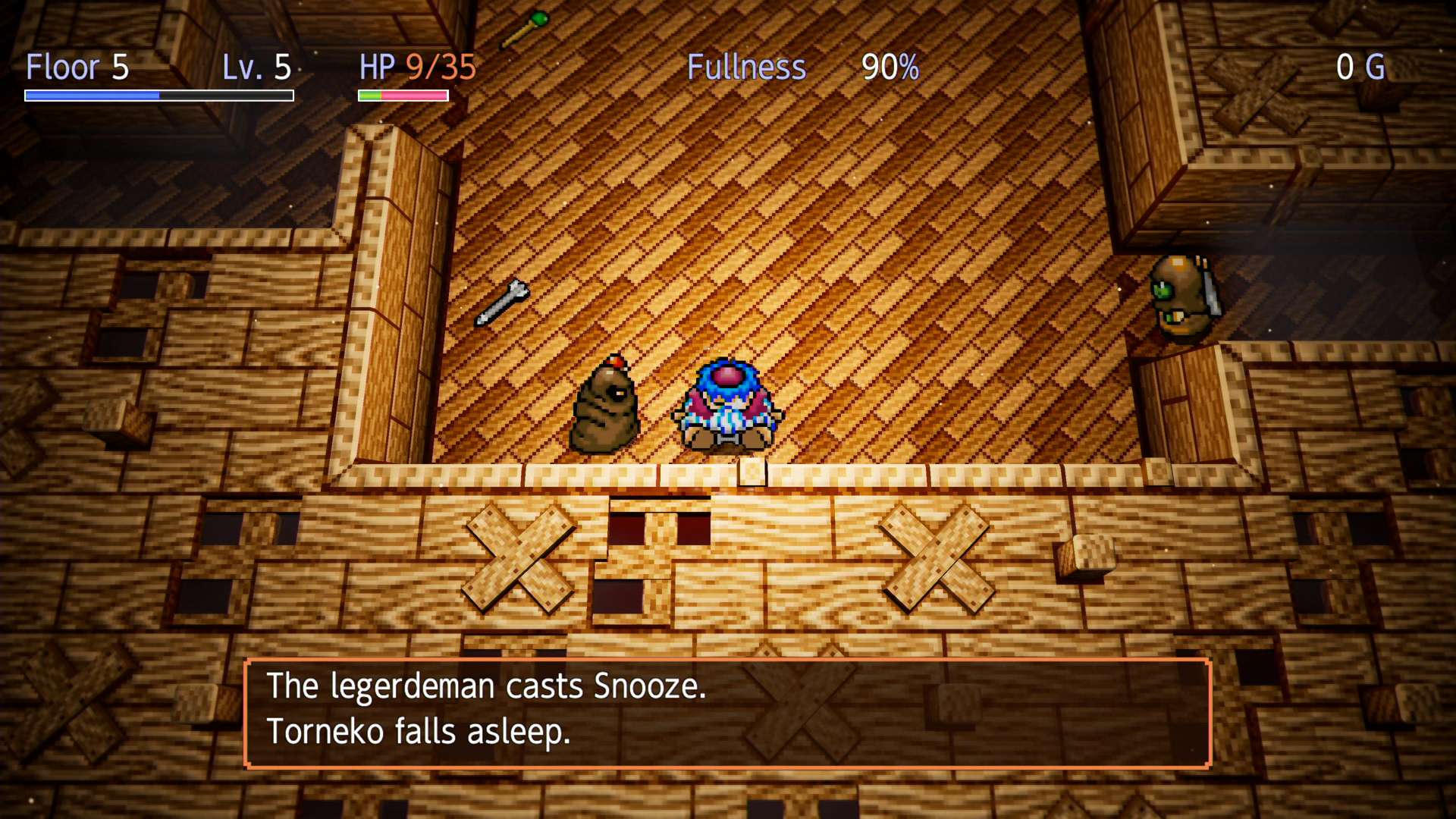
The core gameplay takes place inside a dungeon built around a grid-based structure. Whenever Torneko moves, attacks, or performs another action, it uses up a turn, and the enemy gets to make a move as well. This creates a constant back-and-forth where you have to think carefully about every action. Positioning and timing are therefore extremely important, as a single careless move can put Torneko in a difficult situation.
Torneko also gains experience and levels up as he defeats enemies. His level carries over for the duration of the current run, allowing him to become stronger as he progresses through the dungeon. However, dying means losing that advantage and starting over from the beginning. Any progress made during the run, including the items collected and other temporary progress, is reset when you die.
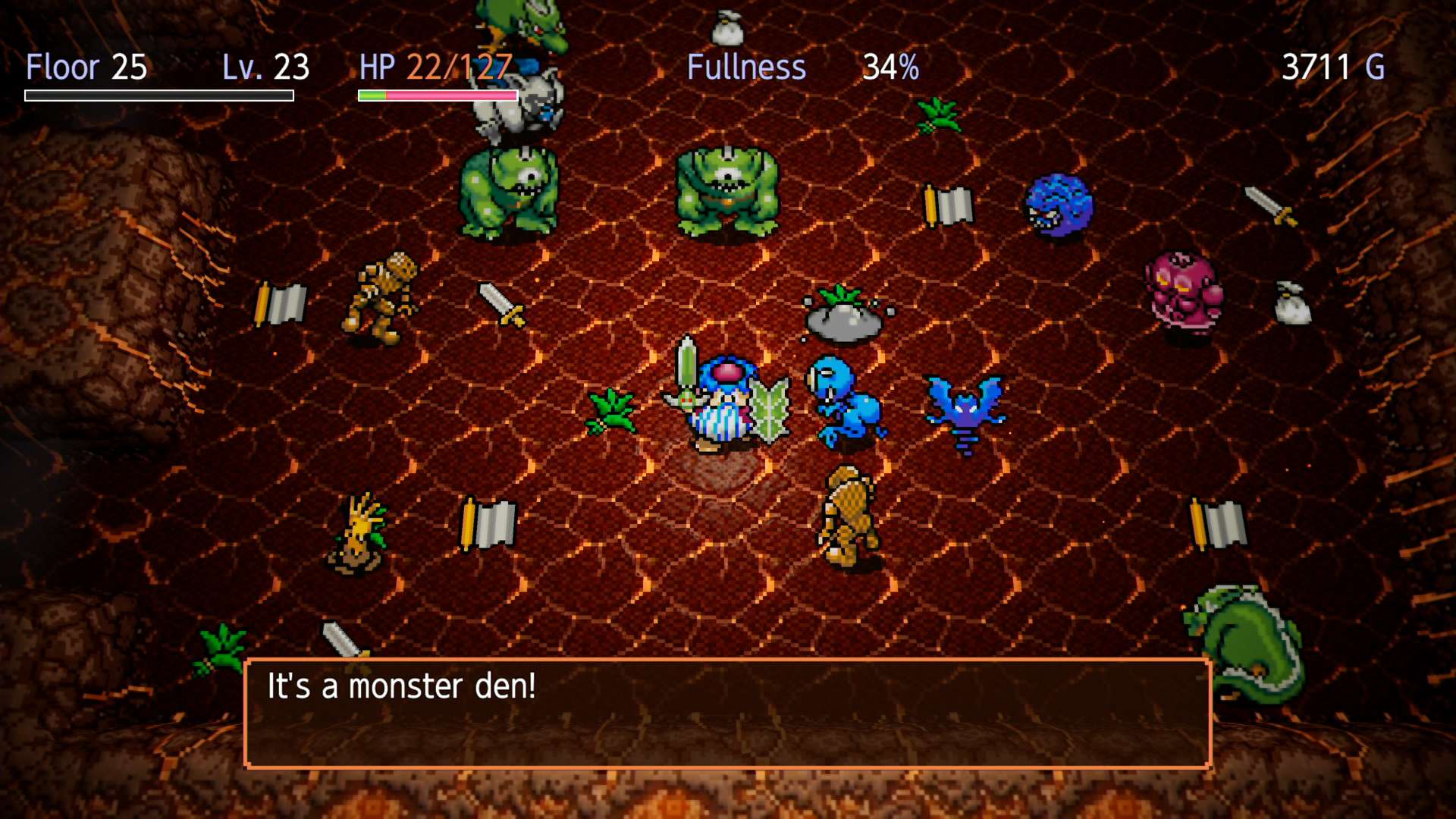
The dungeons contain a variety of useful items. Some provide buffs to Torneko, while others help with dungeon exploration by revealing things such as the dungeon’s layout or the locations of enemies. There are also items that can give Torneko an advantage when dealing with enemies and make it easier to defeat them.
Overall, the game has a very simple structure and does not introduce too many complicated systems. Compared with something like Chocobo’s Mystery Dungeon, which is one of my favourites in the genre, Torneko’s Mystery Dungeon feels considerably more straightforward. That simplicity can be appealing, although it also means that there is not quite as much depth to the overall gameplay system.
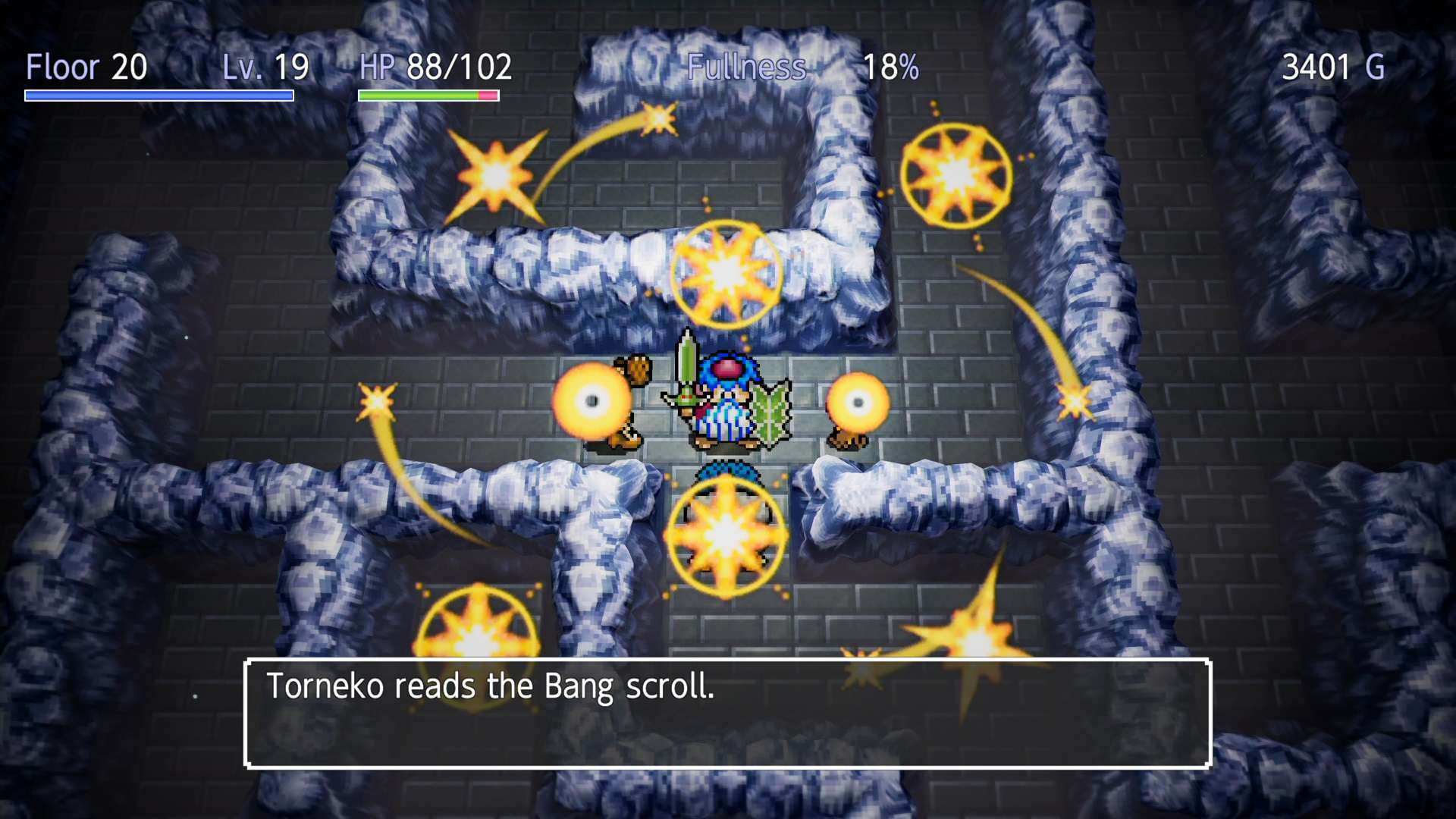
There are several ways to recover health during a run. Simply moving around the dungeon gradually restores Torneko’s health, so exploring and taking your time can help you recover between encounters. Torneko also has a hunger meter that gradually depletes as he moves and performs actions. To keep it filled, you need to find food throughout the dungeon and eat it when necessary, with items such as loaves of bread providing a way to restore your hunger.
The main progression loop is fairly straightforward. You repeatedly enter the dungeon, search for treasure, and try to make it back out alive. If you successfully return with the treasure you have collected without dying, you can use it to progress Torneko’s shop, which gradually moves the game forward. The problem is that there is not much happening narratively alongside this progression, and the story does not undergo any particularly significant changes as you continue playing.
This was somewhat disappointing to me because, as I mentioned earlier, Chocobo’s Mystery Dungeon, which is one of my favourites in the genre, at least had a more substantial story and used its narrative to support the progression. Torneko’s Mystery Dungeon does not really offer that same sense of story-driven progression, which made the overall experience feel a little lacking from a narrative perspective.
One thing I did appreciate, however, is that Square Enix has included some modern quality-of-life features. There are various options that allow you to customise the dungeon experience, make it easier, or adjust it to your preferences. You can modify things such as the number of enemies, how frequently certain things appear, the amount of items and gold you receive, and even remove enemies or traps entirely. There are several different settings you can adjust depending on how challenging you want the experience to be. These options are a welcome addition, particularly for players who may not be accustomed to this type of classic Mystery Dungeon game.
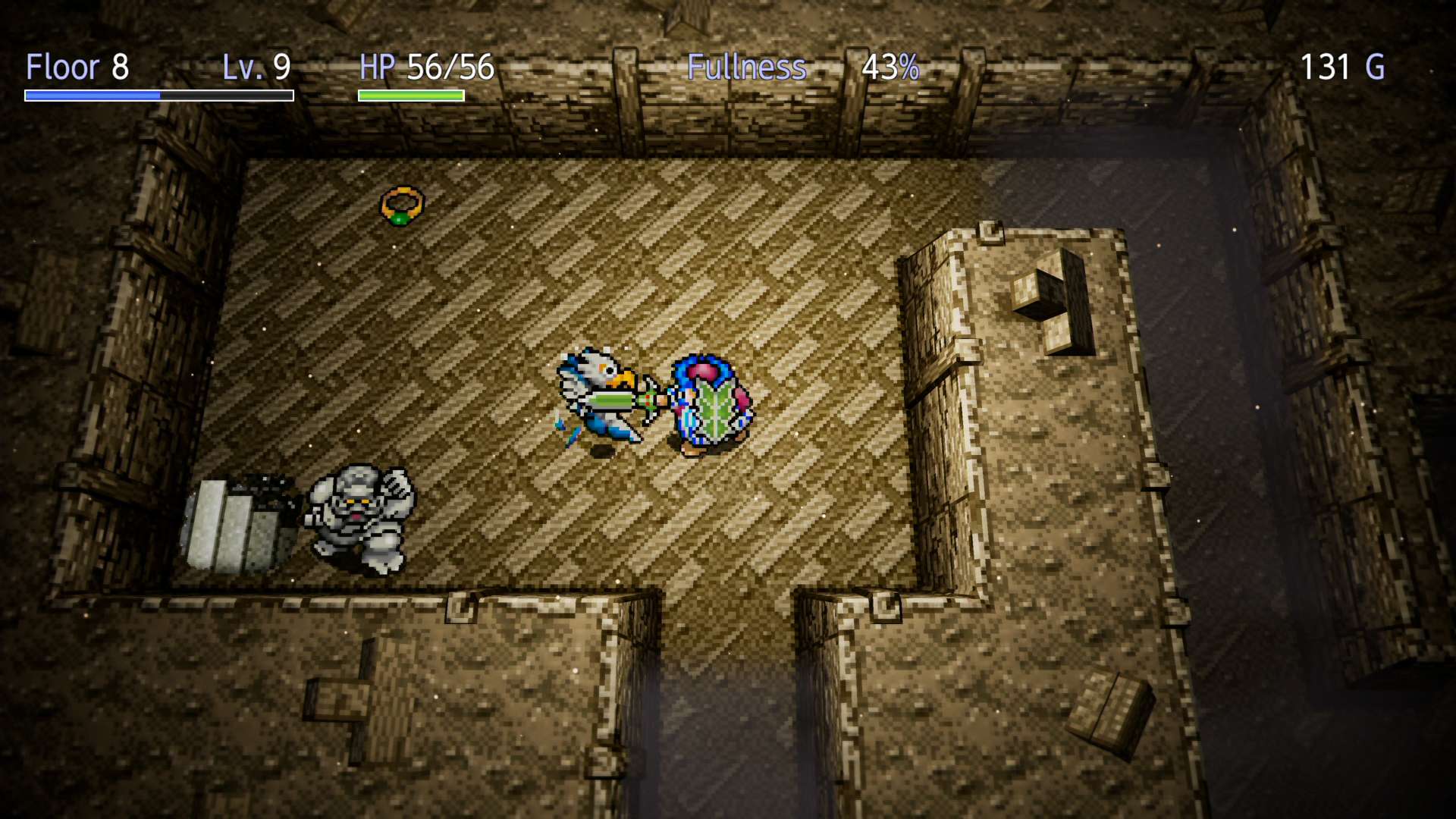
I played the game on Switch 2, and the performance was good throughout my time with it. I did not run into any major performance issues, and it also performed well in both handheld and docked modes. The visual presentation was another aspect that I enjoyed. Square Enix has done a good job of bringing the classic visuals into a modern release without losing the character of the original game. The graphical presentation looks quite good, and the overall art style has aged reasonably well.
The main issues for me are the relatively weak story and the somewhat unusual balance between the gameplay and difficulty. This is not the kind of game where you can simply jump in, play for a short while, and immediately understand everything. It requires some patience and commitment, and you have to spend time learning its systems and getting used to the way its dungeons work. If you are willing to stick with it and put in that effort, there is a rewarding experience to be found.
Because of that, I do not think Torneko’s Mystery Dungeon is necessarily a game for everyone. It is more likely to appeal to dedicated Dragon Quest fans or players who already enjoy the Mystery Dungeon genre. Personally, because I already enjoy Mystery Dungeon games, I found a lot to like here despite its limitations. It is a simple and fairly focused experience that delivers the classic formula well, but its lack of meaningful narrative progression and demanding structure may make it difficult for some players to get into.
Dragon Quest Heroes: Torneko‘s Mystery Dungeon -Classic HD- Game Information
- Price: $24.99
- Publisher: Square Enix
- Developer: Square Enix / Chunsoft
- Platform: Switch 2 (Reviewed)
- Disclaimer: A review code was provided by the publisher