Angered PlayStation fans are calling for a week long “economic and gameplay blackout” to protest against Sony Interactive Entertainment’s decision to end physical media.
A growing movement within the PlayStation community is calling on players around the world to take part in a week-long “economic and gameplay blackout” to protest against Sony Interactive Entertainment’s decision to discontinue physical games media for all new releases beginning in January, 2028. The campaign, organized under the hashtag #PSBlackout, appears to be gaining traction across social media as angered fans voice support for a written statement describing years of dissatisfaction with the company’s direction.

The message is being circulated across social media in the form of an image. It states that Sony Interactive Entertainment has become increasingly disconnected from its community over the past several years. The company’s decision to end physical media is described as “the last straw,” as there are several prior grievances, including the closure of beloved studios such as Bluepoint, the focus on live-service games, the lack of support for PlayStation VR2, the cancellation of fan events, and the continued absence of dormant first-party franchises such as Twisted Metal, SOCOM, Sly Cooper, and Resistance.
Rather than calling for an indefinite boycott, the movement is urging PlayStation users to participate in a symbolic 7-day blackout from Sunday, August 23 at 7 PM local time until Sunday, August 30 at 7 PM local time. During this period, participants can show solidarity by turning off their PlayStation console, logging out of the PlayStation Network, or refraining from making any purchases through the PlayStation Store.
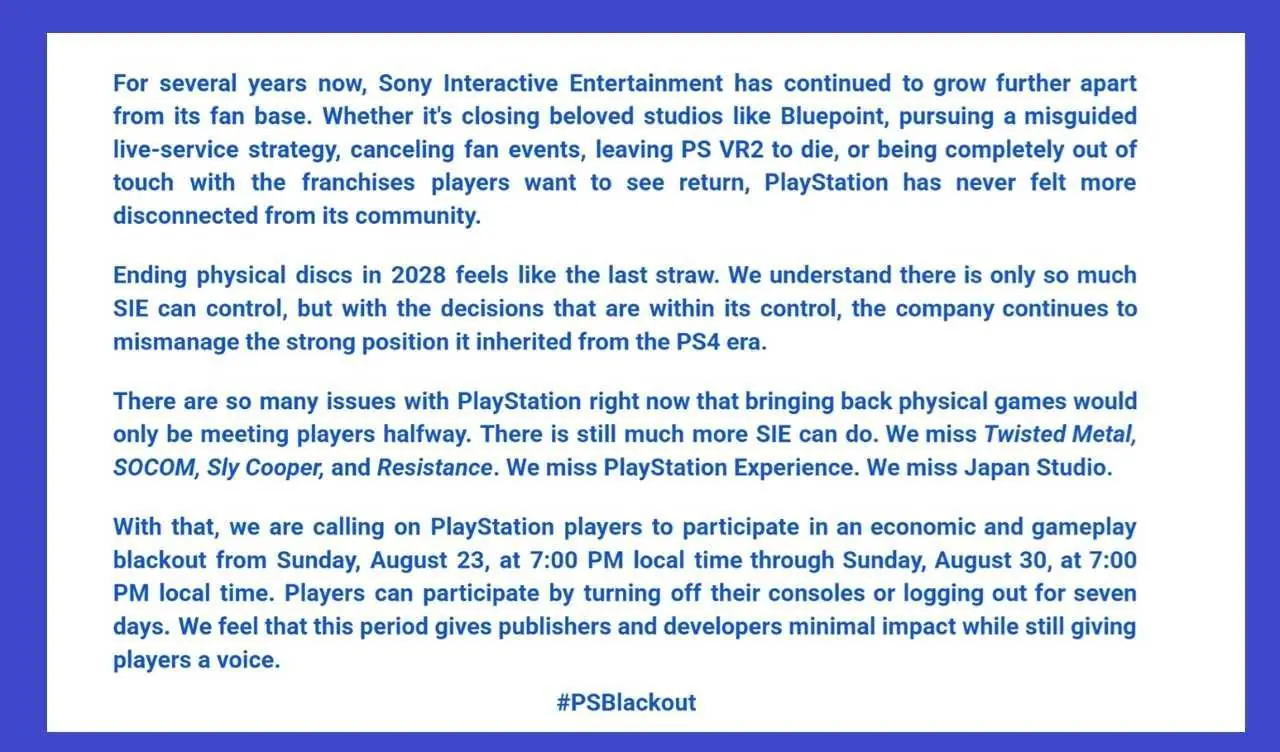
The week-long blackout aims to demonstrate consumer dissatisfaction with PlayStation while minimizing the impact on game companies. At the same time, some remain skeptical about a limited-time movement being enough to persuade Sony Interactive Entertainment to abandon its plans to end physical games media. The company justified the decision by citing changing consumer habits and the industry’s increasing shift toward digital distribution, noting that digital purchases now represent the overwhelming majority of game sales.
However, physical media supporters argue that the format provides true ownership, allows games to be resold, traded, borrowed, gifted, or preserved, and protect consumers from losing access should digital storefronts eventually close.