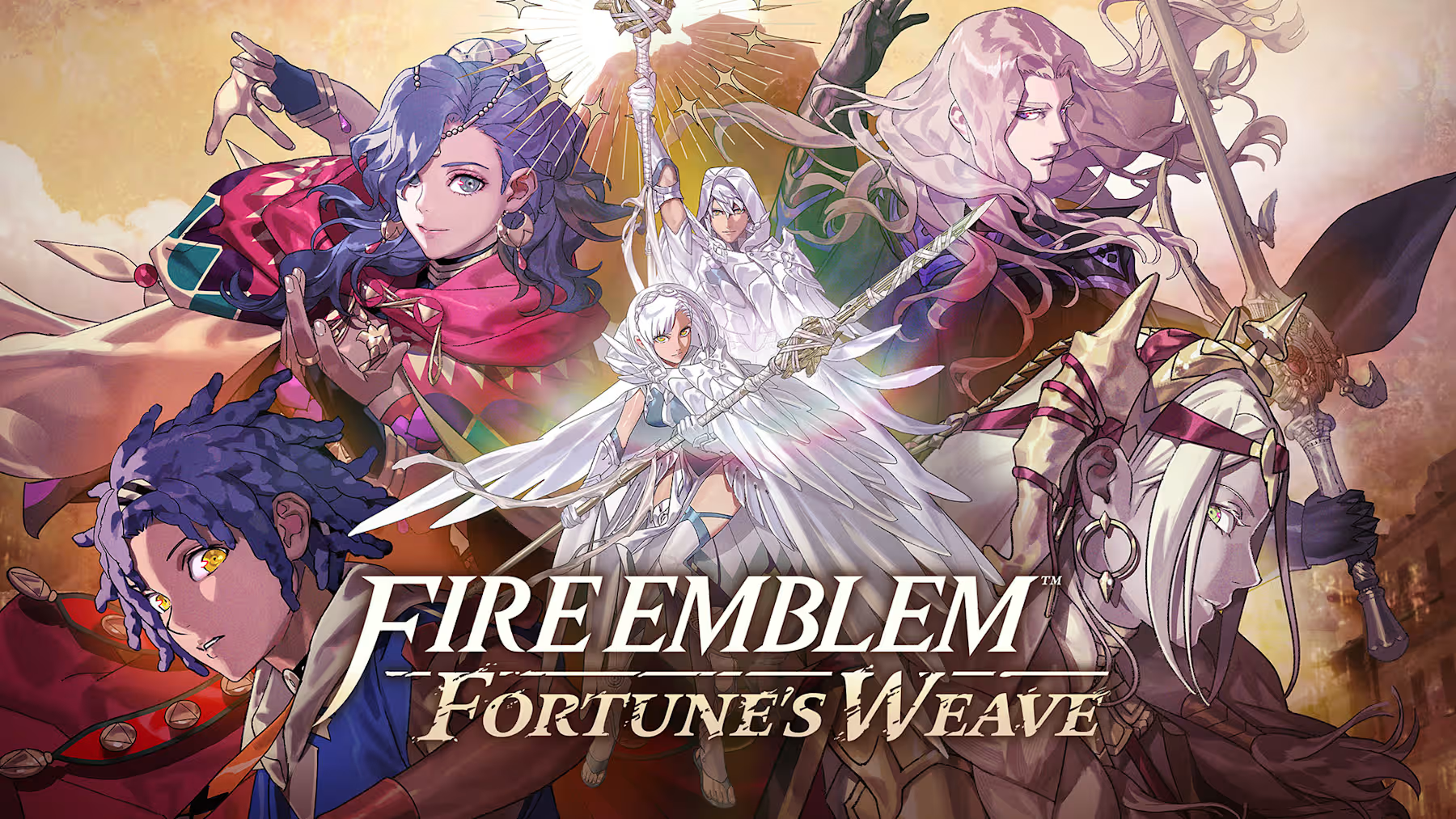
Fire Emblem has come a long way from being a relatively niche Nintendo series. Its popularity grew significantly during the 3DS era, and the Switch entries, Three Houses and Engage, pushed it even further into the mainstream. With Fire Emblem: Fortune’s Weave, Nintendo takes another interesting swing at the formula. This time, the series combines its tactical RPG foundations with time travel and four different character stories.
The game is set five years before the capital city of Dagsion in the region of Dagda is destined to be destroyed by a Demon God. Players take on the role of Eshmel, a customisable protagonist who travels back in time to ensure the four Flame Lords survive the trials and battles ahead of them.
The four heroes include Cai, a young and ambitious boy who wants to free his father and save him from an impending execution; Dietrich, a powerful swordsman on a journey to face the strongest enemy he has ever encountered; Theodora, a ruler who wants to spread her god’s influence while saving her people and securing their sovereignty; and Leda, a dancer and musician on a simple quest for revenge, with a hit list of those responsible for her father’s death.
I really liked the way the game handles these four characters. After a lengthy prologue that doubles as a tutorial, you can choose whose story you want to follow. Each route has its own personality, conflicts, and cast, and although you can get through the game without seeing everything, playing all four stories gives the larger narrative much more context. The first act focuses on their individual journeys, the second gradually brings their conflicts together, and the third brings everyone together in Dagsion. It gives the story a nice sense of progression without forcing you to follow a single character for the entire game.
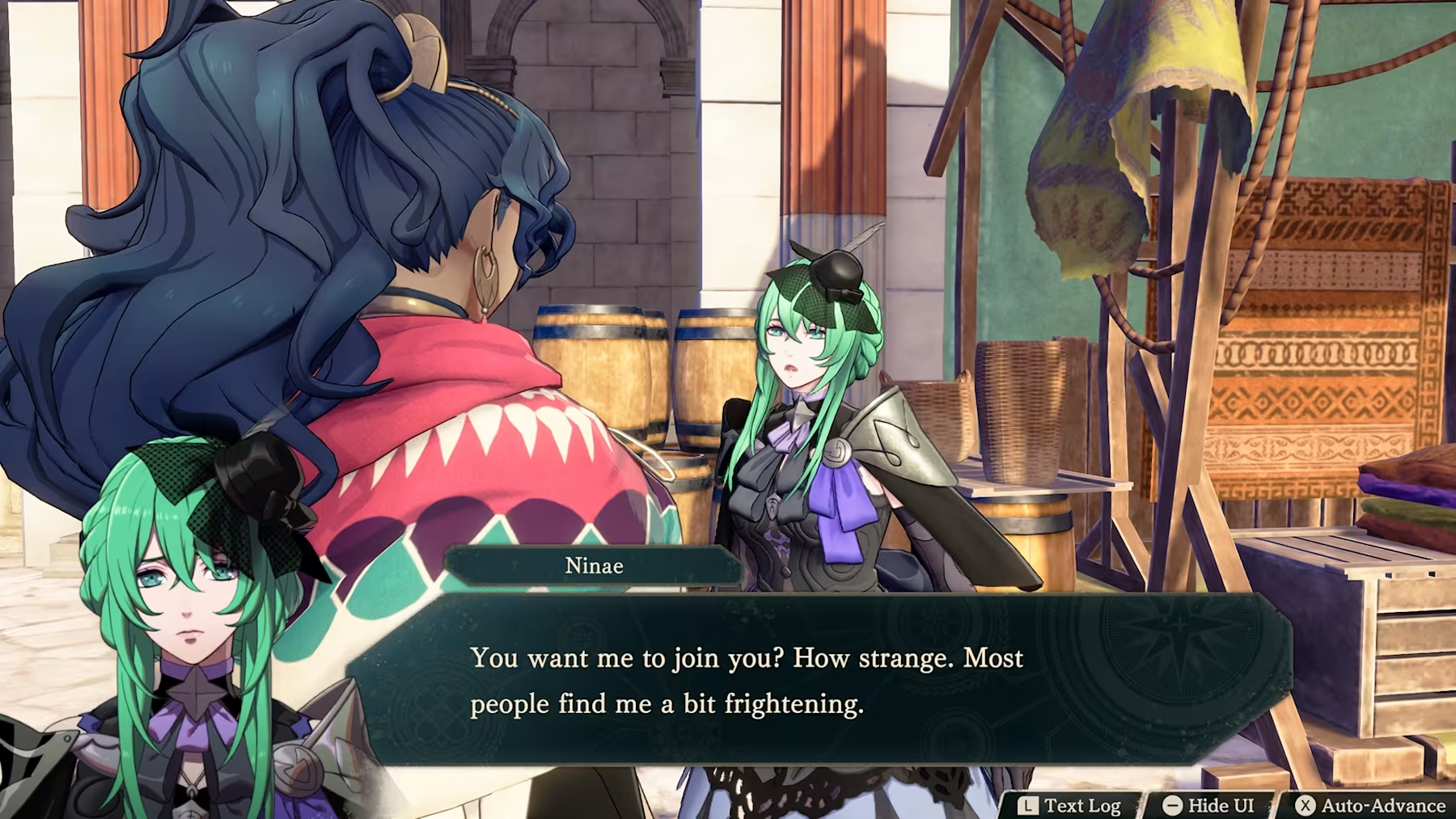
Being able to switch between the four heroes is probably one of my favourite parts of the structure. They are playable from the beginning, so you are not waiting several hours to get access to the rest of the cast. There is also a surprisingly large supporting cast, and many of these characters can eventually join your party. The NPC system is another nice touch. You can build relationships, give characters gifts, spend time with them, and generally interact with the world in ways that make it feel more populated.
Combat remains the heart of the experience, and this is where Fortune’s Weave feels most like a traditional Fire Emblem game. Battles take place on a grid, with positioning, unit stats, weapon types, and environmental conditions all affecting the outcome. I especially appreciate that the game tells you what is likely to happen before you commit to an attack. It makes planning turns much easier without taking away the satisfaction of figuring out the best move yourself.
The weapon system offers more complexity than a simple weapon triangle. Different weapons come with unique advantages and bonuses. While this isn’t entirely a new approach to tactical combat, it introduces enough subtlety that I found myself focusing more on unit positioning instead of just considering which weapon counters another.
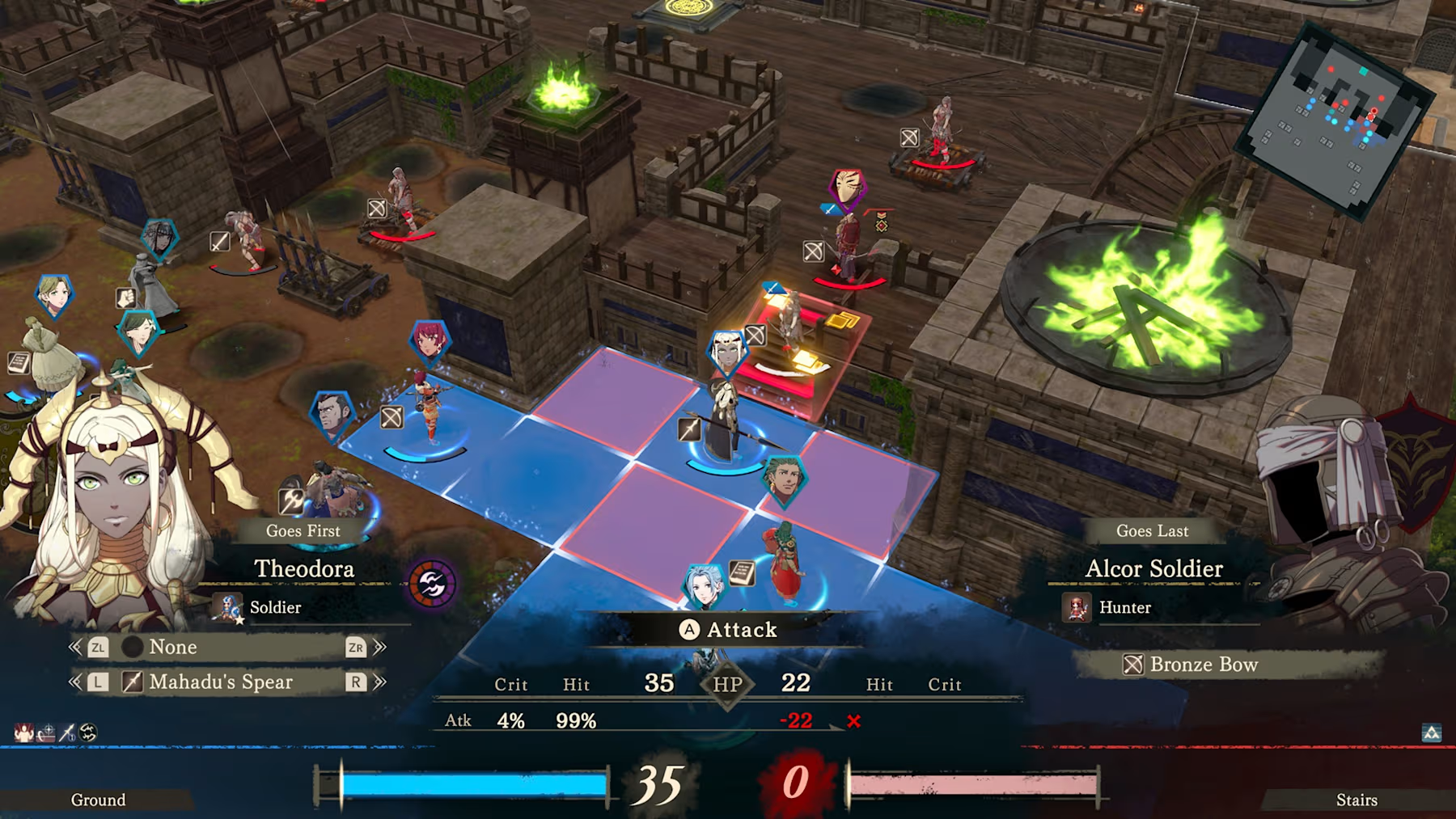
Character progression is similarly well handled. Units can level up, specialise into different classes, and unlock exclusive skills. Weapons have durability, so equipment management matters as well. The four main heroes also have their own Blaze art abilities, which can be extremely useful but consume HP when activated. I liked this system because it gives powerful abilities an actual cost. You can use them to turn a difficult situation around, but you are also making yourself more vulnerable in the process.
The rewind mechanic is another feature that fits the game’s time travel concept particularly well. If you make a mistake, or a character dies while playing with Permanent Death enabled, you can rewind the battle and try again from an earlier point. It is not completely unrestricted, though. The mechanic uses a limited resource, so you cannot simply undo every bad decision without consequence. I found that limitation important because it keeps the system from becoming a complete safety net.
Outside of the main battles, there is a sizeable world to explore, with towns, points of interest, resources, and dungeons. The dungeons use a more traditional JRPG style of combat and include mechanics such as Link Attacks. They are a nice change of pace, but this is also one of the areas where I think the game loses some momentum. The regular JRPG-style encounters are simply not as interesting to me as the main tactical battles, and having to go through too many of them can make the pacing feel uneven. Thankfully, they can be handled with the Auto-Battle option.
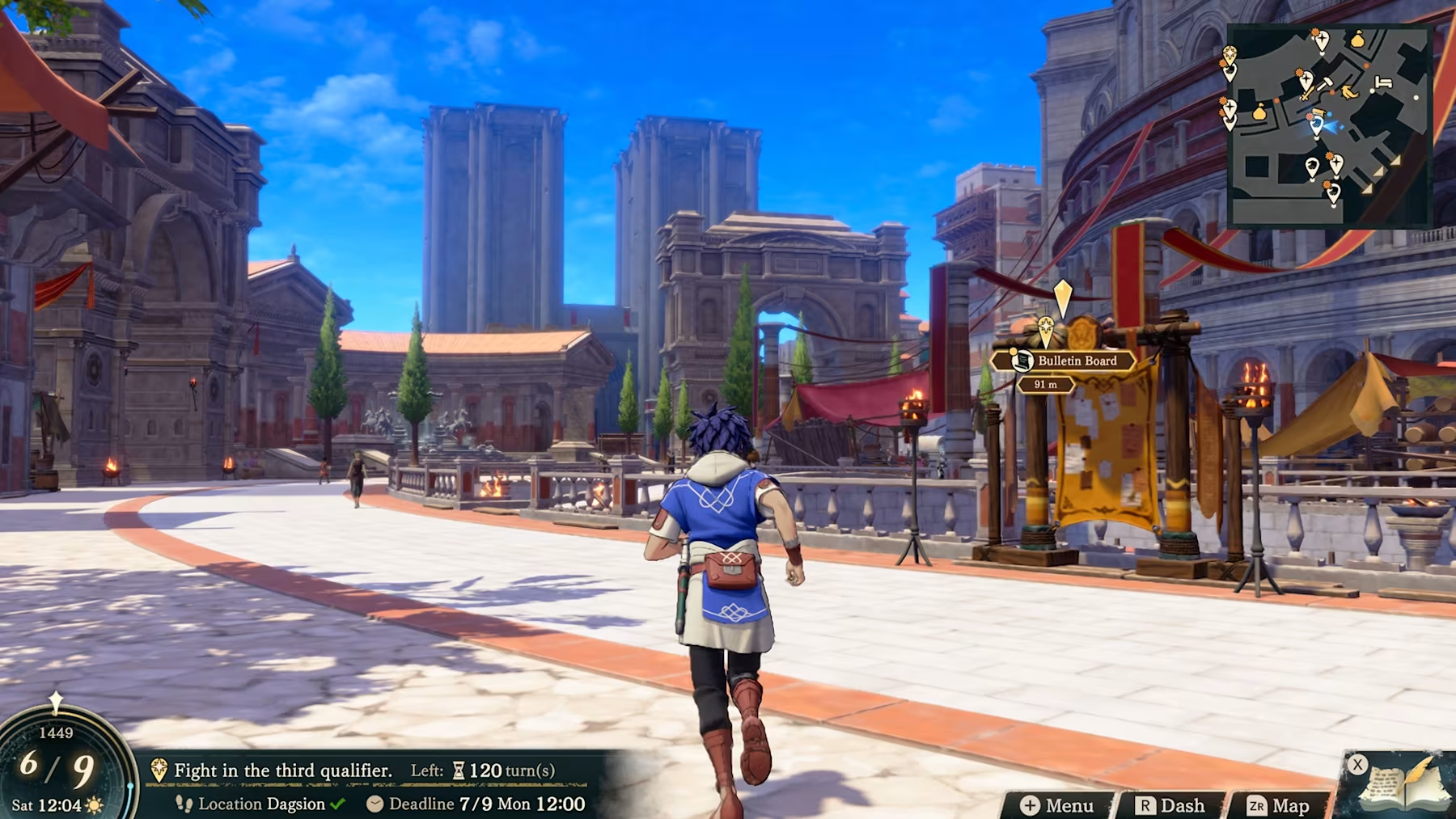
There are plenty of other quality-of-life features that I appreciated. You can move between character storylines and replay completed chapters at will through a central hub, all built around a single save file rather than multiple save slots. You can also choose between Casual and Permanent character death. That last option is especially useful because it lets you decide how much punishment you actually want from the game’s battles.
Visually, Fortune’s Weave is a very attractive game. I really like its art direction, and even standard dialogue scenes benefit from animated character portraits that shift expression as characters speak, while the fully animated cutscenes are reserved for the bigger story moments and hit even harder as a result. The soundtrack is also excellent and easily one of the presentation’s highlights.
There are a few things that held the experience back for me. The biggest issue is probably the lack of a proper story recap. With four interconnected character routes and a non-linear structure, there is a lot to keep track of. If you put the game down for a while, it is surprisingly easy to forget what happened and why certain events matter. A recap feature would have been a very welcome addition.
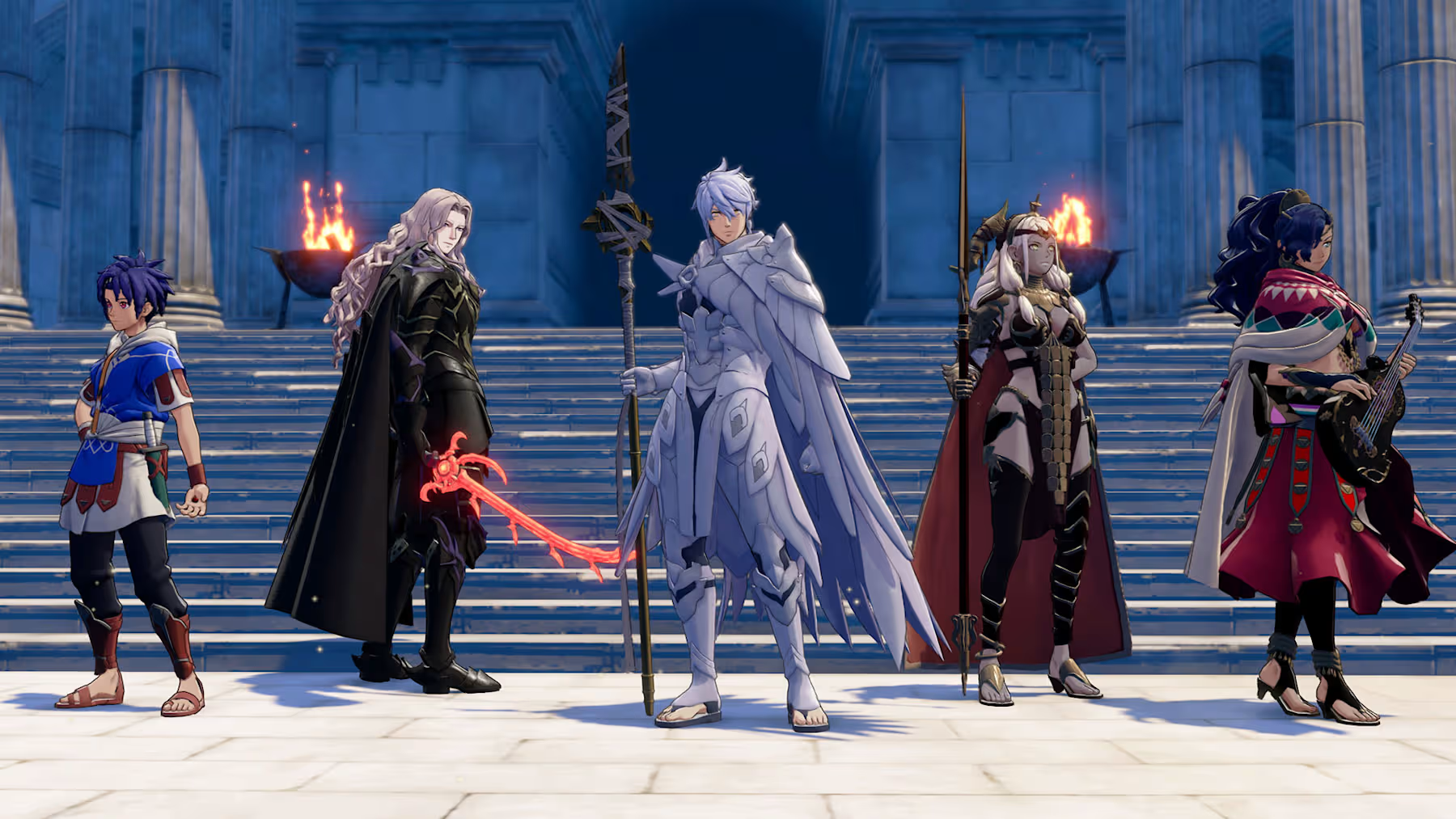
I also found Eshmel considerably less interesting than the other main characters. The four Flame Lords have clearer motivations and personalities, while the player character does not leave quite the same impression. Considering how strong the rest of the cast is, this contrast is noticeable.
Despite these issues, Fire Emblem: Fortune’s Weave feels like a worthwhile addition to the series. Its time travel premise and four character routes give it a structure that feels different from the usual Fire Emblem formula, while the tactical combat remains the main reason to keep coming back.
For me, the game works best when it focuses on its core strengths: the four heroes, their interconnected stories, and the grid-based battles. The weaker JRPG encounters, Eshmel’s limited characterisation, and lack of a story recap keep it from being a completely smooth experience, but they do not take away from what Fortune’s Weave does well. It is a game that should appeal particularly well to existing Fire Emblem fans, while offering enough new ideas to make this entry feel distinct.
Fire Emblem: Fortune’s Weave Game Information
- Price: $69.99
- Publisher: Nintendo
- Developer: Intelligent Systems / Nintendo
- Platform: Switch 2 (Reviewed)
- Disclaimer: A review code was provided by the publisher