NVIDIA has confirmed that its controversial DLSS5 technology is essentially an AI filter that developers can control.
During its SIGGRAPH 2026 keynote, NVIDIA offered a detailed explanation of DLSS 5 and its underlying technology. Rather than functioning as a fully autonomous image generation system, the algorithm is fundamentally a developer-controlled AI enhancement stage that operates on an already rendered frame. Developers can adjust how strongly NVIDIA DLSS5 affects the final image through a range of controls, including intensity sliders, masking, and model selection, essentially making it an AI post-processing filter.

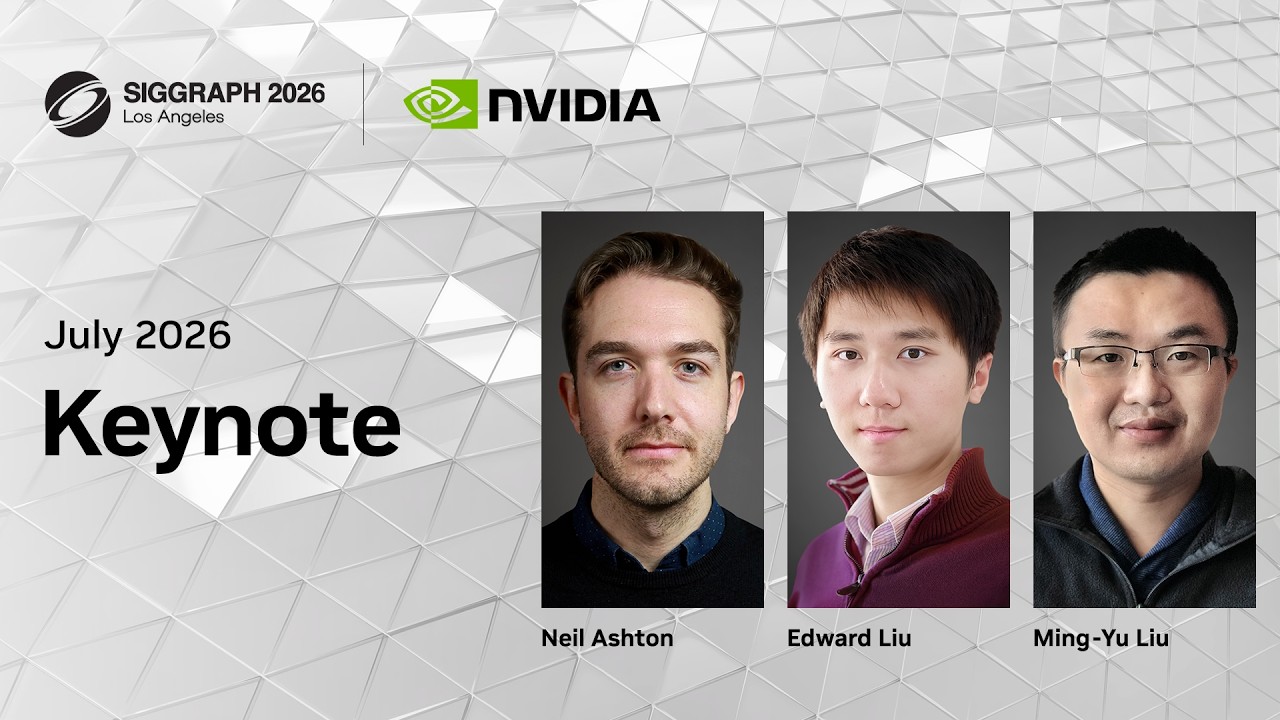
During the presentation, NVIDIA Director of Applied Deep Learning Research Edward Liu explained that DLSS 5 leaves the renderer responsible for constructing the game world while AI is used afterward to “enrich its appearance.” “The renderer keeps building the world exactly as the game has authored it,” he said. “And the generation becomes the learned stage afterwards to enrich its appearance.” He further described the concept as simulation defining the world and generation enriching its appearance.
The keynote highlighted that DLSS5 doesn’t alter geometry or rewrite a game’s content. Instead, it enhances visual characteristics such as ambient occlusion, subsurface scattering, reflections, contact shadows, and lighting while preserving the underlying scene. Instead of exposing a single fixed enhancement pipeline, NVIDIA showed that developers can select different DLSS5 models, assign them to individual scenes or cutscenes, and independently adjust “structure intensity” and “tone intensity” using sliders. Structure intensity controls high-frequency detail such as ambient occlusion, reflections, and subsurface scattering, while tone intensity adjusts overall lighting and color characteristics across the image.
It was mentioned that developers can isolate individual characters, props, or environmental objects using masking, then independently adjust DLSS5’s strength for each element. NVIDIA demonstrated semantic masking, where the AI itself recognizes characters without requiring manual masks, allowing enhancement to be applied selectively to characters while leaving the surrounding environment untouched.
Liu addressed comparisons to traditional image filters, arguing that the model is “not a regular filter” because it inherits world knowledge from much larger AI foundation models and understands characters, lighting, and scene context rather than simply applying predetermined image operations.