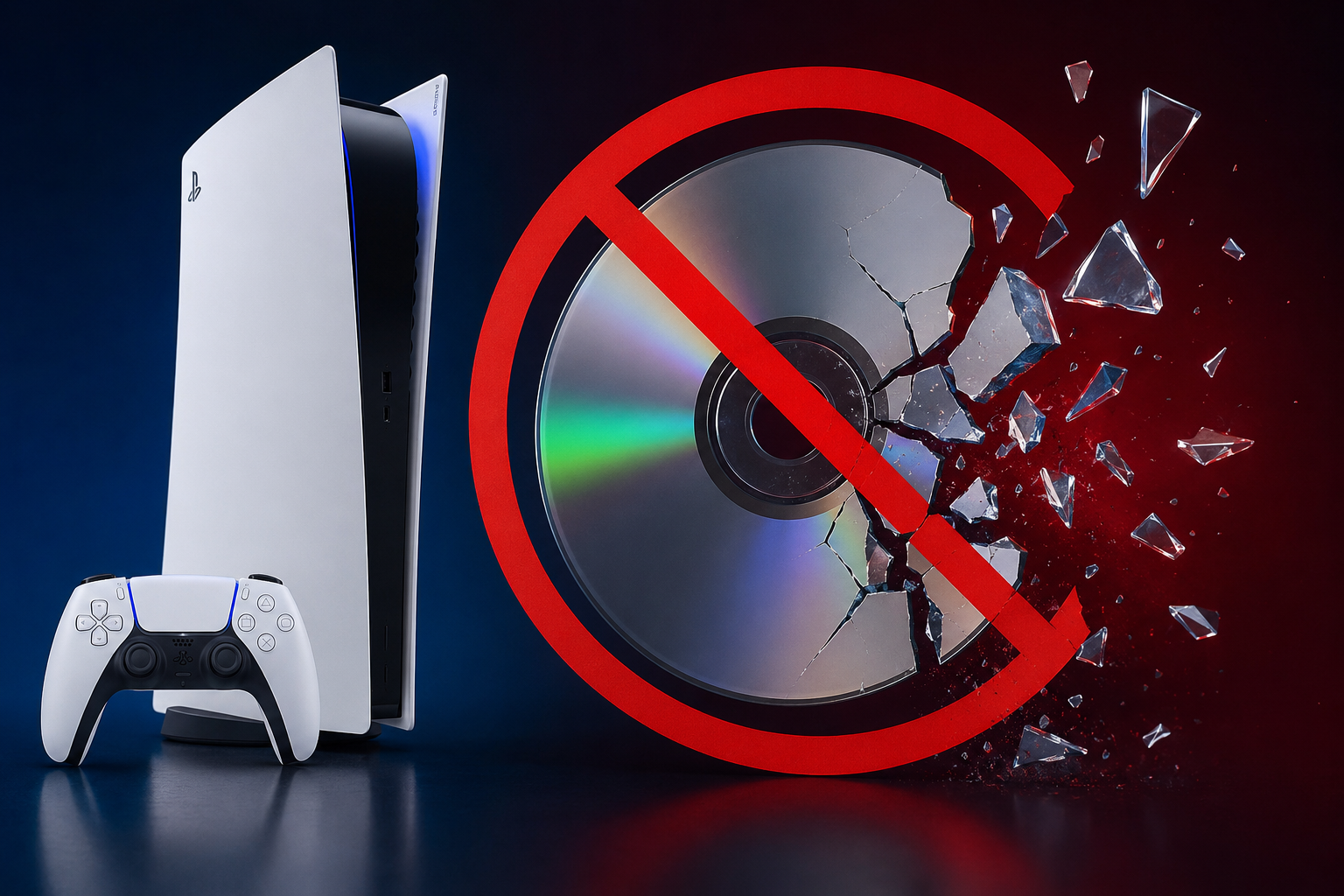
With Rockstar Games officially confirming that Grand Theft Auto VI pre-orders opened on June 25, 2026, the industry has passed the point of no return for its planned November 19, 2026, release. The industry has been pushing toward an all-digital future for years, but the news surrounding Grand Theft Auto VI has finally brought the issue to a head. With major publishers ditching physical discs for boxes that contain nothing but download codes, a harsh reality is setting in: we aren’t buying games anymore; we are simply paying for a temporary license to play them.
It is a difficult deal for consumers, and the power dynamic has shifted entirely in favor of publishers. Players are starting to wonder if the convenience of a digital download is actually worth the trade-off of losing control over their own collections. This isn’t just a minor technical update; it is a complete rewrite of what it means to “own” a game, effectively turning our libraries into digital leases that can be revoked at any time.
From Physical Possession to Licensed Access
Not long ago, a game purchase was a simple, discrete transaction. You paid for a physical disc that allowed for trading, reselling, or indefinite offline play. Today, the industry relies on massive digital storefronts. Under this framework, a purchase merely grants a revocable license to access software. By engaging with these modern platform ecosystems, users effectively sign off on terms of service (EULAs) that prioritize publisher control over consumer rights.
This pivot to digital-only formats serves a specific purpose: tighter enforcement of digital rights management (DRM). By tethering software to online account ecosystems, publishers ensure continuous authentication, effectively turning a static product into a service they can manage at their discretion.
Storefronts and the Preservation Crisis
Digital distribution offers undeniable speed and convenience. However, it creates a massive blind spot for game preservation. Unlike a disc that exists as a permanent archive, digital software is beholden to server longevity. When a storefront closes or a game is delisted due to expired licensing, consumer access evaporates.
This instability is a global concern. In regions where infrastructure is inconsistent, the reliance on stable connections to authenticate basic licenses is a constant frustration. We see this trend reflected in the broader digital economy, most notably in the regulatory overhaul of online casinos in New Zealand. By transitioning to a strictly licensed, server-dependent ecosystem for all iGaming, including the widespread use of online pokies in New Zealand, the government is enforcing a “service-first” architecture that mirrors the gaming industry’s own trajectory.
Whether it’s a AAA title or a regulated casino platform, the reality is the same: the user’s experience is no longer a local asset but a cloud-based portal that requires constant server validation. When that reliability wanes, the fragility of a purely digital library becomes undeniable, and the history of our favorite titles is effectively erased.
Shifting Expectations and Platform Control
While many players enjoy the instant access and cross-platform perks of digital libraries, this convenience has come at the expense of the secondary market. Because digital licenses are locked to individual accounts, the tradition of trading or reselling games has been rendered obsolete. Furthermore, this dependency creates a dangerous single point of failure; if a user’s account is flagged, even for issues as contentious as involvement in modded lobbies, their entire library can be rendered inaccessible, effectively turning a permanent purchase into a revocable privilege.
Publishers argue this model minimizes overhead and streamlines the distribution of live-service updates. By keeping the player base within a unified digital ecosystem, companies can deploy patches and content expansions in real-time. Nevertheless, this strategy leaves the end-user with no true ownership of the media; the software is essentially a lease that can be modified or revoked at any time.
The Future of the Physical Format
Physical media isn’t disappearing, but its function is transforming. Retail releases are increasingly serving as collector’s items, memorabilia for those who value the aesthetic of the “box,” regardless of whether the software inside is digital.
The industry will likely remain a hybrid environment for some time. However, the move toward digital-only distribution for major titles signals that publishers prioritize granular control over the legacy ownership model. For the average gamer, the trade-off is clear: the convenience of an instant, cloud-linked library demands a fundamental shift in how we perceive ownership.
Ultimately, if the industry is committed to a digital-first future, it must rethink the current architecture of distribution. We need sustainable models that provide consumers with genuine agency, rather than fragile licenses that exist only as long as the servers stay online. In the current climate, your collection is only as permanent as the servers supporting it.