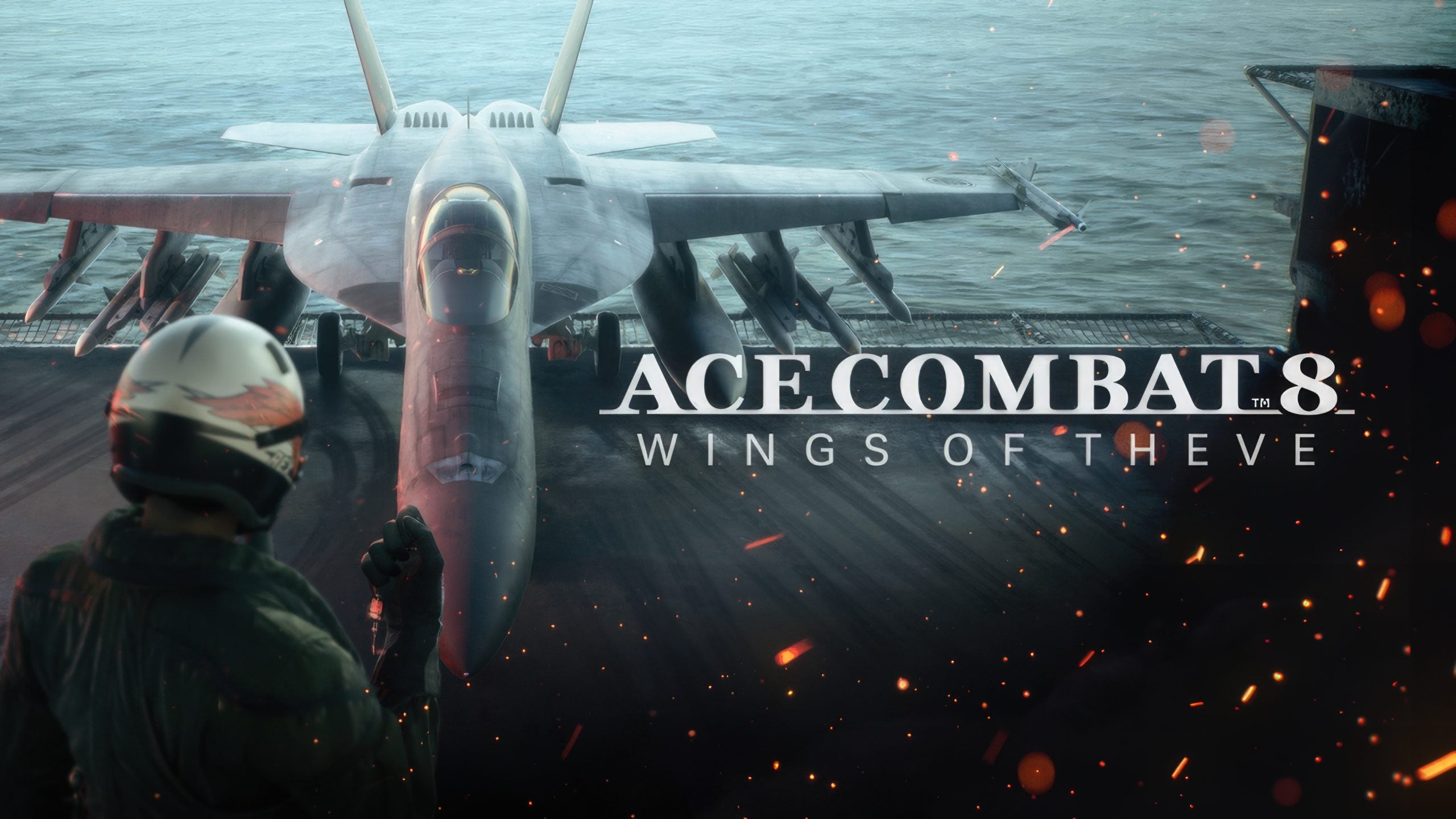
There are few things quite like the feeling of taking off in an Ace Combat game. The engines roar, the carrier deck disappears beneath you, missiles begin screaming across the sky, and before long you’re pulling impossible maneuvers while a soaring orchestral soundtrack makes you feel like the fate of the world rests entirely on your shoulders. Bandai Namco’s Ace Combat 8: Wings of Theve understands that feeling better than almost any other entry in the series. The game arrives 7 years after Ace Combat 7: Skies Unknown, doubling down on the formula that has kept the series alive for over three decades.
Much like in prior entries, Ace Combat 8’s story involves geopolitical conflict, secretive military technology, larger-than-life aces and weapons that become increasingly ridiculous in scale. The game takes place in Strangereal, ten years after the events of Ace Combat 7. The Federation of Central Usea is suddenly attacked by the Republic of Sotoa, leaving much of its military infrastructure devastated. You play as an initially unknown pilot who is rescued after being shot down and subsequently becomes involved in the creation of a legend surrounding the mysterious Wings of Theve.
There’s a contemporary theme running underneath it all, i.e., the manipulation of information and propaganda during wartime. The idea of turning a fallen pilot into a symbol to maintain morale gives the narrative an interesting foundation and occasionally raises thoughtful questions about how modern conflicts are perceived by the public.
Members of your squadron have distinct personalities and motivations, and the game makes a genuine effort to make you care about the people behind the aircraft. Storytelling frequently shifts between brief cutscenes, mission briefings, first-person sequences and a constant stream of radio communications. The protagonist remains silent, which aids immersion but also limits the emotional impact to an extent. On the other hand, the sheer volume of NPC dialogue during combat can make following the story quite difficult. When missiles are approaching, targets are changing, alarms are screaming and half a dozen characters are talking over the radio, paying attention to every piece of exposition becomes nearly impossible. The narrative has some interesting ideas, but ultimately feels less cohesive than its premise suggests.
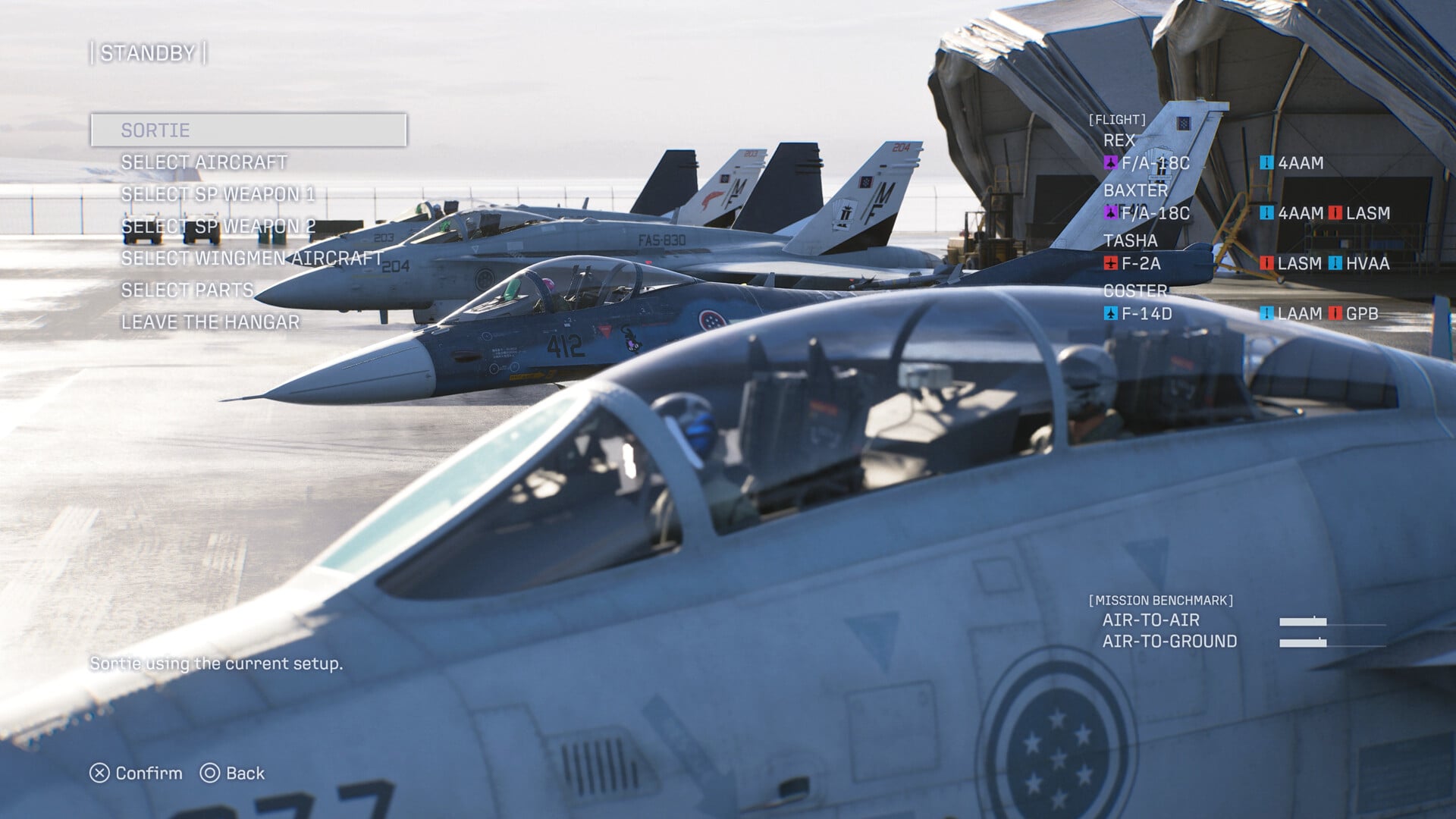
Ace Combat 8’s core strength lies in the cockpit. The basic formula remains the same. Before each mission, you select your aircraft, special weapons and upgrades, while also choosing aircraft for your squadron. Credits earned during missions can be spent unlocking new planes, weapons and performance-enhancing parts through the familiar Aircraft Tree. It is an addictive progression loop, especially for aviation enthusiasts. Starting with familiar aircraft and gradually working toward planes such as the F-35, F-22 and Su-57 provides a constant reason to keep playing.
The aircraft themselves are superbly modelled, although their practical differences aren’t always as pronounced. Even when switching between older and more advanced fighters, the fundamental approach to combat remains largely similar. But this is by design, as Ace Combat is all about mastering the pilot rather than faithfully reproducing the different capabilities of each aircraft. The aircraft carry large quantities of missiles; fuel is effectively unlimited, and crashing into the sea isn’t necessarily the end of the mission. None of this is remotely realistic, and none of it needs to be. The series has always been an arcade experience first, and Wings of Theve embraces that identity with confidence. What matters is the sense of speed and the sheer satisfaction of lining up an enemy fighter and hearing the lock-on sound before launching a missile.
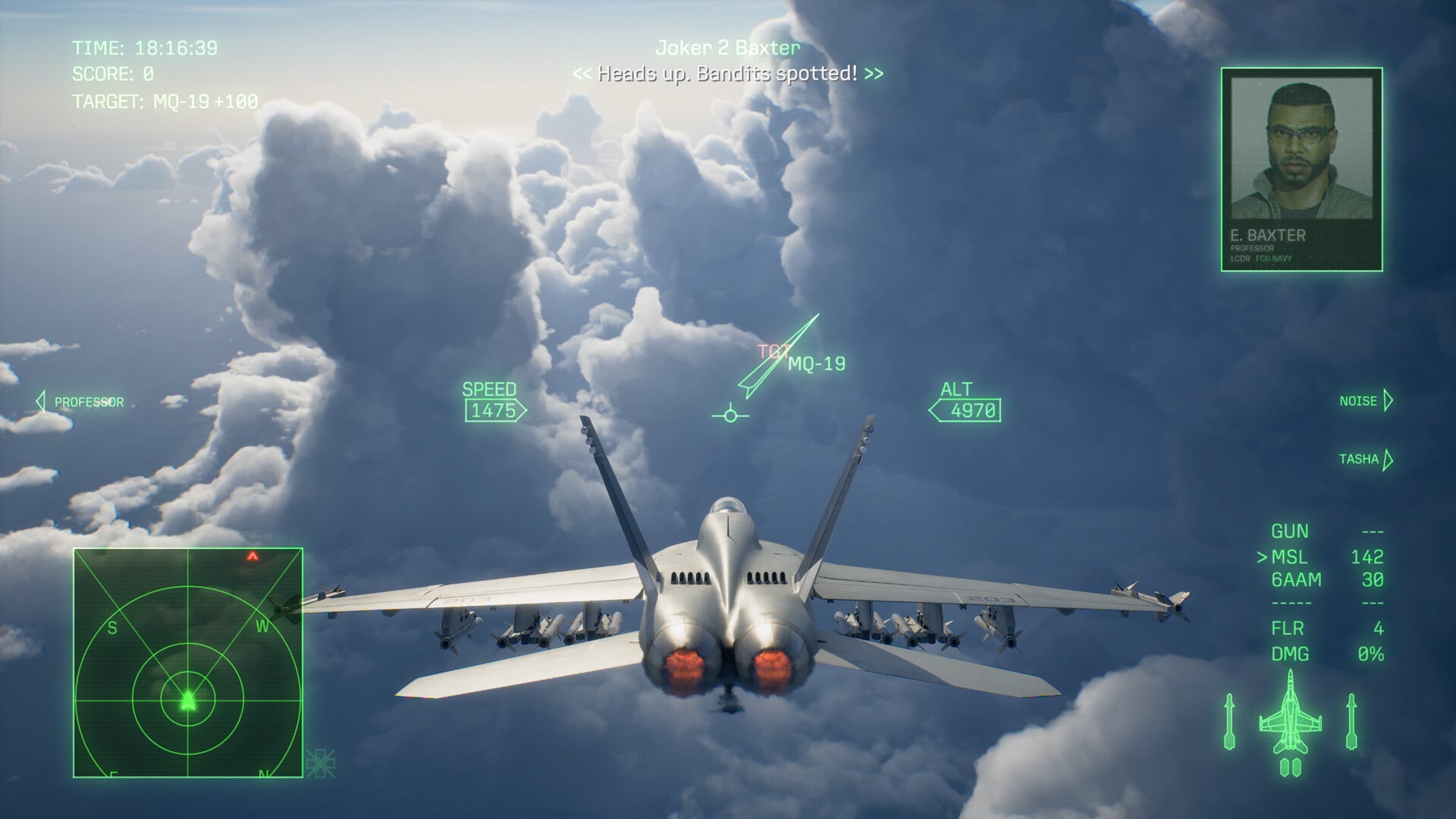
Mission design is Ace Combat 8’s greatest triumph. The campaign can run for over 20 hours, depending on difficulty and playstyle, making it considerably longer than prior entries. There are conventional dogfights, ground-attack missions, escort operations, naval engagements and radar-avoidance sections, but the game frequently adds unexpected complications. Giant land-based weapons, massive fortifications, drone attacks, electronic warfare, dense clouds and enormous enemy formations can turn a straightforward mission into complete aerial chaos within seconds.
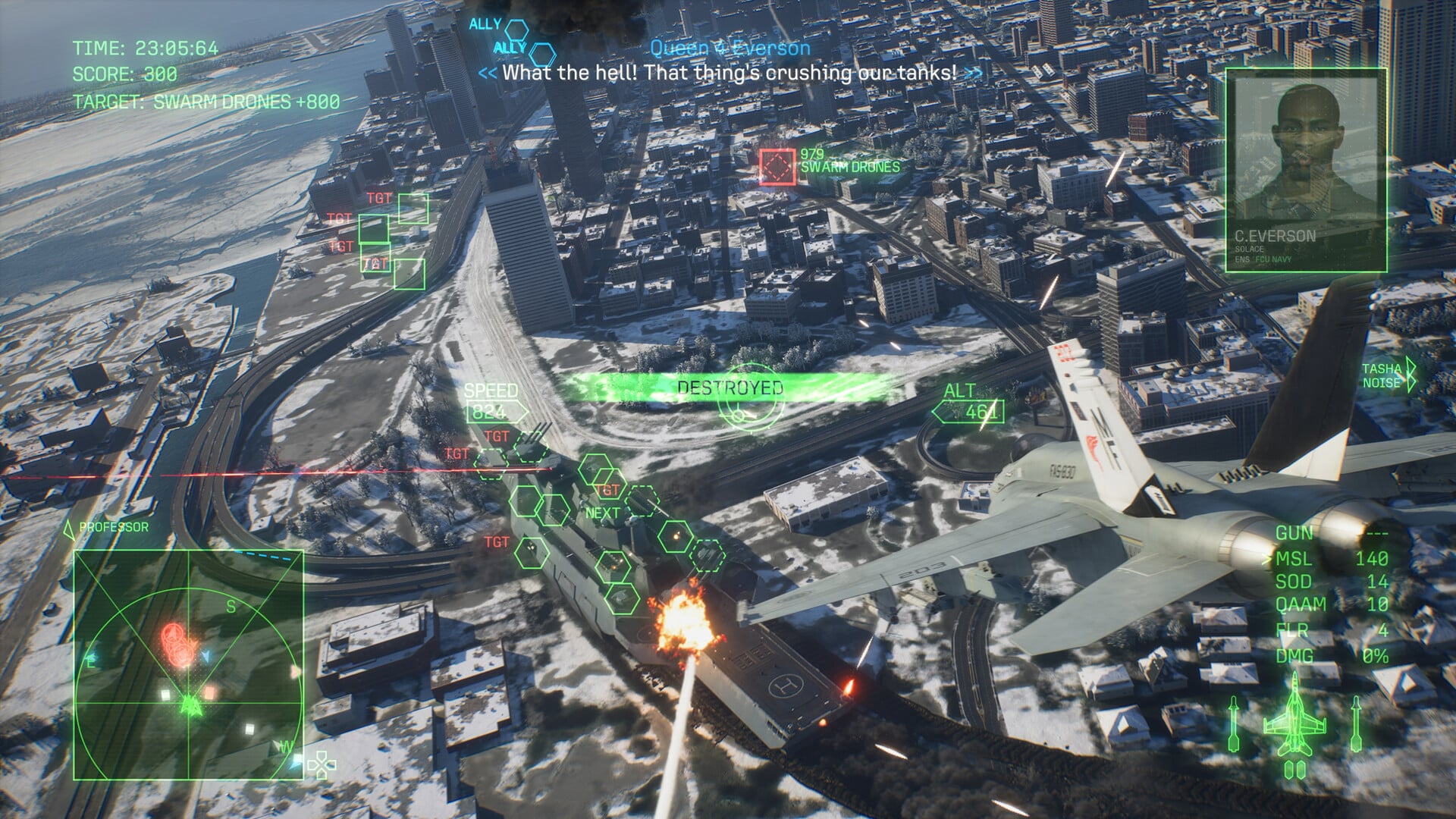
This unpredictability is classic Ace Combat at its finest. One moment you’re calmly destroying ground targets; the next, an enemy ace appears, missiles are everywhere and your carefully planned attack has turned into a desperate fight for survival. The second half of the campaign stands out in particular with some truly spectacular encounters. The ability to issue commands to your wingmen also adds a welcome layer of tactical decision-making to the experience.
Despite the intense combat scenarios, Wings of Theve remains highly accessible. A simplified control scheme allows newcomers to get airborne quickly, while the more traditional controls provide greater freedom for experienced players.
Outside of the campaign, Wings of Theve includes Free Flight, Free Mission, training options and a much more robust online component than prior entries. Several competitive and cooperative modes give players plenty to explore after completing the story, while progression, customization and additional content should offer incentives to keep returning. However, its success will ultimately depend on how Bandai Namco Entertainment supports it over time.
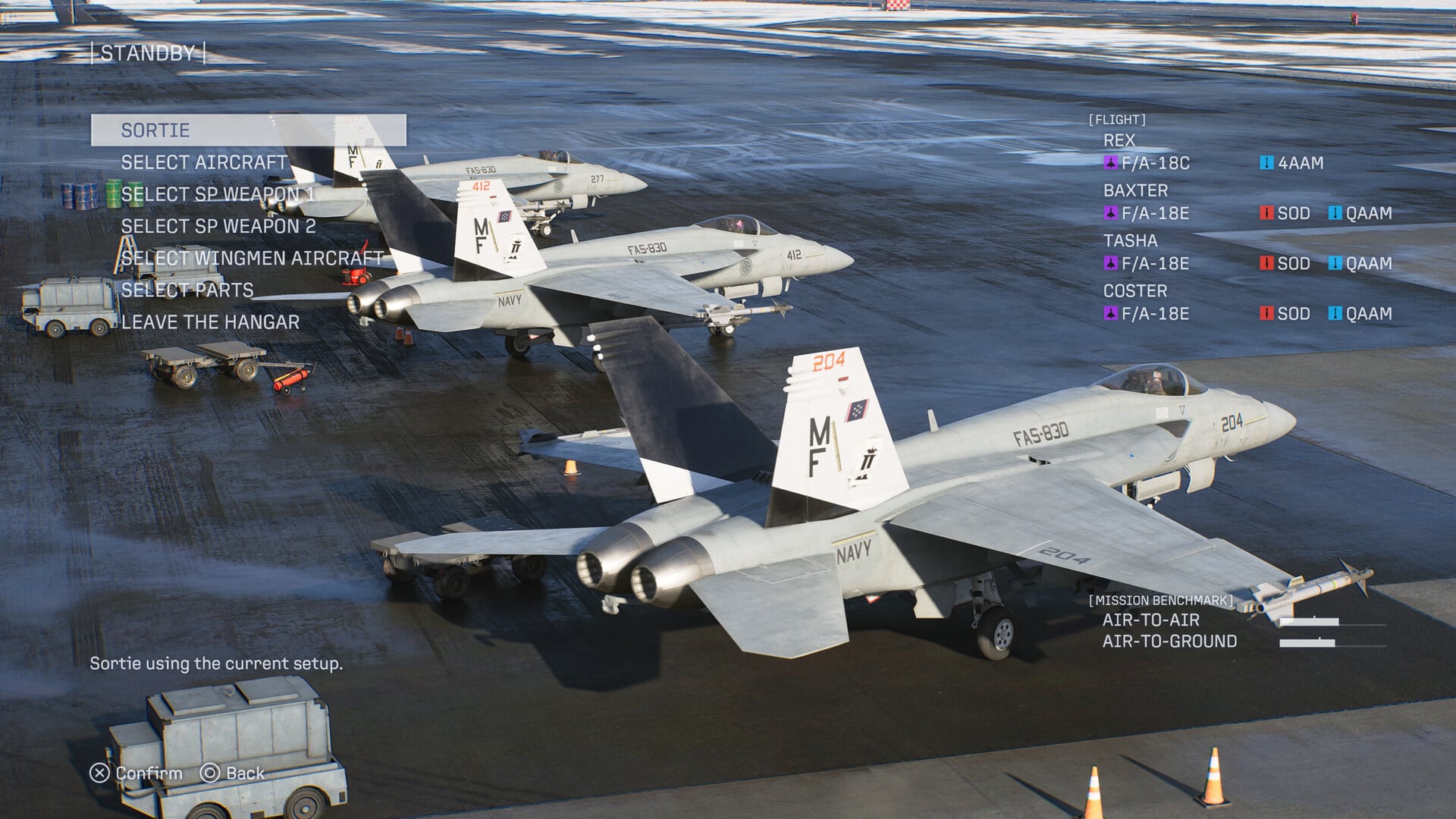
Visually, Wings of Theve is a spectacular looking game. The aircraft models are outstanding, the clouds look gorgeous, explosions are impressive and the larger environments benefit from a much greater sense of scale. The transition to Unreal Engine 5 has allowed the development team to present more detailed landscapes, improved lighting and impressive visual effects. Cities, terrain and military installations feel like genuine locations rather than miniature dioramas, making low-altitude flight appear far more believable than in prior entries.
The sound design is similarly excellent. Explosions, engines, missile warnings and gunfire create an appropriately chaotic battlefield, while Keiki Kobayashi’s orchestral soundtrack once again delivers the emotional backbone of the experience. When the music surges during an intense aerial conflict, Ace Combat 8 showcases just why the series’ soundtracks have become as iconic as its dogfights.
Ace Combat 8: Wings of Theve isn’t revolutionary, and it doesn’t necessarily need to be. It’s a refinement of a formula that has worked for decades, and, in many respects, it’s the most accomplished version. The campaign is more substantial, the mission design is consistently exciting, the aircraft are beautifully presented, and the sense of flying at extreme speeds while missiles streak past your canopy remains extraordinarily satisfying. While the narrative has some interesting ideas, it’s unevenly executed, and the constant radio chatter during missions can get very overwhelming.
Ace Combat 8: Wings of Theve Game Information
- Price: $69.99
- Publisher: Bandai Namco Entertainment
- Developer: Bandai Namco Aces / Project Aces
- Platform: PC/PS5 (Reviewed)
- Disclaimer: A review code was provided by the publisher