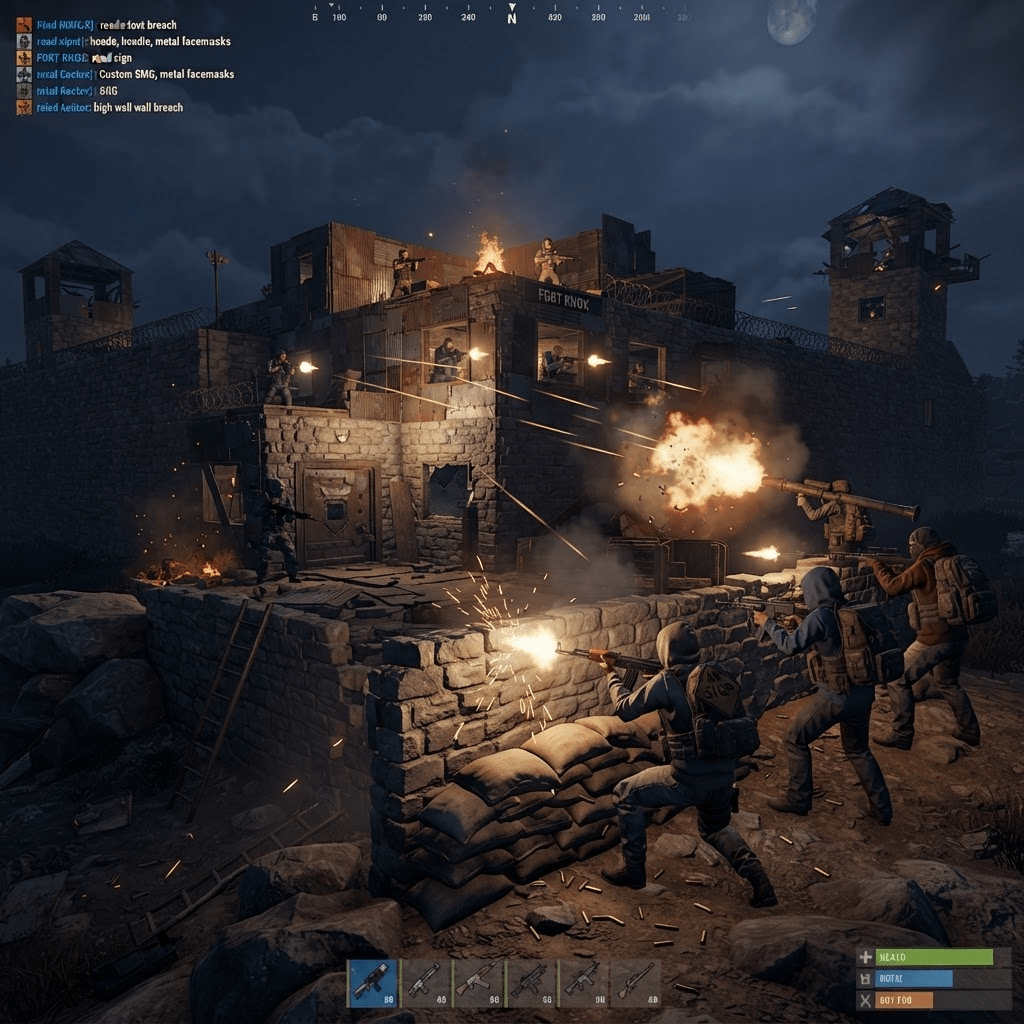
Every raid in Rust is an economic decision before it is a fight. Somebody has to farm the sulfur, cook it into gunpowder, turn that into explosives and then decide whether the base in front of them is worth the pile they are carrying.
Most players work this out by feel, which is why so many raids stall halfway through a wall. The maths is not complicated, but it is unforgiving, and getting it wrong means walking away from a half-open base with nothing.
Worth understanding properly, because it shapes how bases get built as much as how they get broken.
Sulfur Is the Only Currency That Matters
Rust has plenty of resources, and only one of them really governs the late game. Sulfur becomes gunpowder, gunpowder becomes explosives and ammunition, and everything competitive flows from how much of it a group can gather in a wipe.
This is why raid costs are quoted in sulfur rather than in items. Saying a raid costs four C4 tells you nothing about how long it took to afford, while saying it costs several thousand sulfur tells you exactly how many hours went into it.
It also explains the strange rhythm of a wipe cycle. The first few days are quiet because nobody can afford to be loud yet.
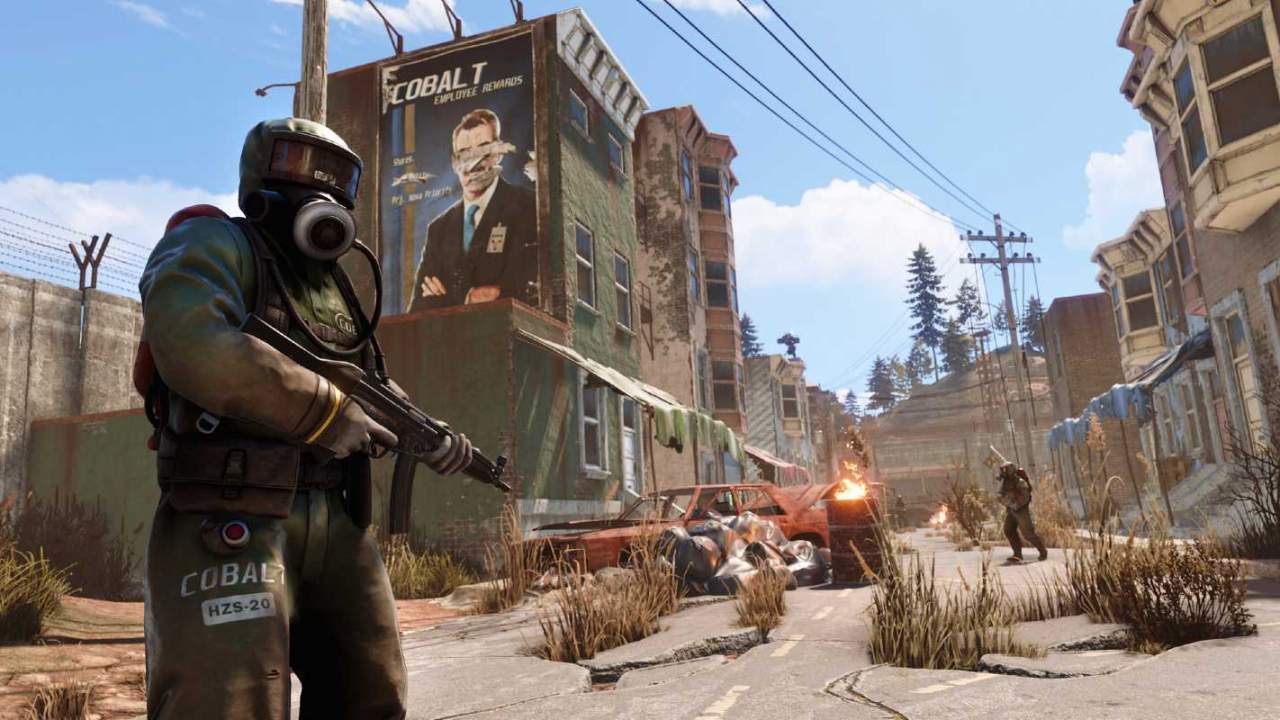
The Numbers Behind Each Wall
Every structure in the game has a hit point value and a resistance figure for each damage type, and the explosive requirement falls out of those two numbers. Divide the hit points by the explosive’s damage after resistance, round up, and that is your answer.
Doing that by hand for a full base is tedious and easy to get wrong, which is why a Rust raid calculator is standard kit for anyone planning something serious. It covers around 27 targets, from wooden doors up to armoured walls, tool cupboards, auto turrets and vehicles including the Bradley and the tugboat, and it ranks every viable explosive by sulfur cost rather than just telling you the cheapest single option.
The useful part is the ranking rather than the raw figure. Nine explosive types can damage most structures, and the gap between the most efficient and the most convenient is often several hundred sulfur per wall.
There is also a soft side toggle, which matters more than new players expect. Hitting a wall from the inside face costs considerably less than hitting the outside, and knowing which side you are looking at changes the whole plan.
Doors Versus Walls Versus Patience
A sheet metal door goes down to a single C4, which is the number most players remember and the reason sheet metal doors are treated as a formality rather than a defence.
Armoured doors and stone or metal walls are a different proposition entirely, and the cost climbs fast enough that raiders start looking for another route in. Windows, floors and the softer faces of a base all become worth checking.
Rockets, satchels and explosive ammunition all sit somewhere on the same curve, trading sulfur efficiency against how long you are stood outside making noise. Cheap raids take longer, and time is what gets raiders killed.
Why Builders Should Read the Same Numbers
The calculator is usually framed as a raiding tool, and it is arguably more useful for the people trying not to get raided. If you know what your own base costs to open, you know whether it is worth opening.
Good base design is mostly about stacking cost. Layered walls, honeycomb compartments and airlocks do not make a base invulnerable, they make it expensive, and expensive bases get skipped in favour of the one down the road.
The specific goal is to make the raid cost more than the loot inside is plausibly worth. That is a number you can actually calculate rather than a feeling about how safe your walls look.
The Figures Move Every Month
None of this is static. Facepunch adjusts damage values, resistances and building costs regularly, and Rust has been in continuous monthly development for over a decade, which means a raid cost memorised two years ago is very likely wrong today.
Values that come straight from the current patch data are worth more than community wisdom for exactly that reason. A chart circulating on a forum is a snapshot of whatever the game looked like when somebody made it.
The meta shifts with those changes too. A base layout that priced raiders out for a couple of wipes can quietly become affordable after a balance pass.
Planning a Raid That Actually Finishes
The most common failure is not being outgunned, it is running out of explosives two walls in. At that point you have announced yourself, spent everything and left the defenders with a repaired base and a grudge.
Cost the whole route before you start, including the internal doors, and then carry a margin on top. Bases rarely match what they look like from outside, and the extra layer you did not account for is the one that ends the attempt.
Anyone who follows our gaming coverage will have seen this pattern across every survival game with a destruction system, and Rust is simply the most honest example of it.
The Bottom Line
Raiding in Rust rewards arithmetic far more than aim. The groups that consistently come away with something are the ones who know what a wall costs before they walk up to it.
Work from the current patch values, check whether you are hitting the soft side, and price the full route rather than the first door. Everything else is enthusiasm, and enthusiasm does not open armoured walls.