Poker has become one of gaming’s most reused mechanics. It shows up in western epics, Japanese crime dramas, casino heists, and even roguelike deckbuilders that have nothing to do with cards on the surface. Here’s a look at some of the best examples, and where to go if you want to take what you’ve learned at a virtual table into a video game.
Going Deeper Than the Minigame
Firstly, video game poker is a fine way to pick up the basics, but the actual strategy behind the game runs a lot deeper than any minigame bothers to teach. Starting hand selection, how to size bets across different streets, and adjusting to how loose or tight an opponent is playing are all things a full poker strategy guide can walk you through in far more depth than an in-game tutorial ever will, right down to separate breakdowns for Texas Hold’em and Omaha, since the extra hole cards in Omaha change which hands are worth playing.
Guides like this typically build from the basics – starting hand ranges and position at the table – up through bankroll management and how to handle tournament formats like sit-n-gos, which is a natural next step for anyone who’s already comfortable with the flow of a hand from playing it inside a game first. Anyone who wants to understand poker in more detail will benefit from looking at this kind of guide, rather than just picking up the foundational ideas from the video game versions. Even so, though, those versions carry many of the key elements, and they can present a lot of fun, so let’s explore them.
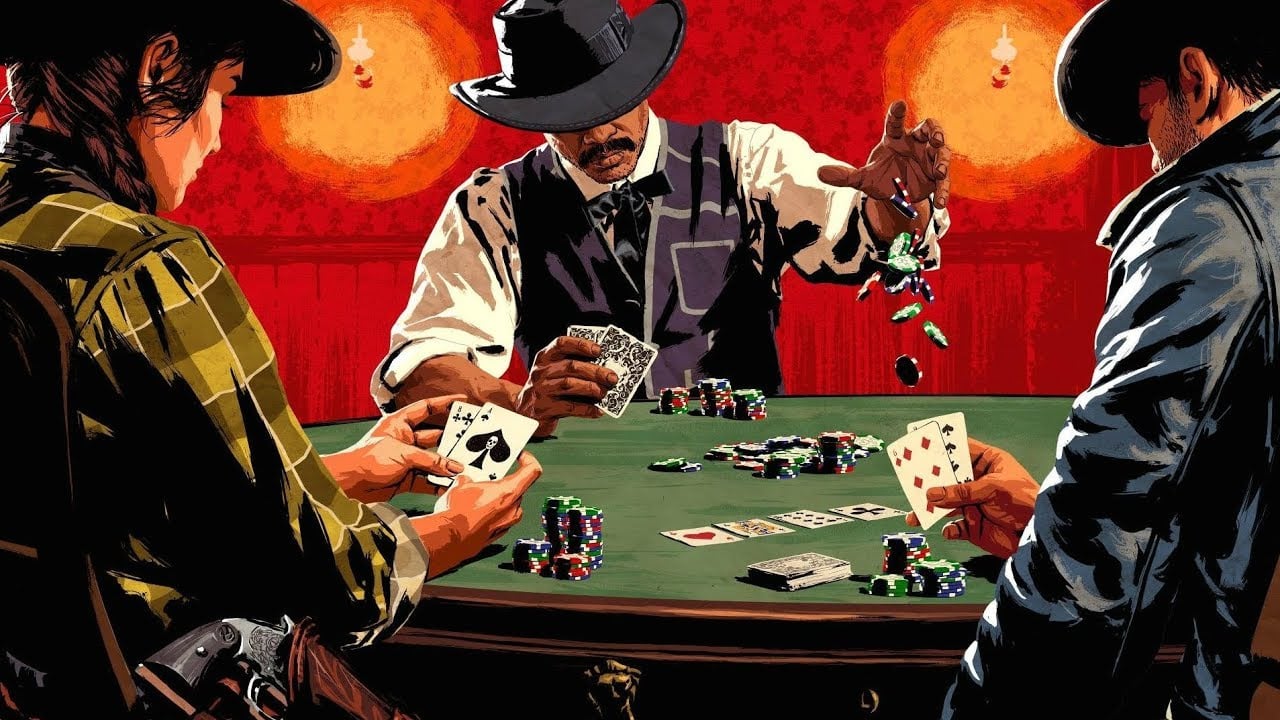
Red Dead Redemption 2
Rockstar’s open-world western built one of the most fully realized poker minigames in any video game, with tables scattered across the map at different buy-ins and stakes. Opponents at the table track how you’ve played previous hands and adjust how they respond to you over the course of a session, which pushes the minigame closer to how a real poker table behaves than a simple randomized dealer would. Red Dead Online carries the same system into multiplayer sessions, letting players sit down against real opponents rather than scripted NPCs. It’s widely considered the high-water mark for poker done well inside a much larger game.
Yakuza Kiwami
The Yakuza series has always leaned into its mini-game-packed version of Japan, and its poker table is one of the deeper examples in the genre. Yakuza Kiwami offers three Hold’em variants, Texas Hold’em, Pineapple Hold’em, and Omaha Hold’em, all playable at the same table, which is more variety than most standalone poker games bother including. The dealer role rotates around the table clockwise just like a real game, and the only real departure from standard rules is a Royal Joker card thrown into the mix for extra chaos.
GTA Online’s Diamond Casino & Resort
Grand Theft Auto V’s Diamond Casino & Resort brought Three Card Poker into the series for the first time, a variant that’s genuinely uncommon in video games compared to standard Hold’em. Players sit against the house dealer rather than other players, which keeps sessions quick, but it’s a nice change of pace from the Hold’em format most other games default to. It sits alongside blackjack, roulette, and slots as part of the casino’s wider table games floor.
The Watch Dogs Series
Ubisoft’s Watch Dogs games don’t get talked about much for their poker tables, but they’re worth a mention for how much production value went into them. High-quality sound design and card animations give the minigame a level of polish that goes beyond a simple side activity, closer to how a dedicated casino game would present itself than a quick distraction bolted onto an open-world hacking game.
Balatro
No list like this is complete without Balatro, the 2024 roguelike deckbuilder that took poker hand rankings and turned them into an entirely new scoring system built for chaining combos rather than playing hands against opponents. It’s not poker in the traditional sense; there’s no betting, no table, no opponents to read, but it’s built entirely on the DNA of poker hand values, straights, flushes, and full houses reimagined as scoring multipliers instead of winning hands. The game sold extremely well and picked up major recognition at the Golden Joystick Awards, proof that poker’s underlying structure still has room for genuinely new ideas decades after Hold’em became the default.
Poker Keeps Finding New Homes
What’s striking, looking across all of these, is how differently each developer chose to use the same basic card game. Rockstar built poker as a slice of realism inside a much bigger world. Yakuza treated it as one mini-game among dozens, packed with variety. Balatro took the format apart entirely and rebuilt it into something unrecognizable, keeping only the hand rankings intact. That range says something about how flexible poker actually is as a system, adaptable enough to sit quietly inside a western epic or become the entire foundation of a genre-bending indie hit. For a game invented long before video games existed, it’s found a surprising number of ways to stay relevant inside them.