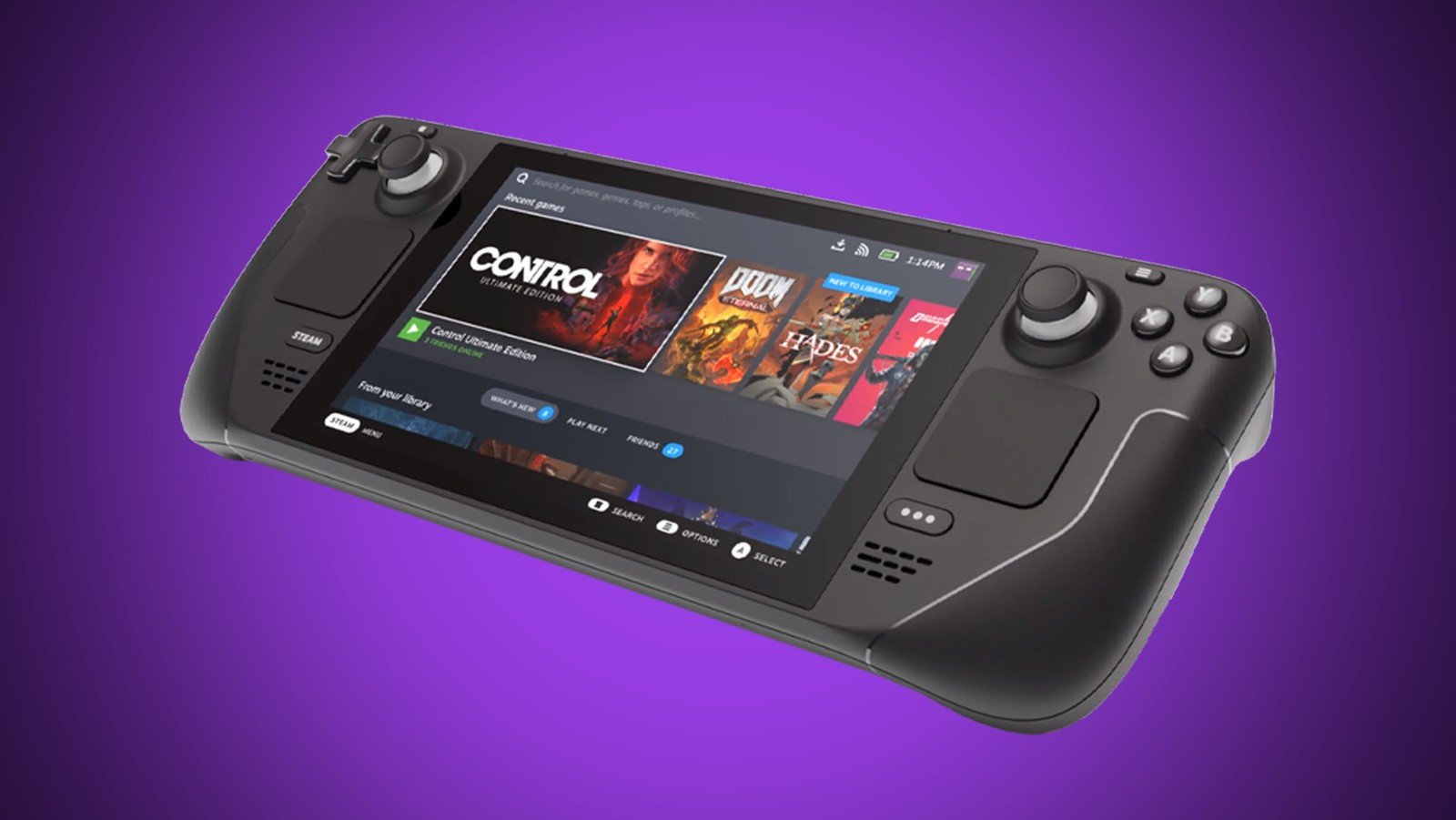
The one thing that seemed to be an undeniable fact for years of being a PC gamer was that sometimes getting a game to run felt like a game in itself. It was a time of driver updates, on and off-screen graphics menus, launcher conflicts and navigating Reddit forums for a missing crash fix – in fact, it took more patience than enthusiasm to play on PC. You might not want to spend half the time trying to figure out the problem if you’re watching someone play, creating video with a video creator, or just trying to unwind after a long day of work to play a little for an hour. That’s where the Steam Deck made itself at home. It did not make PC games more powerful, it made them less frustrating! But as soon as players tasted that convenience there was no turning back.
PC Gaming Used to Reward Patience
It’s like a badge of honour that long time PC gamers wear when discussing issues, they have a story to tell.
This is a scenario many of us have found ourselves in. Minor updates for the latest GPUs several minutes before releasing a new version. I have been checking Steam forums as the game crashes, after the intro, movie. Setting shadows from Ultra to High, as for some reason, that seems to be causing stuttering. Community patches ahead of the official patch.
It became part of the culture. The newcomers were instructed that it was their duty to tinker.
Fair enough, it was nice to get everything right. The process of fine tuning until you got everything just right was a thing that console gamers don’t normally experience. However, let’s face it, no one enjoyed an evening of troubleshooting rather than playing.
I was half way to the game.
PC platform has always been unmatched in terms of flexibility but flexibility also often has complexity. As hardware became more powerful, games became more demanding, and settings menus grew into pages of unfamiliar acronyms. There were more and more, but DLSS, FSR, XeSS, frame generation, shader caches.
For some players, the freedom to play was a delight. Others couldn’t wait to press Play.
Valve Solved a Problem Nobody Was Really Talking About
Most discussions centered around the hardware when Valve made Steam Deck.
Could it run modern AAA games? Would it be a deal breaker if Linux didn’t work? Was it powerful enough?
Those questions were not as crucial as the experience itself.
Convenience is what the Steam Deck brought to PC gaming that it had never really cared about to this point.
Pause a game during a boss fight and resume it afterwards without restarting. Use a controller-friendly interface to navigate in your library, rather than playing with the mouse and keyboard. Before downloading a game, verify if its Steam Deck Verified. Automatically install updates in the background. Launch a game in seconds instead of tweaking settings for twenty minutes.
None of these features were revolutionary on their own. Consoles had offered many of them for years.
The thing that was revolutionary, was to bring that attitude to the PC game without sacrificing the openness that makes the platform unique.
The Steam Deck didn’t take away choice, it just eliminated the need to consider every technical detail before enjoying.
Suddenly, Everyone Wanted to Make PC Gaming Easier
The Steam Deck has not only sold handhelds, but it was a success. It changed what players expected from PC gaming as a whole.
It wasn’t long before competitors arrived. The ROG Ally was introduced by ASUS. Lenovo has introduced the Legion Go. The Claw was the next on MSI. Even Microsoft admits that Windows must be more “handheld” friendly.
The competition was more than just about processors that were faster and screens larger. It was about reducing friction.
Valve further enhanced SteamOS and Big Picture Mode, resulting in a more natural controller experience. Developers began paying closer attention to handheld optimization instead of treating it as an afterthought. Features like cloud saves, performance presets, and scalable graphics settings suddenly felt more important than ever.
Even those who were not planning to purchase a handheld got these enhancements.
Lower power devices are optimized while the desktop guys also get smoother launches, better performance and fewer technical headaches.
One of the greatest advances in PC gaming was actually an item of hardware that was much less powerful than most gaming desktops would be.
Performance Finally beat Pretty Graphics.
Over the years, the only question that dominated PC gaming discussion was:
“Can it run Ultra?”
Nowadays many players are asking something completely different.
“Does it run well?”
It’s a significant change — a very significant one.
The love affair with max graphics is slowly fading out giving way to something more sensible. When it comes to reflections and shadows, it’s the stable frame rate, lower power usage, faster load times and reduced stutters that count more for many.
The results of the technologies, such as DLSS, in games like Cyberpunk 2077 demonstrate the game-changing potential they hold, giving players a choice to enjoy a game without compromising performance. In the meantime, there are titles like Elden Ring, Hades II, Balatro and Clair Obscur: Expedition 33 that show that memorable experiences don’t necessarily have to be about breaking the limits of hardware.
Optimization is as much a virtue as is ambition.
A well-designed game that is running smoothly at 60 frames per second has a more powerful effect than a technically impressive piece that isn’t doing the same thing.
The Steam Deck reinforced this concept, too, as it prompted developers — and players — to get to the point, rather than to go the extra mile.
The Steam Deck Made PC Gaming Less Intimidating
Building a gaming PC has been a club for many decades.
You had to know the ins and outs of graphics cards, processors, RAM compatibility, cooling, BIOS updates, and a lot more. Even for the newcomers the platform was not fully shielded by the purchase of a pre-built system.
The Steam Deck discreetly brought down that wall.
Anyone who didn’t really think of themselves as a “PC gamer” was suddenly interested in Steam sales, trying out some indie games and finding new genres of games that they hadn’t paid a lot of attention to.
It was their first true experience of PC gaming for many gamers.
This is a significant factor because it can influence both the game developers and game publishers, as well as the platform itself, as more people join the game.
The Steam Deck was not meant to compete with the normal gaming PC platform.
It expanded the audience for them.
The Future of PC Gaming Looks Surprisingly Console-Like
The paradox of innovation is that it’s frequently based in copying concepts, not creating new ones.
Quick Resume. Instant sleep mode. Controller-first interfaces. Automatic cloud syncing. Optimized presets. Unified libraries.
These used to be thought of as “console extras.”
They are now expectations all over the PC gaming world.
AI could soon become the de facto standard for graphics options by itself. Games are going to be easier to get into, especially in the case of operating systems. As more and more developers create interfaces that look and function on the desktop, handhelds and televisions, it is becoming an increasingly common occurrence.
The direction feels obvious.
The future of PC gaming isn’t about adding more complexity.
It’s all about the concealment.
There is a desire for players to have some freedom. They still want mods, custom hardware, and endless graphics options. But they also desire to be able to simply enjoy a game after a long day without having to read all of this.
No more need to fight for these two ideas.
Final Thoughts
For decades, PC gamers have been tricked into believing that they could tweak their machines all day long and that’s just a part of the hobby. The Steam Deck revealed an awkward reality: Most people weren’t fans of the detritus, they were just used to it, since there wasn’t anything else that was better.
It’s not that Valve has brought raw power or cutting-edge hardware to PC gaming, but they have. Rather, it revolutionized the way people thought of the platform. The usefulness, accessibility and well-designed became matters of the same value as teraflops and benchmark scores.
It’s a remarkably strong inheritance for a hand-held that many began to view as a sideshow.
The Steam Deck wasn’t only a proof that PC gaming on the move is viable. It reminded the entire industry that the best gaming experiences are the ones where the technology fades into the background, leaving players to focus on what mattered all along: simply enjoying the game.