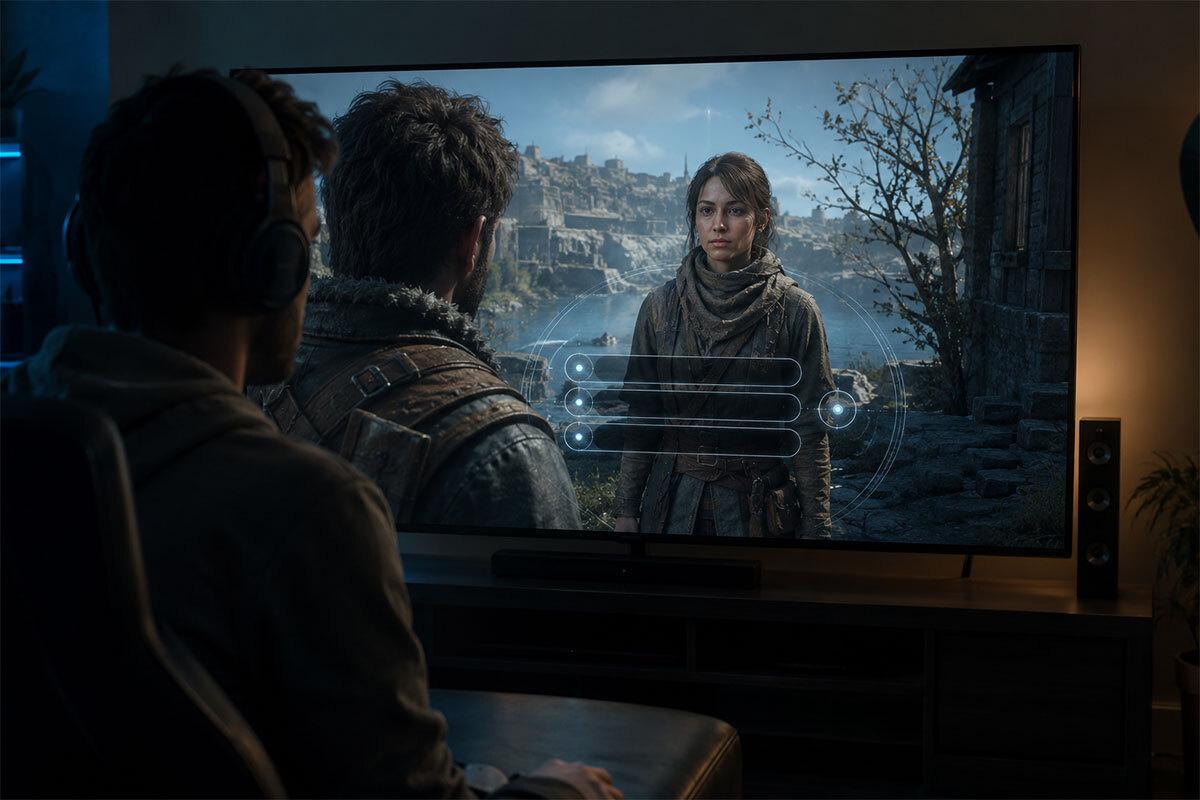
We have all been there. You are playing a brand-new game, you walk up to a villager, and instead of the usual three pre-written lines, a text box pops up. The game lets you type or say anything you want. For a second, your mind is blown. You think, Wow, the future is finally here! But then you start talking. Within two minutes, the magic fades. The villager begins giving you long, weird answers that sound exactly like a customer support agent trying to sell you internet packages. Instead of a gruff blacksmith, you are talking to a robot dressed in medieval armor.
Even though we are in 2026, and technology is moving faster than ever, most artificial intelligence (AI) non-playable characters (NPCs) still feel like chatbots. They just do not feel like real characters in a living world. Here are five big reasons why this keeps happening.
1. They Talk Too Much and Say Too Little
When game studios use massive language models for characters, they give them the ability to generate thousands of words on the fly. But think about how you talk to your friends when you play games. You use short phrases. You say things like, “Watch out!” or “Over here!”
AI NPCs do the opposite. If you ask a simple question like, “Where is the tavern?” an AI villager might give you a three-paragraph speech about the historical architecture of the tavern and the philosophical meaning of beer. This happens because the models are trained on the internet, where people write long essays. It ruins the pacing of a game. Real people do not lecture you when you just want a map direction.
2. The Tech Lacks Video Game Context
The core issue is that many systems rely on general tech rather than specialized conversational AI for gaming. When tools are not built from the ground up for gaming environments, characters lack the specific context of the virtual world around them.
A generic chatbot does not know that a dragon is currently burning down the roof of the building you are standing in. It does not realize you are bleeding or that you just stole its favorite sword. Because the underlying system treats the conversation like a standard text prompt, the NPC sounds completely disconnected from the urgent gameplay happening right around you. Without that deep integration into the game engine, the dialogue feels like a separate mini-game instead of a natural part of the adventure. Purpose-built conversational AI for gaming solves this bottleneck by tracking player sentiment and behavioral memory in real time. This ensures the NPC’s responses instantly adapt to your live in-game actions while using narrative workflows to stay completely true to the game’s established story.
3. They Don’t Have a Purpose or Goals
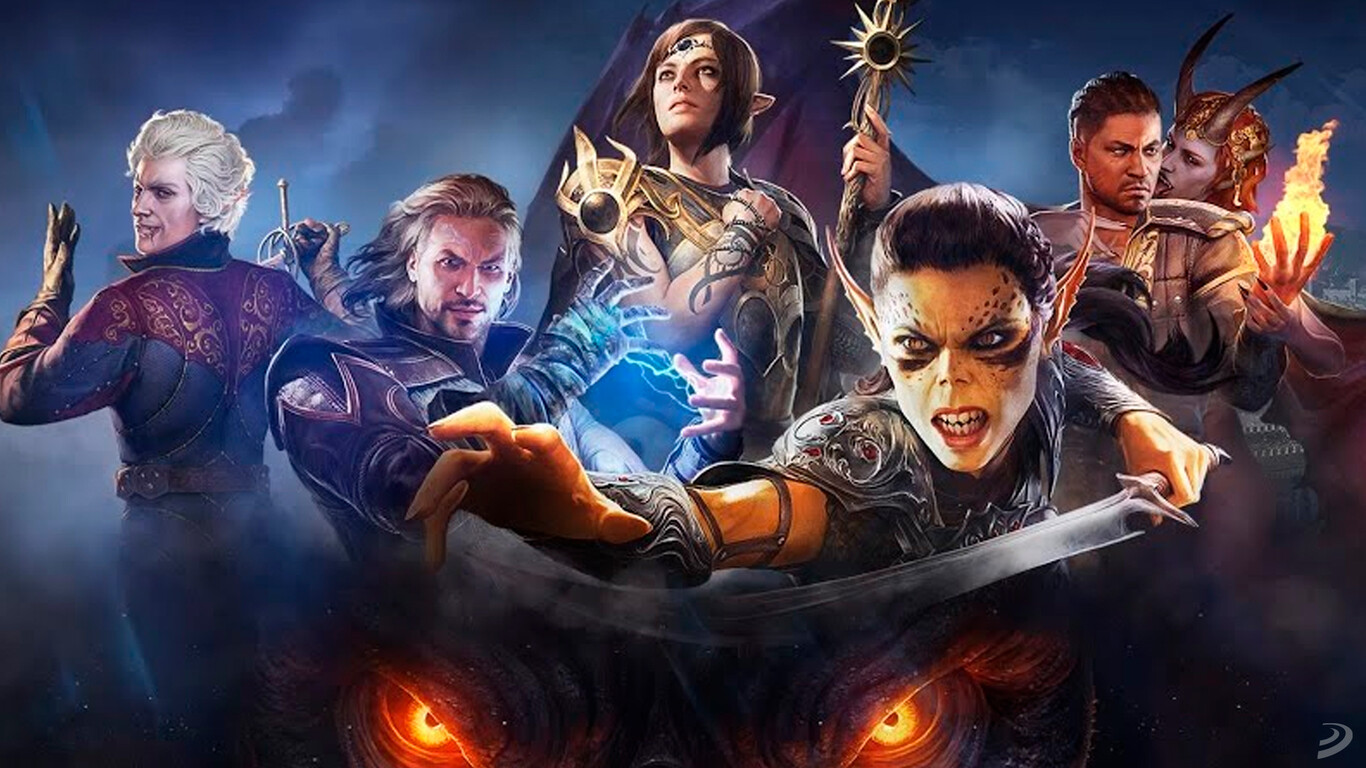
In a traditional video game, every character has a job to do. A quest-giver gives you a quest. A merchant sells you potions. A guard tells you to move along. Their scripts are tight because their time with you is limited.
When you give an NPC a chatbot brain, they lose their focus. They become willing to talk about anything under the sun, from your favorite food to the weather. Because they have no built-in desires, fears, or immediate goals within the story, they just stand there waiting for your next prompt. A real character should have things to do, places to go, and secrets they want to hide from you. Chatbots only live to reply to your messages.
4. Hallucinations Break the Lore
We all know that standard online AI tools love to make things up when they do not know the answer. In the tech world, this is called a hallucination. In a video game, this is a disaster for the story.
If you are playing a sci-fi game set on Mars, and you ask an AI character about their hometown, they might suddenly start talking about a beautiful beach in California because their training data got confused. Suddenly, the entire illusion of the game world is shattered. Game developers spend years building deep lore, histories, and rules for their universes. Letting an unhinged chatbot run wild means the character might say something that completely contradicts the main plot of the game.
5. Infinite Freedom is Actually Boring
It sounds amazing to be able to say anything to an NPC, but in reality, it puts too much work on the player. When a game gives you an open text box with zero limits, most players do not know what to say. You end up asking silly questions or trying to break the character’s code.
A good narrative requires drama and tension. Dialogue trees in the traditional sense provide you with options that impact the plot. You can opt to play as either the hero or the villain of the story. In a scenario where an AI character is responding to every random thought in your mind, the tension will be missing. The dialogue will not be dramatic as there are no risks involved.
The Path Forward
For creating realistic characters, however, game creators need to do more than simply add a generic chatbot to a 3D avatar. The future of gaming lies with sophisticated software that combines conversational flexibility with precise behavioral guidelines, intense training on story background information, and awareness of the virtual environment at any moment. Until then, they remain no closer to being heroes and far closer to technical support clones.
If you want to see a great breakdown of how these new systems are being tested behind the scenes by top studios, check out this look at AI Characters at GDC 2026. This video shows exactly how modern developers are trying to balance player freedom with real game logic so characters can do more than just repeat text.