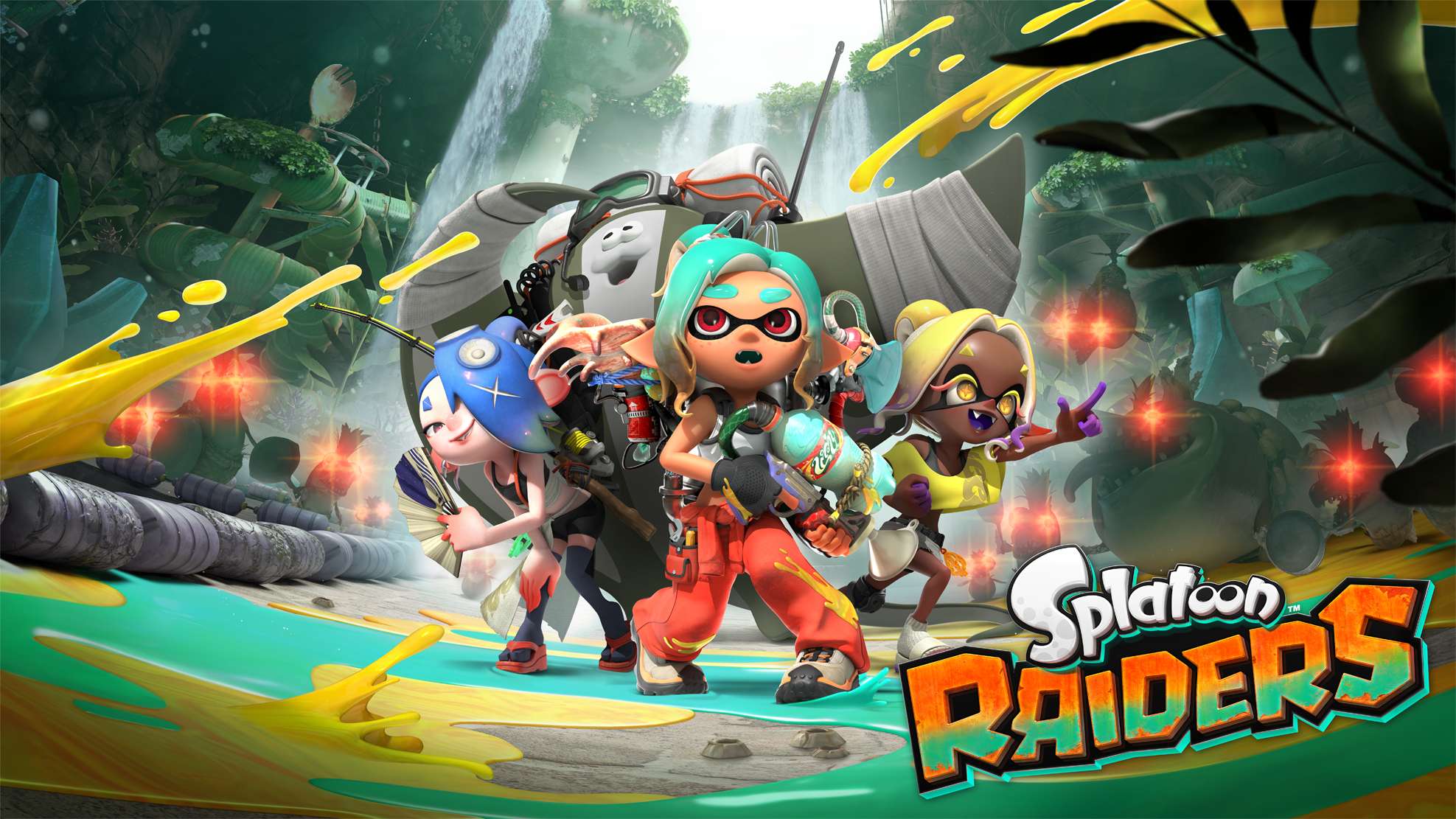
Splatoon Raiders is a brand-new entry in the popular Splatoon series, but instead of the traditional gameplay the mainline games are known for, it takes the series in a different direction. It’s built around both single-player and co-op, with missions lasting between 10 and 20 minutes that make for rewarding sessions whether you’re playing alone or with friends.
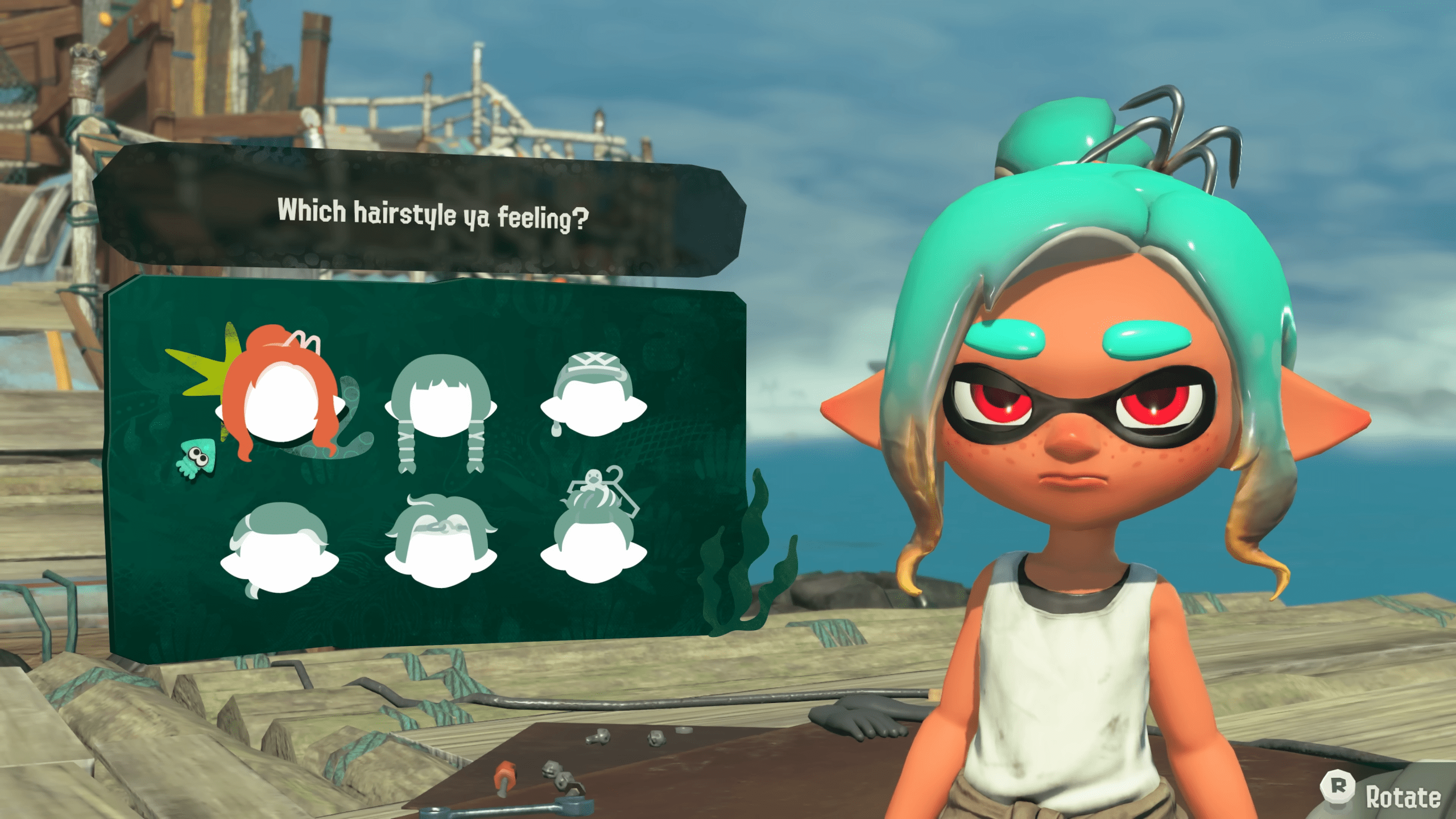
Narratively, Splatoon Raiders is solid, with a story centred on the Splatoon 3 trio of Shiver, Frye, and Big Man. The group sets out on a treasure-hunting adventure to help pay off Splatsville’s debt. Their journey takes them to the Spirhalite Islands, where they meet another Inkling or Octoling created by the player, known as the Mechanic. Together, they take on missions, battle Salmonid enemies, and search for relics and other valuables.
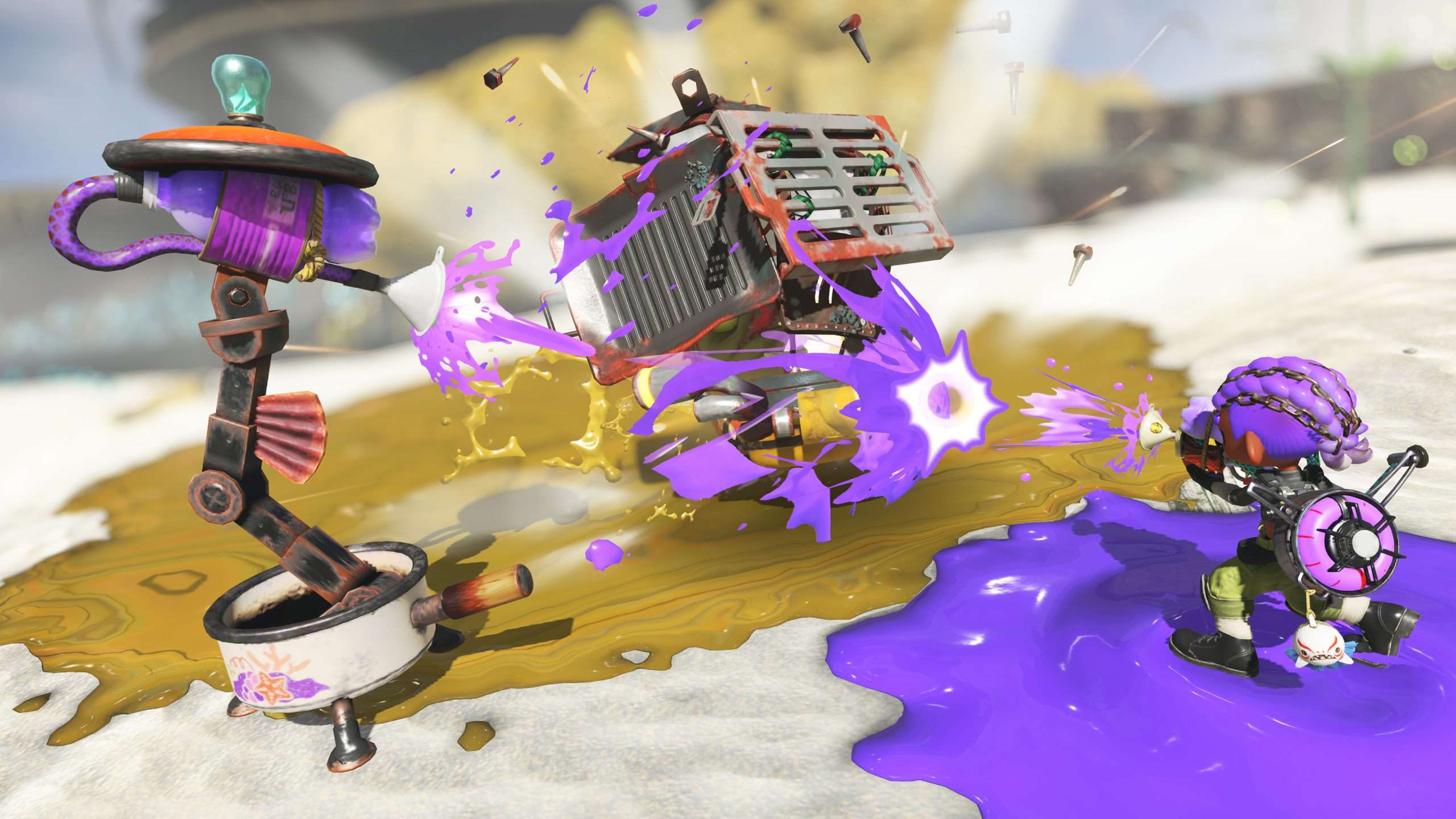
The story isn’t really the game’s main appeal. Instead, the focus is on the gameplay, with its wide variety of weapons, gadgets, and a progression system that rewards players for gathering and making use of the resources they collect. The party sets up a remote base on a hideout ship, which serves as both the upgrade hub and the multiplayer lobby for co-op. From there, players head out to different islands to gather resources and other valuables.
The main character, known as the Mechanic, can wield over 10 different weapons inspired by the Splatoon series. These are gradually unlocked by completing missions across the various islands. While the weapons retain the core characteristics that fans will recognise, they have a more homemade look and feel than the mechanically advanced designs seen in the mainline games. Each weapon’s effectiveness is also tied to the player’s level, becoming stronger as they gain experience.
Gadgets are one of the major new additions in this entry, and they are divided into three categories: Speed, Power, and Tactical. Depending on your playstyle, they can be used during missions alongside the traditional weapons. Players can equip up to two gadgets at a time, and their categories can be changed to better suit different mission requirements. They can also be customised with skills that are unlocked over time and parts found during missions.
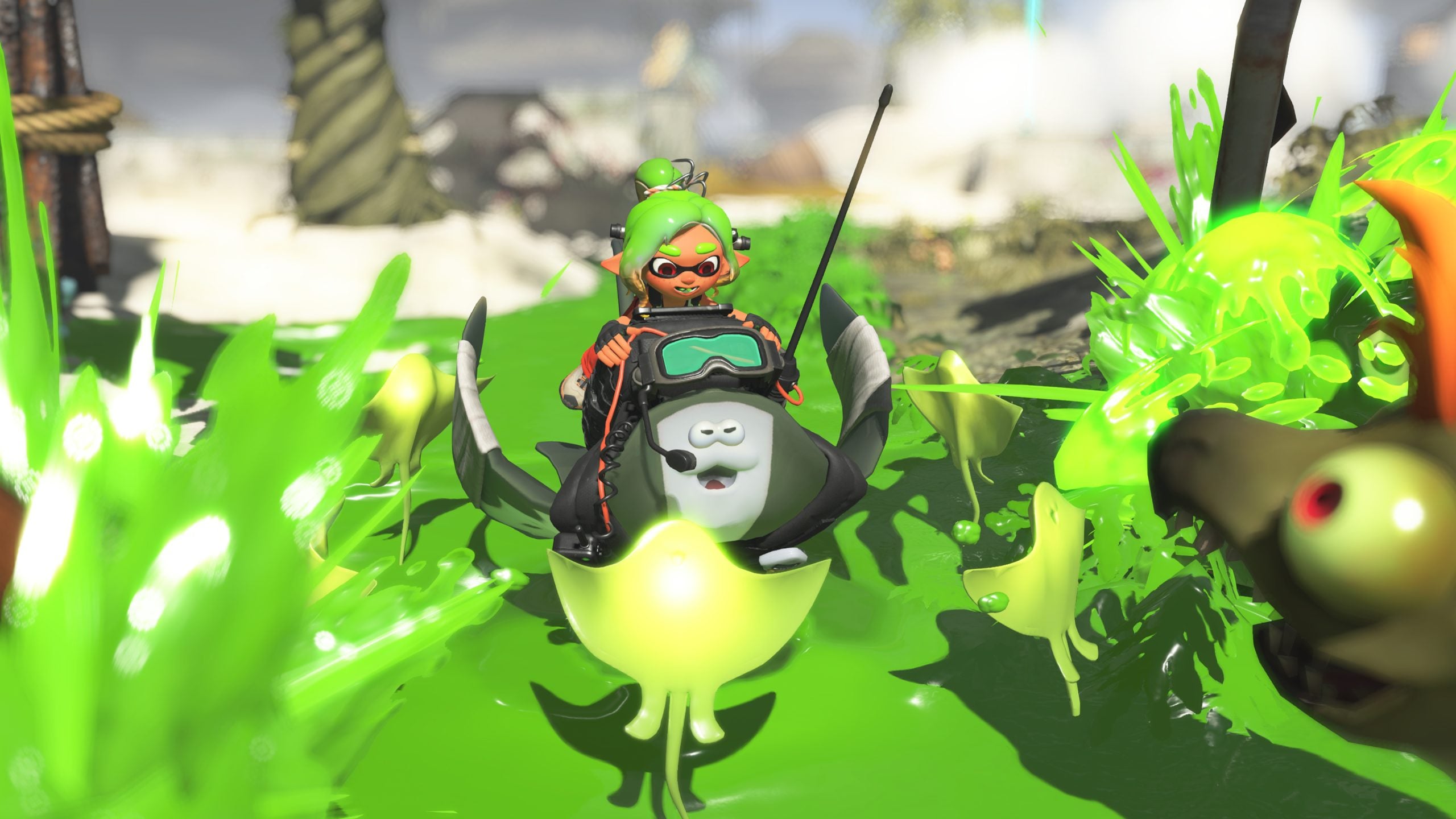
In addition to this, players are accompanied by an AI-controlled companion during missions. Depending on which companion is assigned, they can help the player perform actions such as double jumps or special moves. They also assist in combat and with gathering resources. While the series’ ink mechanics are still present, they are less central to the gameplay here, although they can still be used strategically to avoid enemies or recharge weapon ink.
The game can take more than 20 hours to complete, despite its missions being relatively short. A big part of the experience comes from upgrading and customising your loadout, including gadgets and weapons. With support for both online and local multiplayer, there’s plenty of replay value. During multiplayer, level scaling is handled individually, and loot is separate for each player, meaning everyone earns their own rewards.
The missions are varied as well, so you’re not repeating the same objective every time. They range from linear stages with light platforming to multi-floor dungeons, Salmonid Dens, and missions where your loadout is restricted, forcing you to make the most of the weapons and gadgets available. The game also offers multiple difficulty settings, including a Spicy difficulty that increases both enemy numbers and the overall challenge.
Overall, I was very happy with the amount of content the game offers. My main issue was with the presentation of the environments. I felt there wasn’t enough variety in the different island biomes, and after a while, many of the locations started to look and feel too similar.
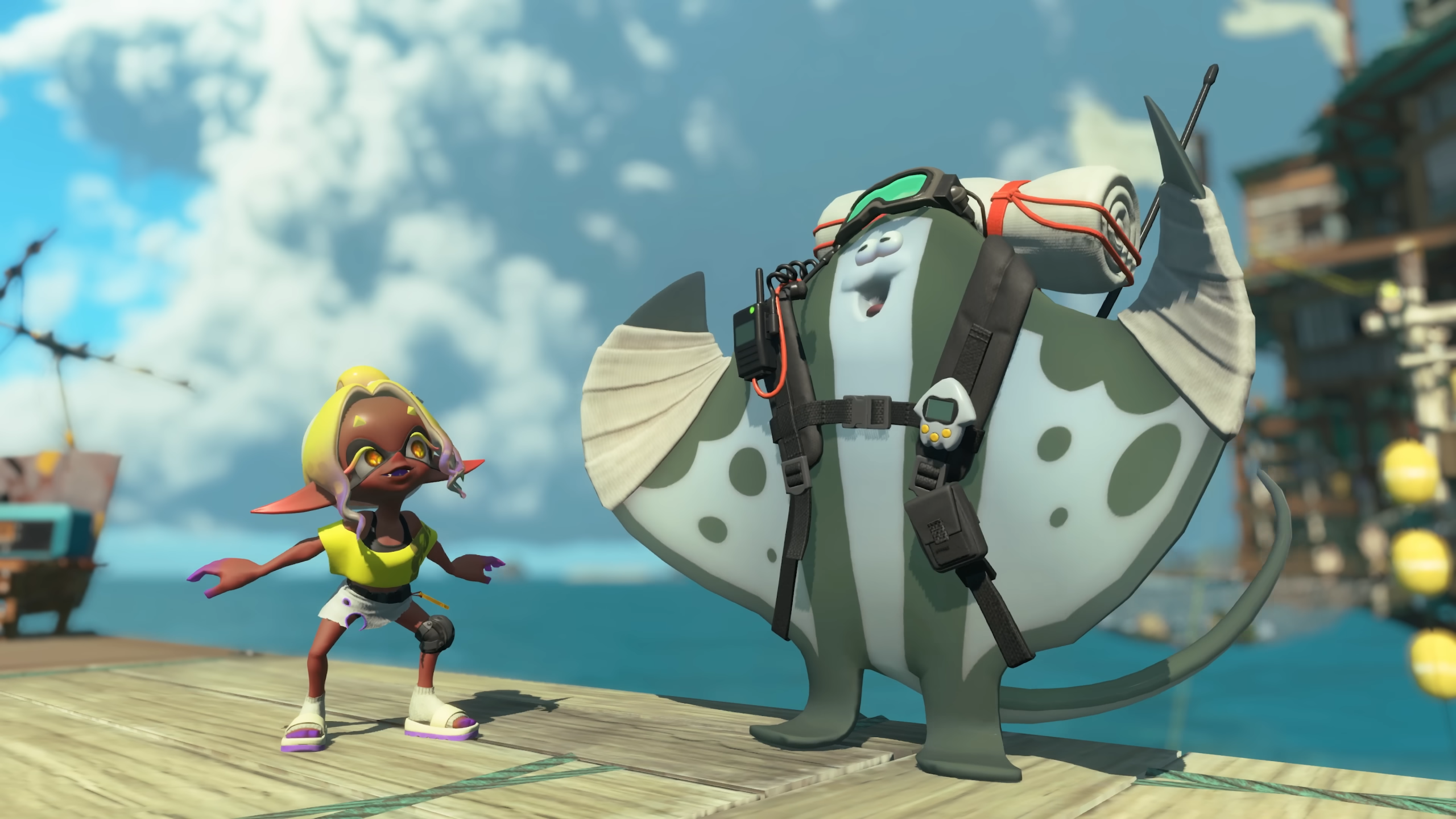
The visuals are impressive for the Switch 2, but the performance stands out even more. The game runs at a near-locked 60 FPS for most of the experience, resulting in smooth controls and responsive gameplay. Even on the Spicy difficulty, which throws significantly more enemies onto the screen, the game rarely struggles to maintain its performance. The UI is sleek and stylish, although it lacks a proper way to track crafting materials, forcing players to manually check what they have if they’re working towards a specific upgrade.
One issue worth highlighting is that, while there’s a good variety of weapons and gadgets, the game never really makes you feel like you need to use all of them, even though it encourages experimentation. Because of the way missions are designed, some of the classic weapons, such as the Roller, aren’t as useful as they are in the mainline games. The same applies to gadgets, as there’s little incentive to upgrade every one of them. Once you’ve fully upgraded a gadget you like, it’s more than capable of carrying you through the rest of the game.
Splatoon Raiders Game Information
- Price: $59.99
- Publisher: Nintendo
- Developer: Nintendo EPD
- Platform: Switch 2 (Reviewed)
- Disclaimer: A review code was given by the publisher