NVIDIA has announced DLSS 4.5 Ray Reconstruction, the latest addition to its AI-powered graphics technology suite, with a release planned for August across all GeForce RTX graphics cards. The company says the new update will deliver improved image quality in ray-traced and path-traced games while maintaining performance levels similar to the existing version.
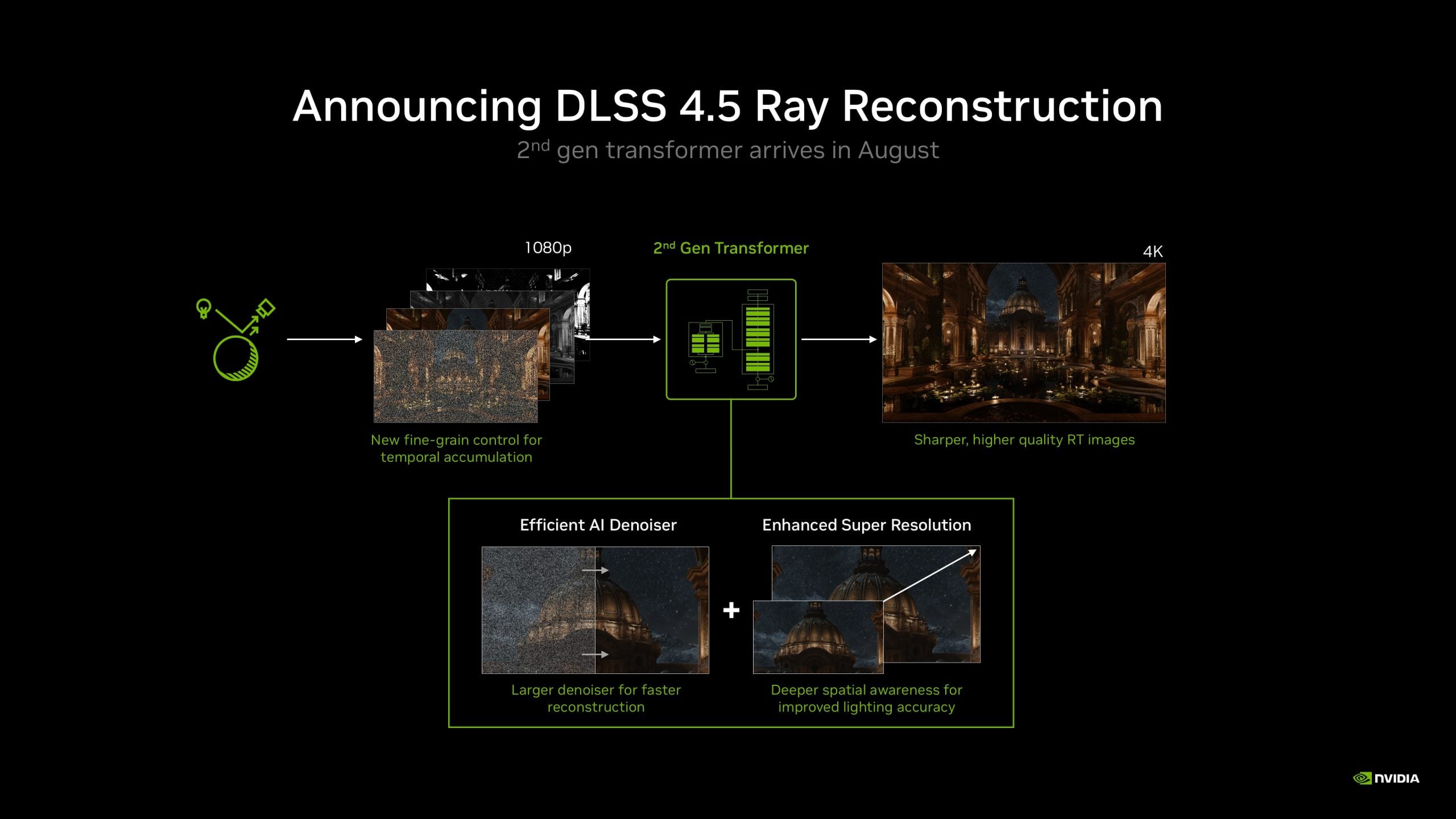
According to NVIDIA, the updated Ray Reconstruction model introduces a second-generation transformer architecture designed to replace traditional denoisers used in ray-traced rendering. The technology uses AI to reconstruct higher-quality images by intelligently analyzing game engine data and filling in areas where rays were not fully sampled. The result is intended to provide sharper visuals, greater stability, and more accurate lighting across supported games.
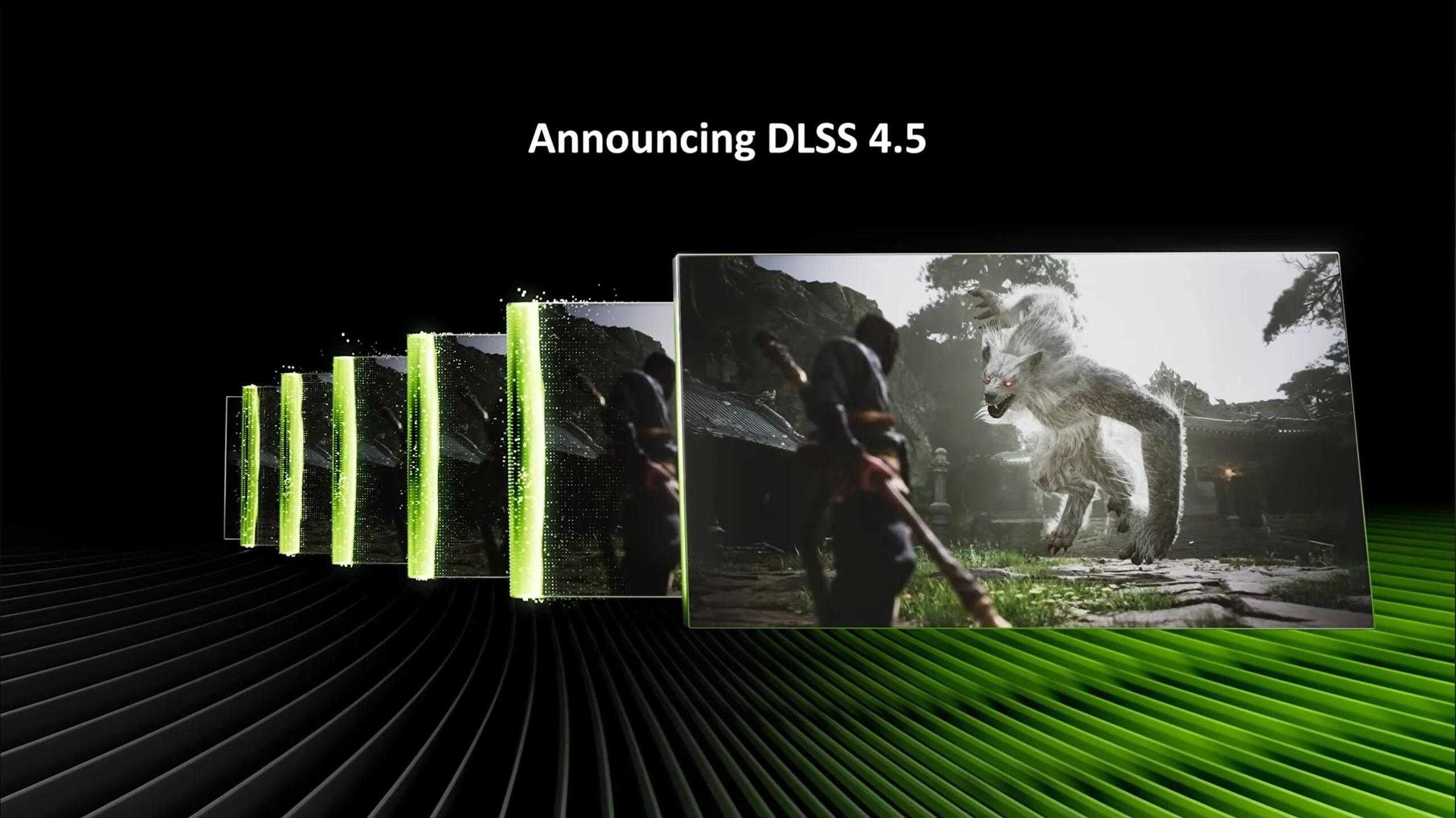
The company highlighted several improvements coming with DLSS 4.5 Ray Reconstruction, including a denoiser that delivers 35% more compute capability while processing 20% more parameters. NVIDIA also says the model benefits from enhanced scene awareness, improved motion clarity, better temporal stability, and a larger training dataset that helps reconstruct images closer to the intended visual output. Developers will additionally gain more control over temporal accumulation settings, allowing for further image quality tuning.
At launch, DLSS 4.5 Ray Reconstruction will be compatible with 27 games, including Cyberpunk 2077, Alan Wake 2, Indiana Jones and the Great Circle, DOOM: The Dark Ages, Star Wars Outlaws, Hogwarts Legacy, F1 25, Resident Evil Requiem, PRAGMATA, and Call of Duty: Black Ops 7. The update will be distributed through the NVIDIA App when it becomes available in August.
Beyond gaming, NVIDIA confirmed that DLSS 4.5 Ray Reconstruction is also coming to Blender. The feature will be integrated into Blender Cycles as a new denoising option when Blender 5.3 launches later this year. NVIDIA says the technology will allow artists to view near-final rendering quality in real time while maintaining responsive viewport performance.
The announcement coincides with another milestone for the RTX ecosystem. NVIDIA revealed that more than 1,000 RTX-enabled games and applications are now available, driven by growing adoption of DLSS, ray tracing, and AI-accelerated technologies. The company first introduced RTX graphics cards in 2018 with the launch of the GeForce RTX 2080, and says the platform has continued to expand significantly over the past eight years.
NVIDIA also outlined several upcoming games and updates that will incorporate DLSS 4.5 technologies. Phantom Blade Zero is scheduled to launch this fall with support for DLSS 4.5 Super Resolution and ray tracing features, while Marvel Rivals will receive native DLSS 4.5 Super Resolution and Dynamic Multi Frame Generation support in an update arriving June 12. NARAKA: BLADEPOINT will be upgraded to DLSS 4.5 Super Resolution on June 5, and titles including Gothic 1 Remake, Hell Let Loose: Vietnam, CINDER CITY, Honeycomb: The World Beyond, Squad, Duet Night Abyss, and Where Winds Meet are also set to adopt various DLSS 4.5 features in upcoming updates or at launch.
With DLSS 4.5 Ray Reconstruction arriving in August and additional game support continuing to roll out throughout the year, NVIDIA is positioning its latest AI rendering technologies as a major upgrade for RTX users across both gaming and creative applications.