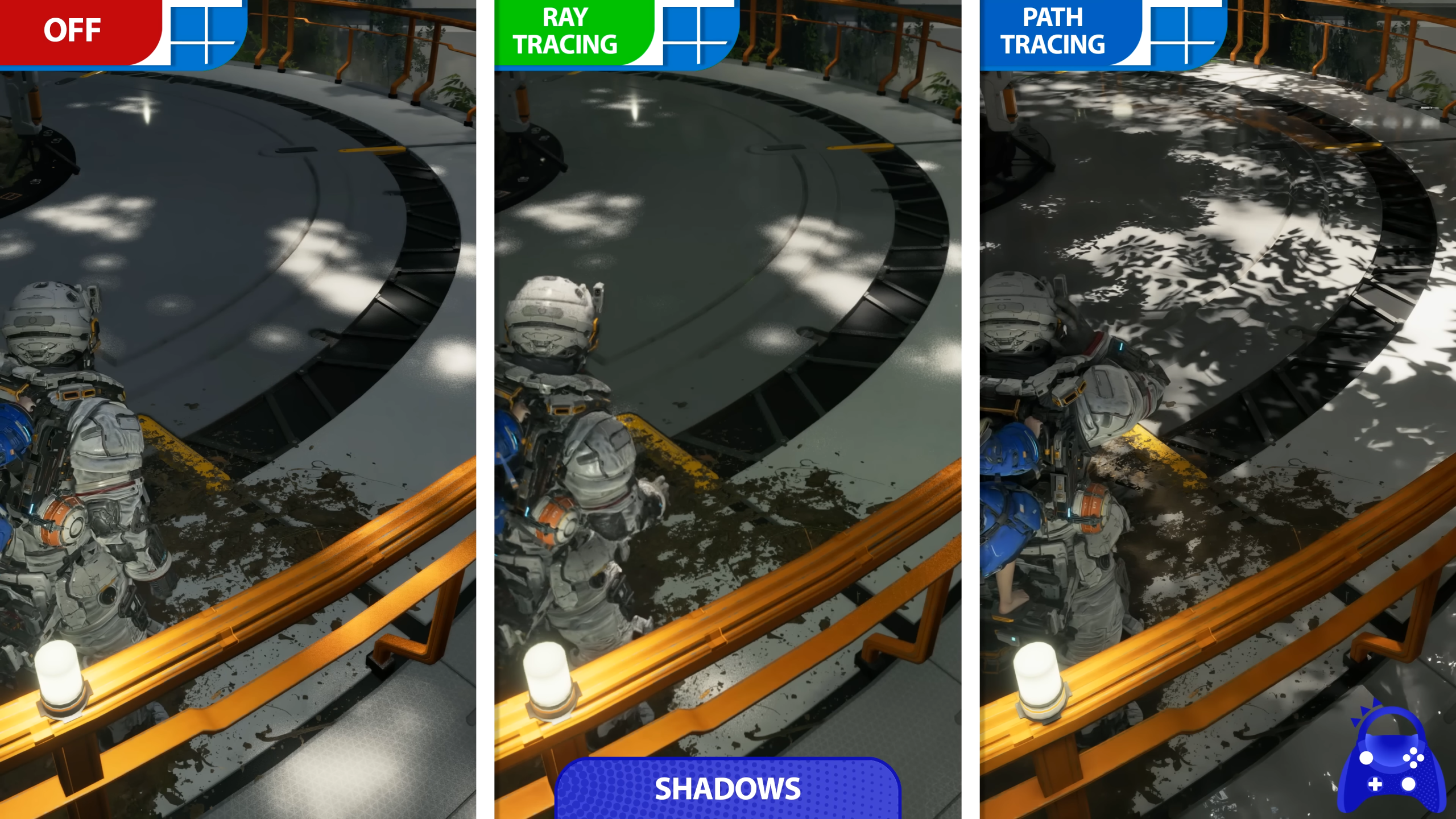
A new technical comparison of Pragmata’s PC version is drawing attention to the game’s path tracing implementation, with early analysis pointing to a noticeable visual upgrade over traditional ray tracing.
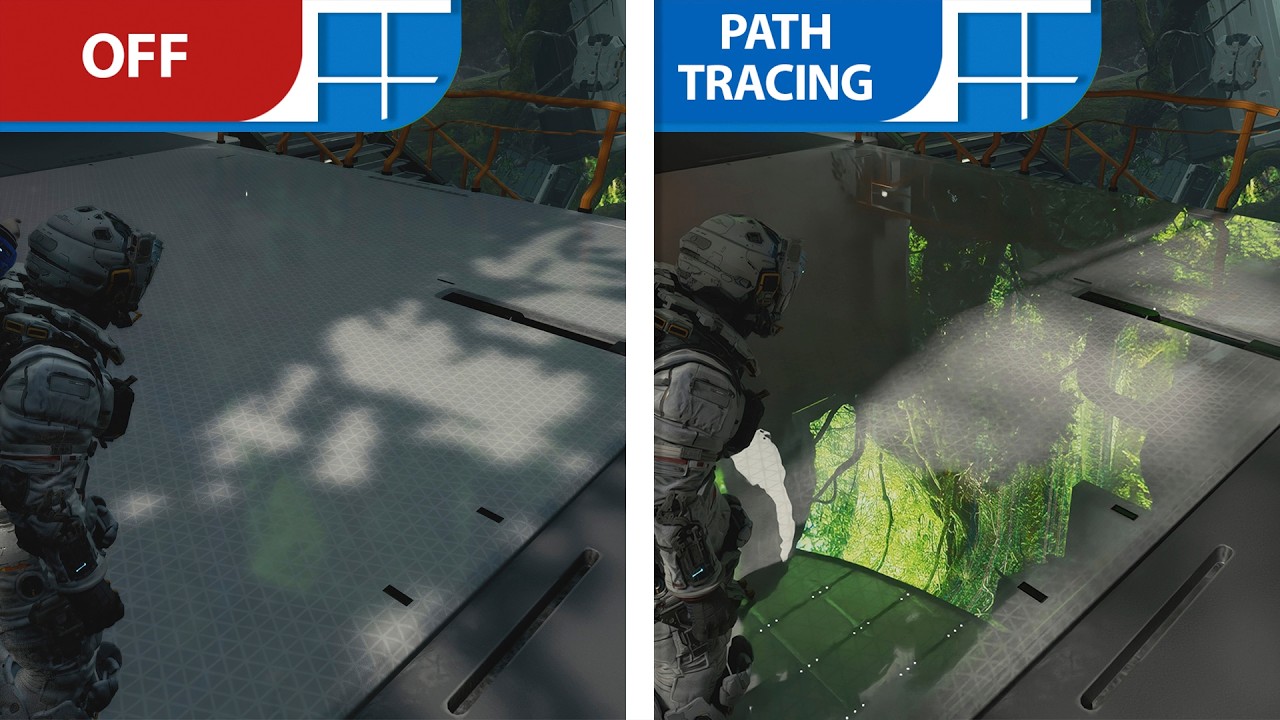
The final PC build introduces full path tracing support, similar to Capcom’s approach in Resident Evil: Requiem. The results appear substantial, particularly in how lighting and reflections are handled across environments. Reflections are rendered across nearly all surfaces, while global illumination reacts more naturally to different light sources and emissive materials. Shadows also show improved accuracy and detail, contributing to a more cohesive image overall.
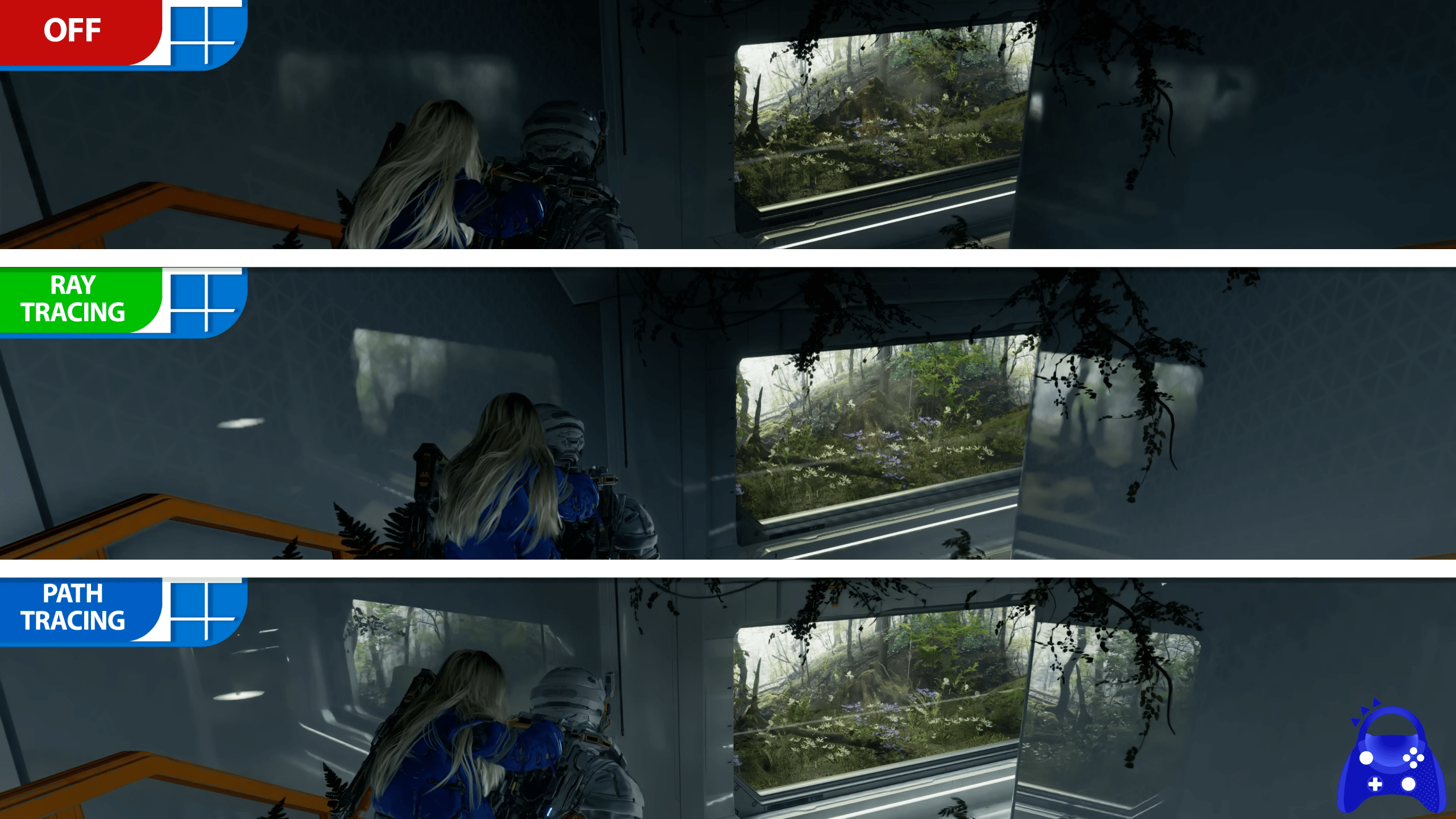
In contrast, the standard ray tracing mode appears more limited in scope. The analysis notes that ray tracing is applied selectively to certain materials, making it visually closer to the standard rendering mode in some scenarios rather than to full path tracing. Metallic reflections in this mode also exhibit more visible noise.
Path tracing, on the other hand, benefits from ray reconstruction being automatically enabled, helping reduce visual artifacts and improving clarity in reflections and lighting. The difference between the two rendering techniques becomes particularly apparent in scenes with complex lighting and reflective surfaces.
The visual gains, however, come alongside ongoing concerns regarding performance. Earlier reports based on Digital Foundry testing indicated that while high-end PCs can handle the game with advanced features enabled, systems equipped with 8 GB GPUs may struggle due to VRAM limitations.
Pragmata is scheduled to launch on April 17, 2026, for PlayStation 5, Xbox Series X and S, PC, and Nintendo Switch 2. The science fiction action adventure follows Hugh Williams and an android named Diana as they explore a lunar research station, combining combat with real-time hacking mechanics.